Home siding is more than just a decorative shell—it’s your home’s first line of defense against Ottawa’s harsh winters, heavy snow, biting winds, and freezing temperatures. When siding damage is left untreated, especially during winter, the consequences can be far more costly and damaging than homeowners often realize. Ignoring the warning signs can compromise your home’s insulation, structural integrity, and long-term value.
This guide explores why winter is the worst season to delay siding repairs, the risks of neglect, and how to protect your investment with proactive maintenance and professional siding services.
The Harsh Reality of Ottawa Winters
Extreme Temperature Fluctuations
Ottawa experiences dramatic swings in temperature. When water seeps into cracks or gaps in siding, it freezes, expands, and forces the material further apart. This freeze-thaw cycle accelerates deterioration, leading to warping, splitting, or loosening panels.
Heavy Snow and Ice Accumulation
Snow and ice place additional stress on siding materials. Prolonged exposure without repair increases the risk of leaks, water infiltration, and mold growth behind siding layers. Once moisture gets trapped, homeowners may face hidden repairs far costlier than initial siding fixes.
High Energy Bills in Cold Months
Damaged siding compromises insulation, making it harder for heating systems to maintain indoor comfort. With energy prices climbing, inefficiencies in winter can significantly increase monthly bills. New siding—particularly energy-efficient vinyl siding—offers long-term savings and comfort.
Consequences of Ignoring Siding Damage in Winter
1. Structural Damage Escalates Quickly
What may seem like a small crack or hole can rapidly grow under winter stress. Water infiltration during snow melts causes rot in the sheathing and framing beneath the siding, potentially leading to thousands of dollars in structural repairs.
2. Mold and Mildew Growth
Moisture behind siding in winter creates an environment for mold. Not only does this damage insulation, but it also presents health risks. The hidden dangers of mold under siding are often overlooked until visible damage occurs inside the home.
3. Reduced Curb Appeal
Damaged or faded siding becomes more noticeable against winter’s white backdrop. Homeowners considering resale will struggle with first impressions if siding shows visible cracks, warping, or discoloration.
4. Limited Repair Options in Winter
Cold temperatures restrict repair materials from bonding effectively. Caulking, adhesives, and paint often require warmer conditions. Ignoring problems in the fall means waiting until spring—or paying for temporary, less reliable fixes.
How to Spot Siding Damage Before Winter
Check for Cracks and Warping
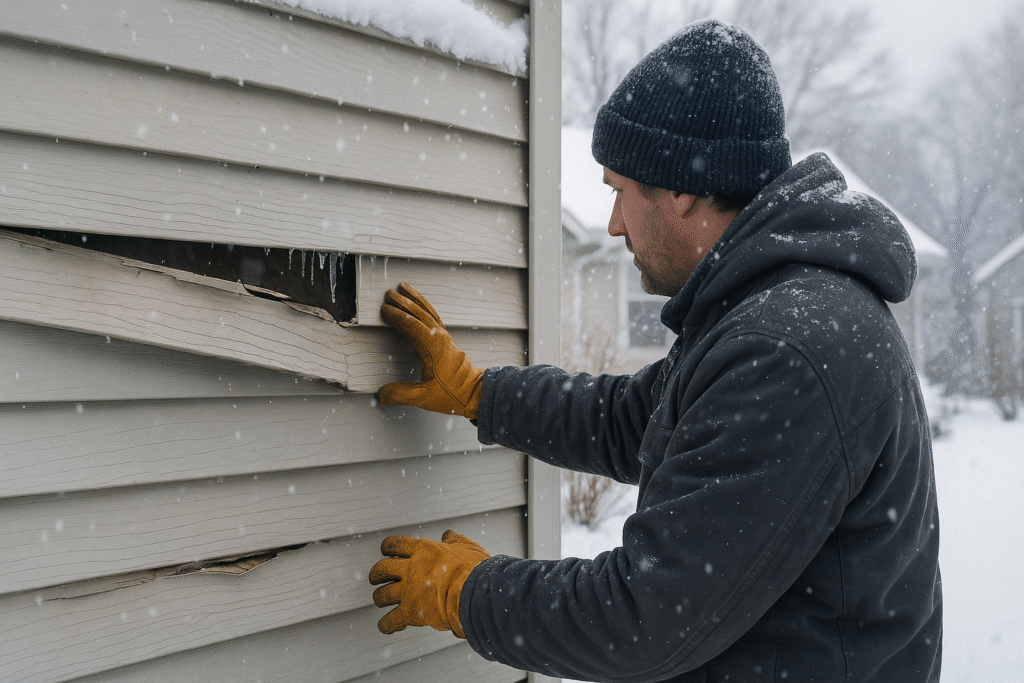
Inspect panels for visible cracks, bulges, or warping. These are signs that moisture has already compromised the siding.
Look for Fading or Discoloration
Excessive fading may indicate your siding has lost UV protection and is more vulnerable to Ottawa’s harsh climate.
Watch for Rising Heating Costs
If your heating bills spike unexpectedly, siding damage or poor insulation could be to blame.
Inspect for Mold or Stains
Dark streaks, stains, or soft spots on siding can mean water is seeping underneath.
For a deeper guide, homeowners can review the top 5 signs it’s time to replace your siding.
Winter Risks by Siding Type
Vinyl Siding
Vinyl can become brittle in extreme cold, making cracks and breakage more likely if panels are already damaged.
Wood Siding
Wood absorbs moisture, leading to swelling, rot, and pest infestations in freezing conditions.
Fiber Cement
Although durable, poorly installed or unsealed fiber cement siding can still suffer from freeze-thaw damage.
Learn more about durability in the top 5 most durable siding materials.
Why Professional Siding Inspections Matter Before Winter
Early Detection Saves Thousands
Professional siding contractors can spot issues homeowners often miss. A minor repair in autumn can prevent a full siding replacement in spring.
Expert Installation Prevents Failures
Poorly installed siding is more prone to damage in harsh climates. Hiring a trusted siding expert in Ottawa ensures proper sealing, alignment, and weatherproofing.
Energy Efficiency Upgrades
Modern siding materials can drastically improve your home’s energy performance. Upgrades before winter can reduce heating costs immediately.
When Replacement Is Better Than Repair
Delaying replacement during winter can be tempting, but in many cases, replacement is the smarter choice:
- Severe warping or cracking affecting large portions of siding
- Widespread water damage or rot behind panels
- Outdated, inefficient siding driving up heating costs
If your siding meets these conditions, consult a siding contractor in Ottawa to explore replacement options.
Government and Industry Insights
The Government of Canada highlights the importance of energy-efficient home upgrades in cold climates, including siding improvements, to meet Energy Efficiency Regulations.
Additionally, studies from the U.S. Department of Energy emphasize siding’s role in reducing heat loss during winter—underscoring why ignoring damage during cold months is especially costly.
Final Thoughts: Don’t Wait Until It’s Too Late
Winter is unforgiving on homes with siding damage. What begins as a small issue can escalate into structural damage, higher energy bills, and significant repair costs. Homeowners in Ottawa and across Canada must act proactively, especially before winter sets in.
By scheduling professional inspections, addressing repairs promptly, and investing in durable siding, you’ll not only protect your home but also improve its efficiency, curb appeal, and value.
Take the Next Step
Protect your home before winter does lasting damage. For expert inspections, repairs, or siding replacement services, reach out to Kaloozie Comfort’s contact team. Their trusted Ottawa siding specialists can guide you through repair or replacement options tailored to your home.