

Ottawa’s harsh climate poses a significant challenge to homeowners, particularly when it comes to siding maintenance and repair. Hailstorms, strong winds, and heavy ice buildup can compromise the integrity of your home’s exterior. Without proper attention, these issues can escalate into costly structural problems, increased energy bills, and diminished curb appeal. This guide provides homeowners with an authoritative, in-depth approach to siding repair after storm-related damage, ensuring both immediate fixes and long-term protection.
Understanding Storm-Related Siding Damage
The Impact of Hail on Siding
Hailstones, even as small as a marble, can leave dents, cracks, or punctures in vinyl, aluminum, and fiber cement siding. In Ottawa, hailstorms can cause widespread siding damage in minutes. Once siding is compromised, moisture intrusion becomes inevitable, leading to rot, mold, and insulation breakdown.
Wind Damage Risks
Strong winds not only dislodge siding panels but also expose underlayment and sheathing. This can leave your home vulnerable to water damage and pests. Loose panels may flap in the wind, creating additional strain on fasteners and nails, eventually leading to full panel detachment.
Ice and Snow Damage
Ottawa winters bring heavy snow and recurring freeze-thaw cycles. Ice dams often form on roofs and eaves, pushing moisture behind siding panels. This results in swelling, warping, and hidden water damage. Prolonged exposure can even compromise siding insulation, leaving your home less energy-efficient during the coldest months.
Signs You Need Immediate Siding Repair
- Cracks, Chips, and Holes – Indicators of hail impact or flying debris.
- Loose or Missing Panels – Usually caused by high winds.
- Moisture or Mold Growth – A sign that ice or snow has seeped behind siding layers.
- Warping and Buckling – Common with vinyl siding after extreme cold.
- Drafts and Heat Loss – Damaged siding allows cold air to penetrate walls, increasing heating costs.
For further guidance on spotting early warning signs, review the Top 5 Signs It’s Time to Replace Your Siding.
Step-by-Step Guide to Fixing Hail, Wind, and Ice Damage
1. Assess the Damage Thoroughly
Walk around your home after every major storm. Use a flashlight to spot dents and cracks. Pay close attention to corners, eaves, and window edges, where damage is most severe.
2. Document Everything
Take detailed photos for insurance claims. According to Government of Canada homeownership resources, documenting damage quickly can expedite claim approvals.
3. Perform Temporary Fixes
- Use weatherproof tape to seal cracks.
- Refasten loose panels with nails or screws.
- Cover exposed sheathing with plastic tarps until professional repair is scheduled.
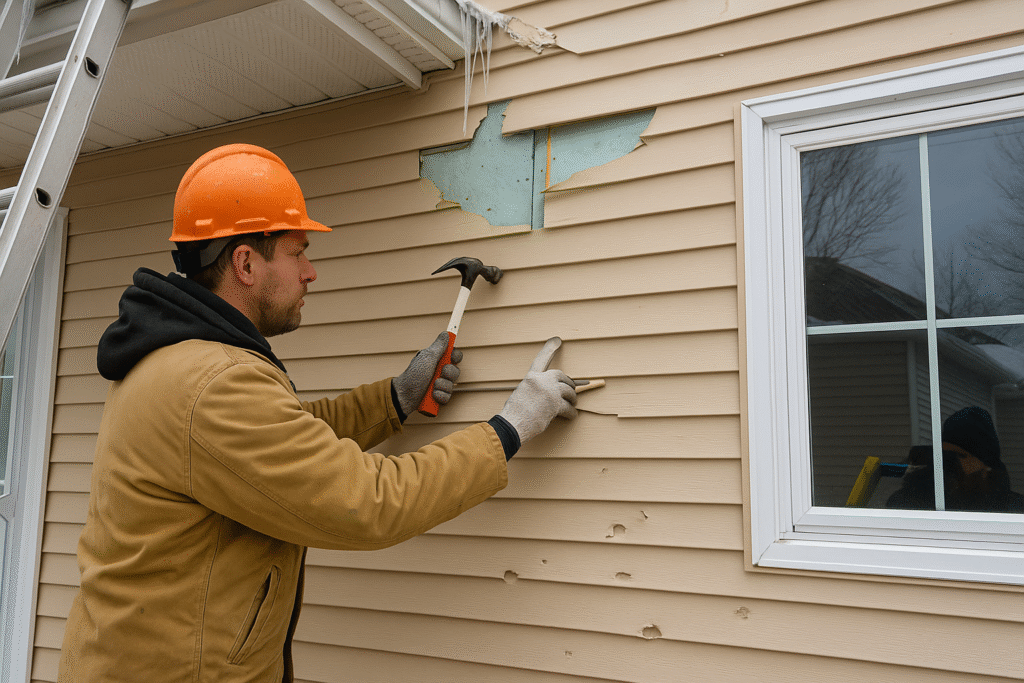
4. Professional Repair or Replacement
Some repairs may be DIY-friendly, but extensive hail or wind damage often requires siding replacement. Hiring experts ensures proper insulation, waterproofing, and long-lasting installation. See why hiring a siding expert is your best option.
Repair Solutions by Damage Type
Hail Damage Fixes
- Vinyl Siding: Replace cracked panels individually.
- Aluminum Siding: Dents can sometimes be pulled out, but replacement often looks cleaner.
- Fiber Cement: Cracks require professional patching or section replacement.
Wind Damage Fixes
- Secure loose siding with manufacturer-approved nails.
- Replace missing sections immediately to prevent water intrusion.
- Inspect underlayment and insulation for hidden damage.
Ice and Snow Fixes
- Remove ice dams with roof rakes and de-icing cables.
- Replace warped vinyl siding sections.
- Improve attic ventilation to reduce future ice buildup.
Preventing Future Storm Damage
Invest in Durable Siding Materials
Not all siding is created equal. Materials like fiber cement and engineered wood offer superior resistance to hail and wind. Explore the most durable siding materials for Ottawa.
Seasonal Maintenance
- Clean siding regularly to remove debris and mold.
- Inspect caulking and flashing twice a year.
- Schedule pre-winter maintenance to prepare for Ottawa’s harsh conditions.
Proper Installation
Poorly installed siding is far more vulnerable to wind and ice damage. Work only with certified professionals who understand Ottawa’s climate challenges. Learn more in The Ultimate Guide to Choosing the Best Siding for Your Home.
The Cost of Delaying Siding Repairs
Ignoring siding damage can lead to:
- Expensive structural repairs from water infiltration.
- Mold remediation costs inside walls.
- Increased heating bills due to poor insulation.
- Lower property value and diminished curb appeal.
According to HomeAdvisor, the average cost of repairing storm damage rises significantly when left untreated for months.
Insurance and Storm Damage Claims in Ottawa
Homeowners insurance often covers siding damage from hail and wind, but coverage for ice damage may vary. To maximize your claim:
- File immediately after the storm.
- Provide detailed documentation.
- Request multiple quotes from siding contractors for accurate replacement costs.
Ottawa homeowners can consult provincial guidelines through Ontario’s home insurance resources to confirm policy coverage.
When to Repair vs. Replace
- Repair: Minor cracks, dents, or a few loose panels.
- Replace: Large sections of warped, cracked, or missing siding; repeated storm damage in the same area; or outdated materials with reduced durability.
For more insights, see Siding Repair in Ottawa: When to Fix vs. Replace.
Final Thoughts
Ottawa’s siding repair needs are unique due to the severity of local weather. Hail, wind, and ice damage should never be ignored. By understanding storm-related risks, acting quickly with temporary fixes, and scheduling professional repairs, you can protect your home’s structural integrity, energy efficiency, and long-term value.
Whether you’re looking for quick repairs or considering a full replacement, working with trusted siding contractors ensures your home remains safe and beautiful year-round.
👉 Take the first step toward safeguarding your home by contacting our Ottawa siding specialists today.

