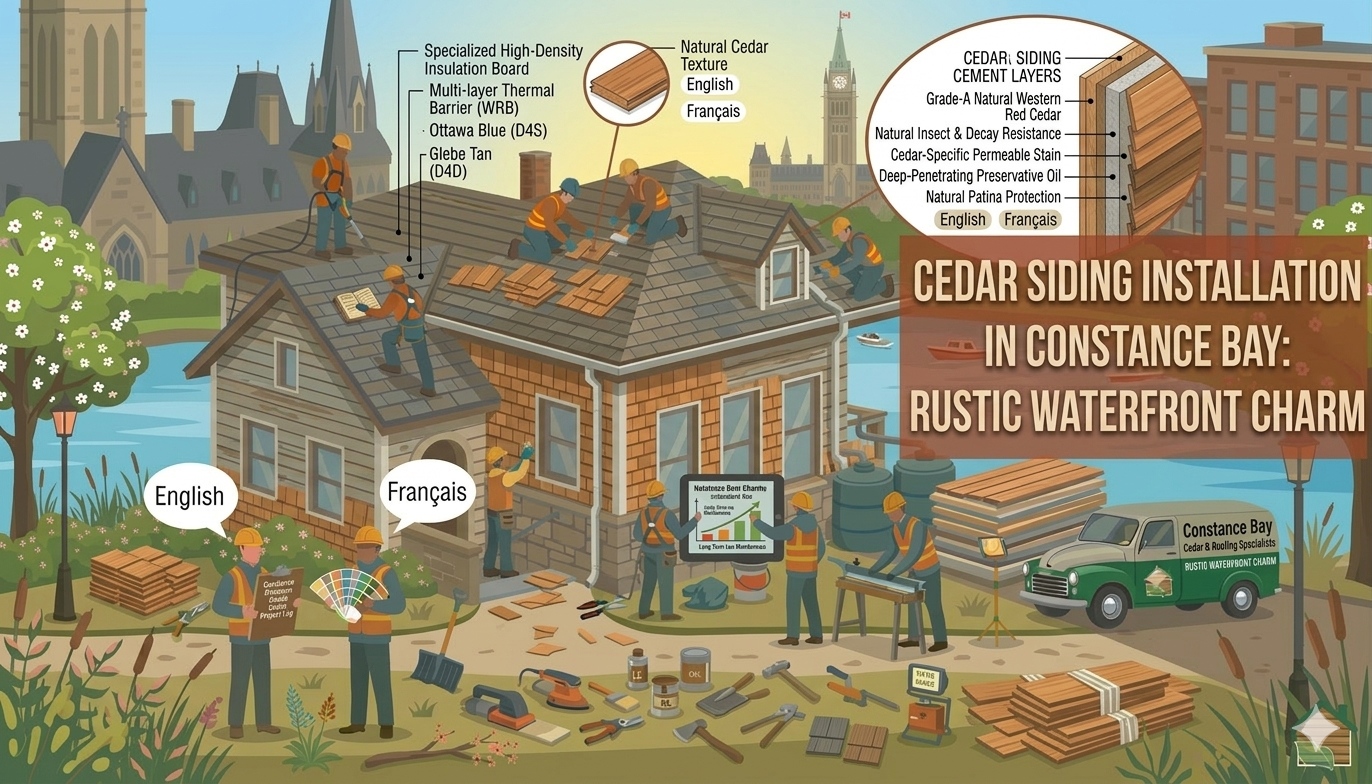
Cedar siding installation in Constance Bay offers something few exterior materials can match: authentic character, natural warmth, and a timeless connection to the landscape. In a community known for waterfront living, cottage-inspired architecture, tree-lined lots, and a relaxed rural-meets-recreational setting, cedar siding feels right at home. It complements the shoreline, blends beautifully with wooded surroundings, and delivers the kind of curb appeal that makes a property feel established, refined, and unmistakably local.
For homeowners in Constance Bay, siding is not only about appearance. It also has to perform in a demanding environment shaped by moisture, wind, seasonal temperature swings, snow, and intense sun exposure. That is why cedar remains such a compelling option. When installed correctly, detailed properly around windows and doors, and maintained on a sensible schedule, cedar siding can provide long-term beauty and reliable protection while enhancing the architectural charm of both year-round residences and seasonal properties.
Whether the goal is to refresh a lakeside cottage, modernize an older bungalow, or create a standout exterior on a custom home, cedar siding brings a level of richness that synthetic finishes often struggle to replicate. Its texture, grain, depth, and natural variation create a living exterior surface that adds sophistication without looking overly polished or artificial.
Why Cedar Siding Fits Constance Bay So Well
Constance Bay is not a cookie-cutter subdivision. Homes in the area often sit closer to nature, with larger lots, mature trees, sandy soils, and greater exposure to the elements than homes in more urban Ottawa neighbourhoods. That setting changes what homeowners should prioritize in exterior design.
Cedar siding works especially well here because it visually belongs in waterfront and woodland environments. It suits rustic cottages, coastal-inspired homes, chalet-style builds, and even newer custom houses that want to feel warm and organic rather than sterile. The material can be installed in several profiles, from bevel and clapboard to board-and-batten and shingle-style accents, giving homeowners flexibility in achieving a look that feels either traditional or more contemporary.
Beyond the aesthetic fit, cedar has practical strengths for this type of environment. It is lightweight, naturally durable, and easier to work with on custom detailing than many heavier cladding options. On homes where architectural charm matters as much as weather protection, cedar provides the best of both worlds.
Homeowners comparing wood with other materials often benefit from reviewing broader siding choices first. A useful starting point is The Ultimate Guide to Choosing the Best Siding for Your Home, especially when weighing appearance, climate performance, and long-term maintenance expectations.
The Rustic Waterfront Appeal of Cedar Siding
The biggest reason many homeowners choose cedar is visual impact. Cedar has a depth and authenticity that instantly upgrades a home’s exterior. It creates texture that changes throughout the day as light hits the grain, and it develops a natural, lived-in beauty that feels especially appropriate near water and natural landscapes.
In Constance Bay, that matters. A home near the shoreline or tucked into a wooded road should not look disconnected from its surroundings. Cedar siding gives the property a softer, more natural presence. It can be stained to showcase its rich grain, painted for a cleaner traditional finish, or allowed to weather into a silvery tone on select designs where that look suits the architecture.
This material is especially effective for:
Cottage and Cabin-Style Homes
Cedar reinforces the cozy, welcoming exterior most cottage owners want. It makes a property feel more established and more in tune with the area’s recreational identity.
Custom Waterfront Builds
For homeowners investing in premium construction, cedar offers an upscale exterior finish that looks handcrafted rather than mass-produced.
Rustic-Modern Exteriors
When paired with black-framed windows, natural stone, or minimalist trim, cedar can look sleek and architectural while still feeling warm and grounded.
Accent Features
Even when used selectively on gables, porch faces, dormers, or entryways, cedar adds high-end visual interest and breaks up more uniform cladding systems.
How Cedar Performs in a Waterfront Environment
Waterfront and high-moisture settings create challenges that homeowners cannot afford to ignore. Wind-driven rain, humidity, snow buildup, freeze-thaw cycling, and splashback from grade all put pressure on the exterior envelope. Cedar can perform very well, but performance depends heavily on installation quality.
A strong cedar siding system is not just about the wood itself. It requires the right wall assembly behind it. That means proper house wrap or water-resistive barrier, well-executed flashing, ventilation where appropriate, and careful detailing at all penetrations and transitions. Without these components, even premium siding can fail prematurely.
This is why installation standards matter far more than many homeowners realize. A well-built siding assembly helps manage moisture, reduce the risk of trapped water, and protect the structural wall. For deeper insight into why workmanship matters so much, Why Hiring a Siding Expert Is Your Best Option is an important read for anyone considering wood siding in exposed conditions.
Cedar itself offers several advantages in this type of setting:
- It has natural resistance to decay compared with many other wood species.
- It handles finishing well, whether stained or painted.
- It provides an authentic appearance that improves high-visibility elevations.
- It can be repaired in sections if damage occurs, rather than forcing a full replacement in every case.
Still, the waterfront environment is unforgiving. That makes contractor selection, maintenance planning, and moisture detailing essential from day one.
Best Cedar Siding Styles for Constance Bay Homes
Not all cedar siding looks the same. The profile selected will shape both curb appeal and maintenance needs. In Constance Bay, certain styles tend to fit particularly well.
Bevel Cedar Siding
This is one of the most classic cedar looks. It creates horizontal shadow lines that work beautifully on cottages and traditional homes. It offers clean visual rhythm while preserving the warmth of natural wood.
Board-and-Batten Cedar
For rustic, farmhouse, or cabin-inspired designs, board-and-batten brings strong vertical definition. It is ideal for homes that want a bolder architectural statement with a handcrafted feel.
Cedar Shingles or Shakes
These are often used on gables or upper sections to add texture and character. On waterfront homes, shingle accents can look especially fitting and elevate otherwise simple façades.
Mixed-Material Cedar Exteriors
Cedar pairs exceptionally well with stone veneer, dark metal roofing, and large glass areas. This combination is popular for upscale renovations because it balances natural texture with durability-focused modern elements.
For homeowners exploring siding appearance in greater detail, How to Choose the Right Siding Color for Your Home can help guide stain, paint, and trim decisions that complement cedar’s natural richness.
Cedar Siding Installation Details That Matter Most
A beautiful cedar exterior can still underperform if the installation is careless. In Constance Bay, the difference between a lasting siding system and a problem-prone one often comes down to details hidden behind the finished surface.
Moisture Management
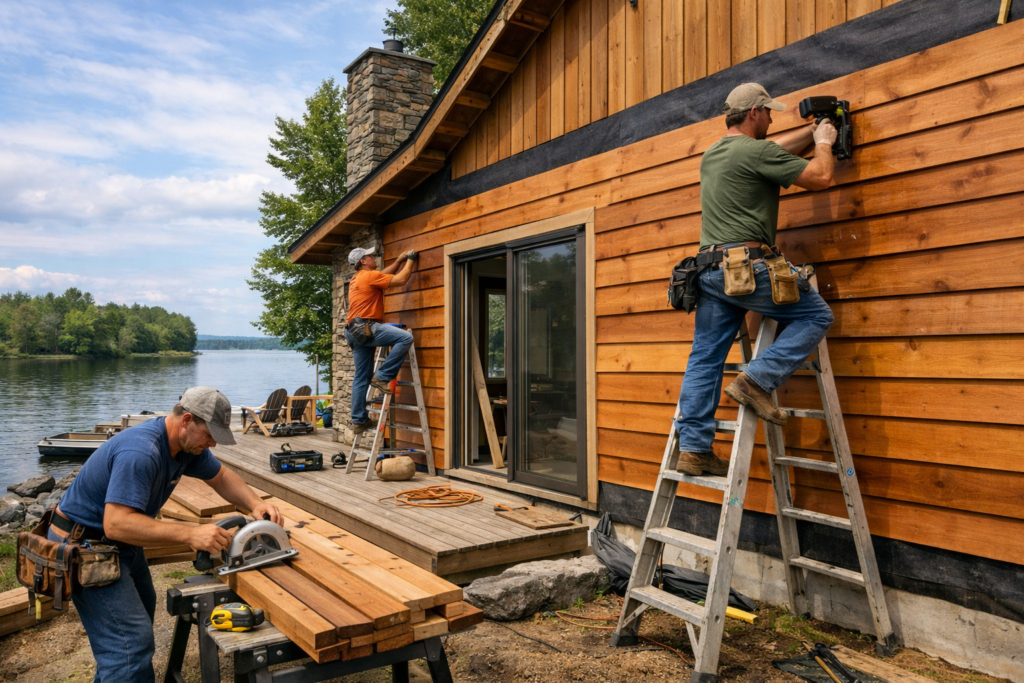
This is the single most important factor. Cedar siding should be installed as part of a wall assembly designed to shed water and dry effectively. That includes quality underlayment, flashing tape, metal flashings, and careful treatment around every opening.
Clearances from Grade
Cedar should never sit too close to soil, decks, roofs, or surfaces where water can collect. Good clearance helps prevent splashback, rot, and premature deterioration.
Fastener Selection
Using proper corrosion-resistant fasteners is essential, especially in exposed conditions where moisture is frequent. Inferior fasteners can stain the wood or compromise long-term hold.
Finishing Before or During Installation
Depending on the product and system, sealing all sides or properly finishing exposed surfaces can significantly improve longevity. This is particularly valuable in areas with strong weather exposure.
Ventilation and Drying Potential
Some assemblies benefit from rainscreen principles that allow the wall to dry more effectively. This can be an excellent strategy for waterfront homes facing repeated moisture exposure.
Homeowners who want a clearer picture of how projects unfold should also review What to Expect During a Siding Installation, which helps set expectations around preparation, timelines, and on-site workflow.
Cedar Siding Maintenance in Constance Bay
Cedar siding is not a “install it and forget it” product. That is not a weakness. It is simply part of owning a premium natural exterior. The reward for that maintenance is an unmatched level of character and curb appeal.
In Constance Bay, maintenance should be proactive rather than reactive. The local environment can accelerate wear if homeowners wait until staining fails or moisture damage becomes visible. Regular inspections are the best defense.
A good maintenance strategy includes:
Annual Visual Checks
Look for peeling finish, dark staining, cracked caulking, exposed end grain, or boards showing signs of moisture stress.
Gentle Cleaning
Dirt, mildew, pollen, and organic buildup should be cleaned before they trap moisture against the wood surface.
Re-Staining or Repainting as Needed
The timeline depends on sun exposure, finish type, and how exposed the home is to wind-driven rain. South- and west-facing walls often need attention sooner.
Monitoring Problem Areas
Pay close attention to lower walls, around decks, near roof intersections, beneath windows, and anywhere snow or runoff tends to collect.
For broader upkeep guidance, How to Maintain Your Siding for Longevity offers practical insight that supports better performance and longer service life.
Cedar Siding vs Other Popular Siding Options
Cedar is not the lowest-maintenance or lowest-cost cladding available, but it fills a unique role in the market. It is chosen for a premium natural look that many homeowners feel is worth the extra care.
Compared with vinyl, cedar offers better visual authenticity, richer texture, and a far more custom appearance. Vinyl usually wins on lower maintenance, but it cannot replicate real wood with the same depth.
Compared with fiber cement, cedar is often preferred for warmth and natural beauty, while fiber cement may appeal more to homeowners prioritizing fire resistance and reduced finish maintenance.
Compared with engineered wood, cedar carries a more traditional and premium reputation, especially for homes where design character matters as much as material efficiency.
For homes in a place like Constance Bay, where setting and exterior style are central to the property’s identity, cedar often earns its premium by looking more appropriate, more refined, and more in harmony with the environment.
How Cedar Siding Adds Property Value
Curb appeal has real value, especially in distinctive neighbourhoods where buyers notice design quality immediately. Cedar siding can contribute to stronger first impressions, better architectural cohesion, and a more memorable exterior. That is especially important in waterfront communities, where buyers tend to care deeply about atmosphere, materials, and how a home fits its lot.
A properly installed cedar exterior may help a property in several ways:
- It creates a premium custom-home appearance.
- It distinguishes the home from more generic exterior finishes.
- It enhances the charm buyers expect in cottage and waterfront markets.
- It supports long-term pride of ownership when maintained properly.
This does not mean every buyer will prefer wood over lower-maintenance alternatives. But for the right home in the right setting, cedar can be one of the most effective materials for elevating perceived value.
Permits, Codes, and Smart Planning for Exterior Renovations
Homeowners planning siding work should always confirm whether permits or additional requirements apply to their project, especially when renovations include structural changes, insulation upgrades, or work tied to larger envelope improvements. The City of Ottawa building and renovating resources are a good starting point for understanding local requirements.
It is also wise to think about energy performance during exterior upgrades. If siding is being removed, that can be the ideal time to address air sealing, insulation details, and weak areas around penetrations. For general home energy improvement information, Natural Resources Canada provides useful national guidance that homeowners can review alongside contractor recommendations.
Choosing the Right Contractor for Cedar Siding Installation in Constance Bay
Cedar is not the place to chase the cheapest quote. Natural wood siding rewards precision and punishes shortcuts. A low-cost install that ignores moisture detailing, flashing transitions, finish protection, or proper fastening can become far more expensive later.
A qualified contractor should understand not just siding installation, but exterior envelope performance. They should be comfortable discussing weather barriers, trim details, clearances, fastening methods, stain or paint considerations, and how waterfront exposure changes the installation approach.
Look for a contractor who can explain:
- How moisture will be managed behind the cedar
- What prep work is included before installation
- How windows, doors, and rooflines will be flashed
- What finish recommendations apply to the product chosen
- What type of maintenance the homeowner should expect over time
In a place like Constance Bay, that experience matters. The right installer protects both the beauty and longevity of the investment.
When Cedar Siding Is the Right Choice
Cedar siding is an excellent fit when the homeowner values architecture, warmth, and natural character over purely low-maintenance ownership. It is ideal for people who want their home to feel rooted in the landscape and are willing to protect that finish through periodic care.
It makes particular sense for:
- Waterfront homes
- Cottage-style properties
- Custom builds with natural material palettes
- Renovations focused on premium curb appeal
- Homes where the exterior should feel timeless rather than trend-driven
It may be less suitable for homeowners who want the absolute lowest-maintenance exterior possible or who do not want to commit to future upkeep. But for the right property and the right owner, cedar delivers a level of charm few materials can approach.
Final Thoughts on Cedar Siding Installation in Constance Bay
Cedar siding installation in Constance Bay is about more than cladding a house. It is about creating an exterior that reflects the setting, enhances the architecture, and gives the property a genuine sense of place. In a waterfront community where natural beauty is part of everyday life, cedar feels intentional. It looks established, welcoming, and distinctly suited to the area.
When installed with proper moisture control, quality flashing, correct clearances, and a realistic maintenance plan, cedar can be a long-lasting and highly rewarding choice. It adds depth, richness, and visual authenticity that help a home stand out for the right reasons.
For homeowners planning an exterior upgrade in Constance Bay, cedar remains one of the strongest options for achieving rustic waterfront charm with premium curb appeal and enduring design value.
FAQs
What makes cedar siding a good choice for homes in Constance Bay?
Cedar siding suits Constance Bay because it complements waterfront and wooded surroundings while offering natural beauty, texture, and strong curb appeal. It is especially attractive for cottage-style, rustic, and custom homes.
Does cedar siding require a lot of maintenance?
Cedar does require more maintenance than vinyl or some engineered alternatives. However, with regular inspections, cleaning, and timely staining or painting, it can remain beautiful and durable for many years.
Is cedar siding durable enough for waterfront weather conditions?
Yes, cedar can perform very well in waterfront conditions when installed properly. The key is moisture management, proper flashing, correct fasteners, and keeping the siding protected with suitable finishes and maintenance.
Can cedar siding increase home value?
Cedar siding can improve perceived value by boosting curb appeal and giving a home a premium, custom appearance. In scenic communities like Constance Bay, that aesthetic advantage can be especially meaningful.
How long does cedar siding last?
Service life depends on installation quality, finish protection, exposure, and maintenance. Well-installed and well-maintained cedar siding can last for decades.
Should cedar siding be stained or painted?
Both options can work. Stain is often chosen to showcase the natural wood grain, while paint offers a more traditional solid finish. The best choice depends on the look desired and the maintenance plan the homeowner prefers.
For tailored advice on siding, exterior upgrades, or a full-home renovation plan, visit the Kaloozie Comfort contact page.