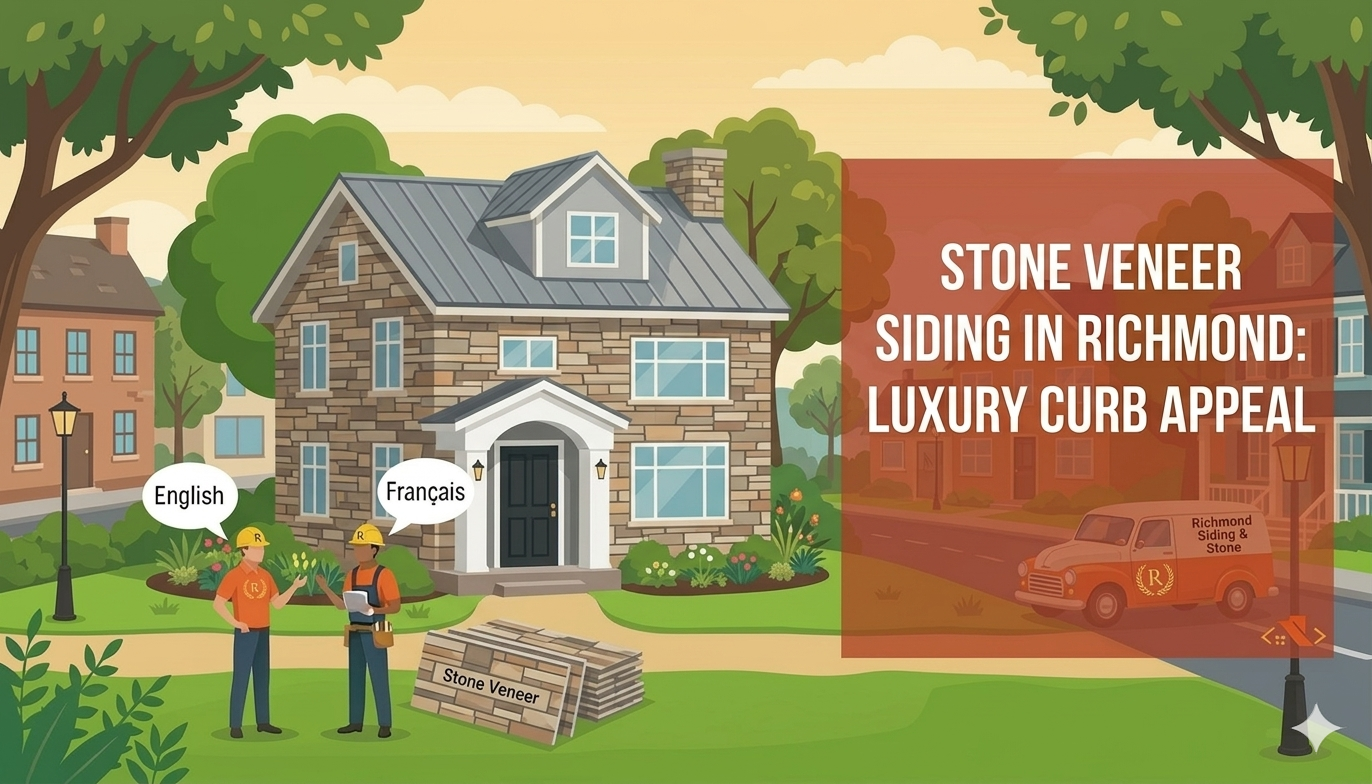
Stone veneer siding has become one of the most desirable exterior upgrades for homeowners who want a refined, upscale, and lasting first impression. In Richmond, where homes range from elegant custom builds to beautifully updated family properties, exterior appearance carries real weight. Homeowners are no longer satisfied with a plain façade. They want a finish that feels substantial, polished, and architecturally impressive. Stone veneer delivers exactly that.
A well-designed stone veneer exterior adds texture, depth, and prestige to a property without the structural burden and cost of full-thickness natural stone. It creates the type of luxury curb appeal that immediately changes how a home is perceived from the street. More importantly, when installed properly as part of a complete exterior strategy, stone veneer can complement other siding materials, protect vulnerable accent areas, and help define a home’s character in a way that standard cladding often cannot.
For homeowners in Richmond considering an exterior renovation, stone veneer is not simply a decorative choice. It is a smart architectural investment. It can elevate entryways, garage surrounds, porch columns, foundation walls, front-facing gables, and full feature sections of a home. When paired with the right siding profile, trim colour, roofing material, and window design, it creates a premium look that feels intentional rather than trendy.
Before committing to an exterior upgrade, it helps to understand how stone veneer fits into the broader conversation of material performance, design planning, and installation quality. Homeowners comparing options often start with a broader review of the best siding for your home, then narrow down which materials create the strongest balance between appearance, durability, and maintenance.
Why Stone Veneer Siding Is So Popular in Richmond
Richmond homeowners are increasingly drawn to stone veneer because it offers the elegance of natural masonry while remaining practical for modern renovation budgets and construction methods. It produces a strong visual effect, especially on homes where the front elevation is the focal point. Unlike flat or uniform exterior finishes, stone veneer introduces dimension. That dimension matters because luxury curb appeal is rarely created through colour alone. It comes from contrast, layers, shadow lines, and materials that visually anchor the structure.
Stone veneer also works exceptionally well with a range of architectural styles found in and around Richmond. On traditional homes, it adds timeless character and permanence. On newer builds, it creates a custom-home look that feels more expensive and more complete. On transitional designs, it bridges classic and modern elements beautifully.
Another reason for its popularity is flexibility. Stone veneer can be used selectively rather than across the entire façade. This allows homeowners to create impact where it matters most. A front entrance wrapped in stone veneer immediately feels more upscale. A lower wall section clad in stone can make the whole home look more grounded and durable. Accent peaks and columns can break up large stretches of siding and prevent the exterior from looking flat or builder-basic.
For homeowners planning an exterior transformation, stone veneer is often most effective when integrated with a broader siding and eavestrough service strategy so the finished project performs as well as it looks.
What Makes Stone Veneer Different From Full Stone
One of the biggest misconceptions in exterior renovations is that stone veneer is somehow a lesser version of real stone. In reality, high-quality stone veneer is a specialized cladding solution designed to provide the visual richness of stone in a lighter, more installation-friendly system. Depending on the product, it may be manufactured stone or natural stone cut into thin pieces for veneer application.
The practical advantage is significant. Full-bed stone requires substantial structural support, more labor, and far higher installation costs. Stone veneer achieves a similar high-end look with less weight, greater flexibility, and easier integration into typical residential construction. That makes it ideal for accent walls, façade enhancements, exterior columns, garages, and other visible design features.
For the homeowner, the result is clear: strong luxury appeal without the excessive material bulk and complexity of traditional masonry construction. It is an efficient way to create a premium exterior impression while keeping the project grounded in real renovation practicality.
Luxury Curb Appeal Starts With Material Contrast
Homes that truly stand out almost always use contrast intelligently. Stone veneer performs best when it is part of a composition rather than the only material doing all the work. Pairing it with horizontal lap siding, board and batten, or premium vinyl profiles can create a highly custom finish. The contrast between smooth siding and textured stone is what makes the elevation feel sophisticated.
This is especially important in Richmond, where neighborhood character matters and homeowners often want to increase perceived home value without making the house look overdesigned. Stone veneer adds richness when used with restraint. It can define the base of the home, frame the front entrance, or highlight architectural lines. When overused, it can feel heavy. When placed strategically, it creates elegance.
Colour selection also matters. Warm greys, taupes, charcoal mixes, sand tones, and limestone-inspired palettes tend to perform particularly well because they are versatile and timeless. They also pair well with black windows, dark roofing, white trim, natural wood accents, and popular modern exterior palettes.
Homeowners thinking through the visual side of a siding project should also consider how to choose the right siding color for your home, since the stone-to-siding relationship often determines whether the result looks truly upscale or merely busy.
Best Places to Use Stone Veneer on a Richmond Home
Front Entryways
The front entry is one of the strongest places to use stone veneer because it defines the first impression. Wrapping the entrance surround or adjacent wall sections in stone makes the home feel more substantial and custom-built.
Garage Façades
On many suburban homes, the garage occupies a large visual footprint. Stone veneer used around the garage base or in adjacent wall sections can soften the dominance of garage doors and create a more balanced front elevation.
Foundation Exposures
Visible foundation walls can make a home look unfinished or overly plain. Stone veneer offers an elegant way to upgrade exposed lower sections and give the exterior a more complete, high-end appearance.
Columns and Porch Supports
Stone-clad columns are a classic luxury feature. They add weight and character while tying the entrance design together.
Gables and Accent Panels
Used selectively in upper peaks or controlled feature zones, stone veneer can turn a simple façade into a more dynamic composition.
One of the strongest combinations for homeowners seeking a premium but balanced exterior is integrating stone with fiber cement siding service in Ottawa, especially when durability and architectural crispness are both priorities.
Stone Veneer and Richmond’s Climate
Exterior materials in Richmond must do more than look good in summer. They must perform through freeze-thaw cycles, moisture exposure, snow accumulation, wind, and seasonal temperature swings. This is why installation quality matters as much as the material itself.
Stone veneer systems require proper substrate preparation, water management detailing, flashing, and skilled application. When poorly installed, even premium materials can fail. Moisture intrusion, cracking, adhesion problems, or premature wear are not usually caused by the concept of stone veneer itself. They are usually caused by shortcuts behind the finished surface.
That is why homeowners should view exterior upgrades through a building-envelope lens rather than a purely cosmetic one. Surface beauty means little if the assembly underneath is not handled properly. In practical terms, that means attention to transitions, trim details, moisture barriers, and integration with siding, windows, soffit, and other exterior components.
This is also why many homeowners researching premium finishes end up reading about why hiring a siding expert is your best option. High-end materials demand high-end execution.
Does Stone Veneer Increase Home Value?
In many cases, yes. Stone veneer is widely associated with quality construction, luxury design, and stronger visual appeal. It can enhance the perceived value of a home by making the exterior appear more custom, more durable, and more expensive. For buyers, first impressions are formed immediately. A façade with well-executed stone accents tends to feel more premium before a prospective buyer even walks through the front door.
The value is not limited to resale alone. Homeowners also gain daily enjoyment from a more attractive exterior, improved pride of ownership, and the sense that their property presents well year-round. In neighborhoods where appearance contributes to market positioning, this kind of upgrade can help a home stand apart from comparable properties with more basic cladding.
From an investment standpoint, stone veneer performs best when the design is timeless. Neutral palettes, clean transitions, balanced placement, and compatibility with the architecture matter far more than chasing dramatic or overly specific trends.
For general guidance on durability and long-term exterior performance, homeowners can also review the National Research Council Canada for building science information and trusted residential construction resources.

How Stone Veneer Compares to Other Siding Options
Stone veneer is not usually chosen as a full-house siding replacement in the same way vinyl or fiber cement might be. Instead, it is often part of a layered exterior strategy. Each material has a role.
Vinyl siding is often selected for affordability, low maintenance, and wide colour availability. Fiber cement appeals to homeowners looking for strong durability and a painted, premium look. Engineered wood may offer a warm appearance and distinctive profiles. Stone veneer, by contrast, is the material that adds gravity, richness, and visual depth.
For luxury curb appeal, the question is often not stone veneer versus other siding. It is stone veneer combined with the right siding. Homes that look expensive rarely rely on one flat finish alone. They use hierarchy. They use focal points. They use complementary textures that guide the eye.
Homeowners who are still comparing material lifespan and resilience often benefit from reading about what type of siding lasts the longest before deciding which primary and accent materials belong in the same project.
Design Tips for a High-End Stone Veneer Exterior
Choose a Stone Profile That Matches the Home’s Architecture
Ledgestone, fieldstone, limestone-style panels, and stacked profiles all create very different impressions. A sleek modern home may benefit from cleaner, linear stone. A traditional home may suit more rugged, irregular texture.
Do Not Overload the Front Elevation
Stone veneer is most effective when it highlights the architecture rather than overwhelms it. Strategic placement creates a more refined result than trying to cover every visible surface.
Coordinate With Roofing, Trim, and Windows
Exterior materials should work as a system. Roof colour, trim contrast, fascia, soffit, shutters, lighting, and even entry doors should align with the stone palette.
Think About Seasonal Appearance
Richmond homes must look good in snow, rain, bright sun, and overcast conditions. Stone colours that are too dark or too yellow can feel visually heavy depending on the season and surroundings.
Use Lighting to Enhance Texture
Stone veneer comes alive when exterior lighting creates shadow and depth. Entry sconces, garage lighting, and landscape lighting can all elevate the finish.
For homeowners looking at overall project execution and aesthetics, what to expect during a siding installation is also useful when planning timelines, staging, and finish coordination.
Common Mistakes to Avoid With Stone Veneer Siding
A luxury material can only create a luxury result when it is designed and installed properly. Some of the most common mistakes include choosing a stone colour that clashes with roofing or windows, using too many competing textures, applying stone veneer without proper transitions, and hiring installers who treat it as a purely decorative add-on rather than part of the exterior wall system.
Another mistake is ignoring the details that surround the stone. Trim lines, caulking quality, flashing accuracy, and termination points all influence whether the project looks clean and professional. On premium homes, small inconsistencies become very noticeable.
Budget planning is another area where mistakes happen. Some homeowners underestimate the importance of proper prep work and focus only on the visible finish. A better approach is to consider the entire project scope, including substrate readiness, moisture management, detailing, and adjacent cladding alignment.
Those budgeting for a premium exterior should always compare stone veneer as part of a broader envelope investment, not as an isolated visual expense. For deeper pricing context on related work, homeowners often review how much it should cost to put siding on a house in Ottawa before building a realistic renovation plan.
Maintenance Expectations for Stone Veneer
Stone veneer is popular partly because it delivers upscale appearance without the maintenance demands associated with some traditional exterior materials. In most cases, maintenance is relatively straightforward. Seasonal visual inspections, gentle cleaning when needed, and periodic checking of adjacent joints or flashing details are usually enough to keep the system looking strong.
That said, “low maintenance” should not be confused with “ignore it forever.” Exterior materials benefit from attention. Homeowners should watch for signs of cracking, staining, water runoff issues, or impact damage near vulnerable areas. Good maintenance habits protect both appearance and longevity.
For broader exterior upkeep guidance, homeowners can refer to the Canada Mortgage and Housing Corporation for homeowner-oriented housing resources and maintenance planning information.
Why Stone Veneer Works So Well for Upscale Richmond Homes
Richmond is the type of market where appearance, neighborhood consistency, and pride of ownership all matter. Homes are often judged not only on size and layout, but also on presentation. Stone veneer supports that presentation exceptionally well because it communicates permanence, craftsmanship, and design confidence.
It also suits a wide range of homeowner goals. Some want to modernize an older exterior. Some want to make a newer home look more custom. Others want to improve resale positioning or align the façade with the quality of the interior renovation they have already invested in. In each case, stone veneer can serve as the visual upgrade that ties everything together.
The key is not simply adding stone. It is using it with intention. When chosen carefully and installed professionally, stone veneer transforms a home from ordinary to memorable. It turns flat surfaces into architecture. It gives the property a stronger street presence. It creates the kind of luxury curb appeal that buyers notice, neighbors admire, and homeowners appreciate every time they pull into the driveway.
Choosing the Right Contractor for Stone Veneer Siding in Richmond
The success of a stone veneer project depends heavily on who installs it. Homeowners should look for contractors with direct exterior renovation experience, a strong understanding of siding integration, and a portfolio that shows clean detailing rather than just material familiarity. Stone veneer is not a product to hand off to an inexperienced installer learning on the job.
A qualified contractor will discuss drainage, substrate preparation, transition details, flashing, trim compatibility, and long-term performance. They will not reduce the conversation to colour swatches alone. They will help the homeowner decide where stone veneer belongs, where it does not, and how it should interact with the rest of the home’s exterior materials.
If your goal is a premium result rather than a quick cosmetic patch, the contractor choice is as important as the material choice itself.
Final Thoughts on Stone Veneer Siding in Richmond
Stone veneer siding remains one of the strongest ways to create luxury curb appeal in Richmond without committing to full masonry construction. It offers visual depth, timeless character, and the ability to elevate nearly any front elevation when used strategically. It works particularly well for homeowners who want their property to look more custom, more durable, and more valuable from the street.
The best projects combine thoughtful design, disciplined material coordination, and professional installation. When those three elements come together, stone veneer becomes more than an accent. It becomes the feature that defines the home’s entire exterior identity.
If you are planning an exterior upgrade and want a more refined, high-end result, stone veneer deserves serious consideration. For tailored advice on your home’s exterior renovation goals, contact Kaloozie Comfort to discuss the right siding and accent strategy for your Richmond property.
FAQs
What is the main benefit of stone veneer siding for Richmond homes?
The main benefit is luxury curb appeal. Stone veneer gives a home a richer, more custom appearance while remaining more practical and cost-effective than full natural stone construction.
Is stone veneer siding suitable for cold Ontario weather?
Yes, when installed properly. The key is correct preparation, moisture management, flashing, and integration with the exterior wall system. Installation quality matters as much as the material.
Does stone veneer need a lot of maintenance?
No, it is generally considered low maintenance. However, homeowners should still inspect the exterior periodically and keep an eye on adjacent sealants, drainage, and any visible wear.
Can stone veneer be used with other siding materials?
Yes. In fact, it is often best used alongside other siding materials such as vinyl, fiber cement, or board and batten to create contrast and a more upscale exterior design.
Does stone veneer increase resale value?
It can improve perceived value and market appeal by making the home look more premium, more architecturally finished, and more visually impressive from the street.