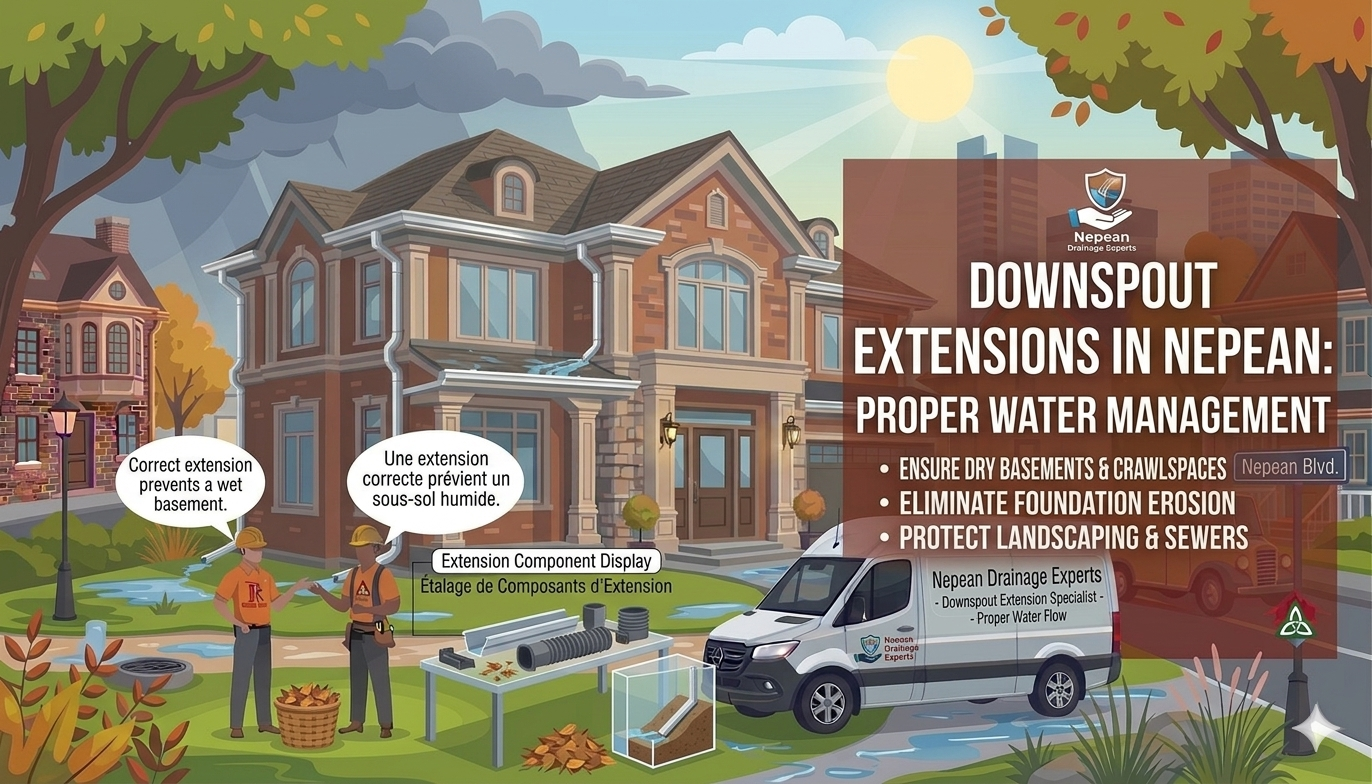
In Nepean, proper water management is not a minor exterior detail. It is one of the most important parts of protecting a home from expensive structural issues, basement moisture, siding deterioration, soil erosion, and long-term foundation damage. Many homeowners focus on roofing, windows, or siding upgrades but overlook the simple truth that a home’s drainage system has to direct water away quickly and efficiently. That is where downspout extensions become essential.
A properly designed drainage setup does much more than move rainwater off the roof. It controls where that water ends up. Without effective downspout extensions, runoff often collects beside the foundation, saturates the soil, seeps into lower levels, damages landscaping, and contributes to freeze-thaw pressure during Ottawa’s harsh seasonal shifts. In a place like Nepean, where heavy rain, snowmelt, and icy winter conditions all put stress on residential exteriors, this issue becomes even more serious.
Downspout extensions are one of the most affordable and effective exterior upgrades a homeowner can make. When installed correctly, they help preserve grading, reduce hydrostatic pressure against basement walls, and support the overall lifespan of your roofing, siding, soffit, fascia, and eavestrough system. They are not an afterthought. They are a key part of a complete water-control strategy.
For homeowners already thinking about broader exterior upgrades, it also helps to understand how drainage interacts with the rest of the building envelope. Problems that begin at the roofline often affect far more than the gutters alone. That is why integrated exterior planning matters, especially when evaluating siding and eavestrough services for long-term protection.
Why Downspout Extensions Matter for Homes in Nepean
Nepean homes deal with a climate that puts exceptional pressure on drainage systems. Spring snowmelt can create sudden runoff surges. Summer storms can dump large amounts of water in a short period. Autumn debris can clog eavestroughs and create overflow. Winter ice buildup can slow drainage and force water into places it should never reach. Downspout extensions help control all of this by moving discharged water far enough away from the home.
When water is released too close to the foundation, it does not simply disappear into the ground. It pools. It softens the surrounding soil. It increases the chance of settlement issues. It can find cracks in concrete or weaknesses in old waterproofing systems. Over time, this repeated saturation can lead to basement dampness, musty smells, mold risk, and visible deterioration around the lower exterior walls.
This is particularly important for homeowners who already notice signs of moisture-related stress on the outside of the house. Drainage failures often overlap with exterior cladding problems, especially if water splashes back onto the walls or saturates vulnerable lower sections. In those situations, it is smart to also review whether you may need siding repair and replacement as part of a more complete exterior solution.
What a Downspout Extension Actually Does
A downspout extension attaches to the lower end of the downspout and carries water farther away from the home’s foundation. The goal is simple: redirect water to a safe discharge point where it will not threaten the house, the yard, or neighboring properties.
That sounds straightforward, but performance depends on several factors:
Distance from the Foundation
Water should be directed far enough away that it cannot easily flow back toward the house. Even a small extension can improve drainage, but longer and properly positioned extensions generally provide better protection.
Slope and Grading
The extension itself is only part of the system. The surrounding yard must slope away from the house so that discharged water continues moving outward rather than collecting at low points.
Volume Capacity
A roof sheds a surprising amount of water. Large roof sections can overwhelm undersized drainage systems during heavy rain. Extensions need to be compatible with the downspout size and expected water volume.
Discharge Location
The endpoint matters. Water should not be directed onto walkways, toward neighboring foundations, or into areas where standing water becomes a hazard.
The most effective systems treat downspout extensions as part of a full drainage design, not as a quick plastic add-on chosen at the last minute.
Common Water Management Problems Caused by Missing or Short Downspout Extensions
When downspouts dump water too close to the structure, the damage may not be immediate, but it is often predictable. The most common issues include:
Foundation Saturation and Basement Moisture
Water pooling near the base of the home gradually increases pressure on foundation walls. Small cracks that once seemed harmless can become entry points for moisture. Finished basements are especially vulnerable because even minor seepage can damage flooring, drywall, trim, and insulation.
Soil Erosion Around the Home
Constant runoff hitting the same area can wash away topsoil, expose roots, disturb mulch beds, and create trenches beside the house. Once grading is compromised, water starts flowing back toward the structure instead of away from it.
Siding and Lower Wall Splashback
Improperly discharged water can bounce back onto the siding. Repeated wetting near the bottom courses of siding increases the risk of staining, warping, mold, and hidden moisture damage. Homeowners who want to protect the full exterior system should understand how drainage and cladding work together, especially when reviewing eavestrough and siding integration.
Ice Formation in Winter
When drainage is poor, water can collect and refreeze around entrances, driveways, walkways, and the base of the home. This not only threatens materials but also increases slip risk.
Landscape Damage
Flower beds, decorative stone, garden edging, and lawn sections can all be destroyed by concentrated roof runoff. A poor discharge point can undo landscaping work quickly.
Why Nepean Properties Need Smarter Drainage Planning
Nepean includes a wide variety of housing types, lot slopes, property ages, and soil conditions. Some homes sit on flatter lots where water drains slowly. Others have mature landscaping that unintentionally traps runoff. Some older homes were built with drainage systems that no longer meet today’s expectations for stormwater control. In many cases, the original downspout setup was simply too basic for modern rainfall patterns and changing weather conditions.
This is why homeowners should not assume that “water is leaving the gutter” means the problem is solved. Water must be moved intentionally and safely. A good drainage design considers roof size, lot grading, splash zones, seasonal freezing, and how other exterior elements interact with runoff.
That is especially true when eavestroughs themselves are aging or poorly configured. If the entire system needs attention, a more complete upgrade through eavestrough installation in Ottawa may provide a stronger long-term solution than patchwork fixes.
Best Types of Downspout Extensions for Proper Water Management
Not all downspout extensions perform the same way. The right choice depends on the home, the lot, and the drainage goal.
Rigid Extensions
Rigid extensions are durable and maintain their shape well. They are often preferred for consistent water flow and a cleaner appearance. They work best when carefully placed along side yards or landscaped areas.
Flexible Extensions
Flexible models are popular because they are easy to install and can bend around obstacles. They are useful in tight layouts, but lower-quality materials may crack or shift over time.
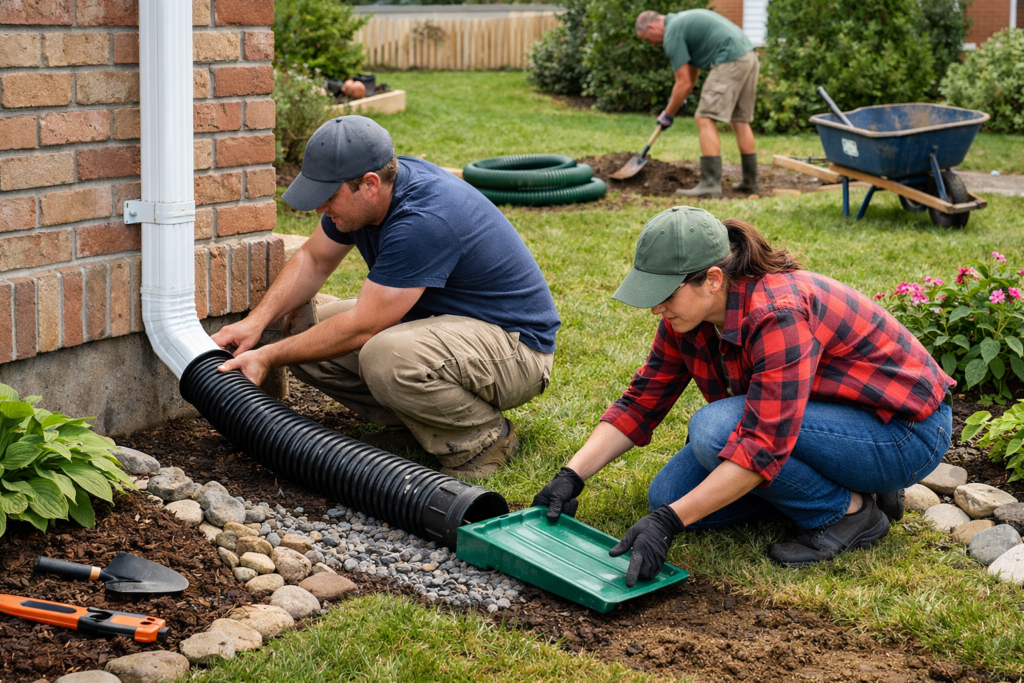
Buried Drain Extensions
A buried extension carries water underground to a designated discharge point, such as a pop-up emitter or drainage area. This is a cleaner-looking solution and often the most effective for larger properties or homes where visible extensions would interfere with walkways or landscaping.
Splash Blocks
Splash blocks alone are often not enough for many Nepean homes, especially during heavy rain or rapid snowmelt. They may help disperse water, but they do not carry it very far. They are best used only where grading is excellent and water volumes are modest.
How Far Should a Downspout Extension Extend?
The exact distance depends on the property, but the principle is always the same: discharge water far enough that it cannot return toward the foundation. The correct answer depends on lot slope, soil absorption, proximity to neighboring homes, hardscaping layout, and municipal drainage practices.
In general, short discharge points near the home are a major risk. If water is still saturating the perimeter soil after rainfall, the extension is not doing enough. The ideal setup should move water to a location where it can continue draining naturally away from the structure.
For homeowners evaluating the entire exterior drainage path, it is also wise to review broader guidance from authoritative sources such as the City of Ottawa and the Canada Mortgage and Housing Corporation, both of which provide useful homeowner information on property maintenance, drainage, and moisture control.
Signs Your Home in Nepean Needs Better Downspout Extensions
Many drainage issues give clear warnings before major damage appears. Homeowners should pay attention to the following signs:
Water pooling near the foundation after rain
If puddles remain near the home for hours or days, runoff is not being carried far enough away.
Basement dampness or musty smells
Even minor moisture issues can point to poor exterior drainage.
Eroded mulch beds or trenches beside the house
This often means roof water is hitting the same area too aggressively.
Stained siding near the bottom of the wall
Splashback can leave dirt streaks and moisture marks.
Ice patches forming below downspouts in winter
This is a strong sign that discharge placement needs to change.
Cracked or disconnected extensions
An extension that has shifted, split, or collapsed is no longer protecting the home.
Downspout Extensions and Basement Protection
One of the biggest reasons homeowners invest in downspout upgrades is basement protection. Water intrusion is one of the costliest and most frustrating homeownership problems because it often affects both structural components and finished living space.
A wet basement is rarely caused by a single factor. More often, it is the result of multiple small failures happening together: poor grading, clogged eavestroughs, short downspouts, foundation cracks, and splashback against lower walls. Downspout extensions are not the only solution, but they are often the first and most practical correction.
By moving water away at the source, extensions reduce the burden on foundation waterproofing systems and perimeter drainage. That makes them a critical first line of defense, especially during spring thaw and major summer storms.
How Downspout Extensions Support Siding, Roofing, and Exterior Longevity
Water never respects artificial trade boundaries between roofing, siding, eavestroughs, and foundation systems. When one part fails, the others often suffer. Overflow from gutters can damage fascia boards. Splashback can affect siding. Saturated soil can undermine grading and direct moisture toward the structure. Poor drainage can shorten the life of multiple exterior components at once.
That is why smart homeowners think in systems. A properly managed home exterior includes roofing that sheds water efficiently, eavestroughs that capture it, downspouts that direct it, and extensions that move it safely away. If one link in that chain is weak, the rest of the structure carries the risk.
This is also why many homeowners planning larger exterior projects look at total envelope performance rather than isolated repairs. Drainage improvements work even better when paired with other exterior upgrades such as roofing, siding, or window improvements that support the same moisture-control goals.
Professional Installation vs DIY Downspout Extensions
Some basic extensions can be added by homeowners, but proper water management often requires more than simply attaching an accessory to the bottom of a downspout. A professional assessment can identify grading problems, overflow points, discharge conflicts, hidden clogs, and seasonal drainage risks that DIY fixes usually miss.
Professional installation becomes especially valuable when:
- the lot is flat or poorly graded
- water enters the basement
- extensions need to run underground
- discharge areas are limited
- multiple downspouts need coordinated routing
- ice formation is a recurring problem
- siding or foundation damage is already visible
A professionally planned system also looks cleaner, functions better, and is less likely to create new issues elsewhere on the property.
What to Look for in a Downspout and Drainage Solution
The best drainage setup for a Nepean home should include:
Correct sizing
The system must handle the roof area it serves.
Secure connection points
Loose joints reduce performance and can leak near the home.
Proper slope
Water should flow continuously without sitting inside the extension.
Safe termination
Discharge points must protect the property and avoid creating hazards.
Seasonal durability
Materials should stand up to cold weather, snow, shifting soil, and repeated freeze-thaw cycles.
Integration with the rest of the exterior
The solution should support eavestroughs, siding, roofing, and grading as one system.
Preventive Maintenance for Downspout Extensions
Even the best extension setup still needs maintenance. Homeowners in Nepean should inspect drainage systems regularly, especially after storms and during seasonal transitions.
Clean eavestroughs and downspouts
Clogs reduce flow and can cause overflow higher up in the system.
Check for movement
Extensions can shift after lawn work, foot traffic, or winter conditions.
Inspect discharge zones
Make sure water is still flowing away properly and not creating new low spots.
Watch for cracks and separations
Small breaks reduce performance and often worsen quickly.
Monitor after heavy rain
One of the easiest ways to evaluate a system is simply to watch it during a storm.
The Long-Term Value of Proper Water Management
Downspout extensions are not a cosmetic upgrade. They are a protective investment. The cost of adding or improving them is minor compared with the potential cost of repairing a wet basement, damaged siding, eroded landscaping, cracked walkways, or foundation-related problems.
For homeowners in Nepean, proper water management also supports curb appeal, resale confidence, and exterior durability. Buyers notice signs of drainage issues. They notice uneven grading, staining near the foundation, and water damage around the lower exterior. Good drainage sends a message that the home has been maintained correctly.
When the exterior drainage system is working as it should, the entire property performs better. The roof sheds water efficiently. The gutters stay functional. The foundation stays drier. The basement stays safer. The siding stays cleaner. The landscaping lasts longer.
Why Downspout Extensions Should Never Be Treated as an Afterthought
Too many homeowners wait until there is a visible water problem before fixing drainage. By that point, the damage has usually been developing for a long time. Downspout extensions are one of those upgrades that seem small until they prevent a major repair bill.
In Nepean, where seasonal weather can place exceptional demands on exterior drainage systems, taking water control seriously is simply part of responsible homeownership. A home that manages water properly is better protected against moisture damage, structural stress, exterior deterioration, and preventable maintenance costs.
Whether the goal is to stop basement seepage, protect a recent siding investment, prevent soil erosion, or improve the overall performance of the eavestrough system, the solution often starts with a deceptively simple improvement: making sure the downspouts do not stop at the foundation line.
Conclusion
Downspout extensions in Nepean are one of the smartest and most practical ways to improve proper water management around a home. They help redirect runoff, protect foundations, reduce basement moisture risk, preserve landscaping, and support the long-term performance of the entire exterior envelope. In Ottawa-area conditions, where rain, snow, and freeze-thaw cycles can quickly expose weaknesses in drainage design, a well-planned extension system is not optional. It is essential.
Homeowners who want lasting protection should think beyond basic runoff control and treat drainage as part of a complete exterior strategy. When downspout extensions are properly installed and integrated with eavestroughs, grading, siding, and roofing, the result is a safer, drier, and more durable home.
For tailored exterior solutions and professional guidance, visit the contact page to discuss your project.
FAQs
What are downspout extensions used for?
Downspout extensions are used to carry rainwater and snowmelt farther away from a home’s foundation. This helps prevent pooling water, basement seepage, soil erosion, and exterior moisture damage.
How do downspout extensions protect a foundation?
They reduce the amount of water soaking into the soil directly beside the home. That lowers moisture pressure around basement walls and decreases the chance of seepage, cracking, and long-term structural issues.
Are downspout extensions necessary for homes in Nepean?
Yes. Nepean homes deal with heavy rain, snowmelt, and freeze-thaw cycles that make proper drainage extremely important. Without adequate extensions, water often collects too close to the house.
Can short downspouts cause basement leaks?
They can contribute significantly. If roof runoff is discharged beside the foundation, the surrounding soil becomes saturated, increasing the chance that moisture will enter through cracks or weak points.
What is better: above-ground or buried downspout extensions?
Both can work well. Above-ground extensions are simpler and more affordable, while buried systems offer a cleaner appearance and often better long-term water control when professionally installed.
How often should downspout extensions be checked?
They should be inspected several times a year, especially in spring, fall, and after major storms. Any signs of shifting, cracking, blockage, or poor discharge should be corrected quickly.