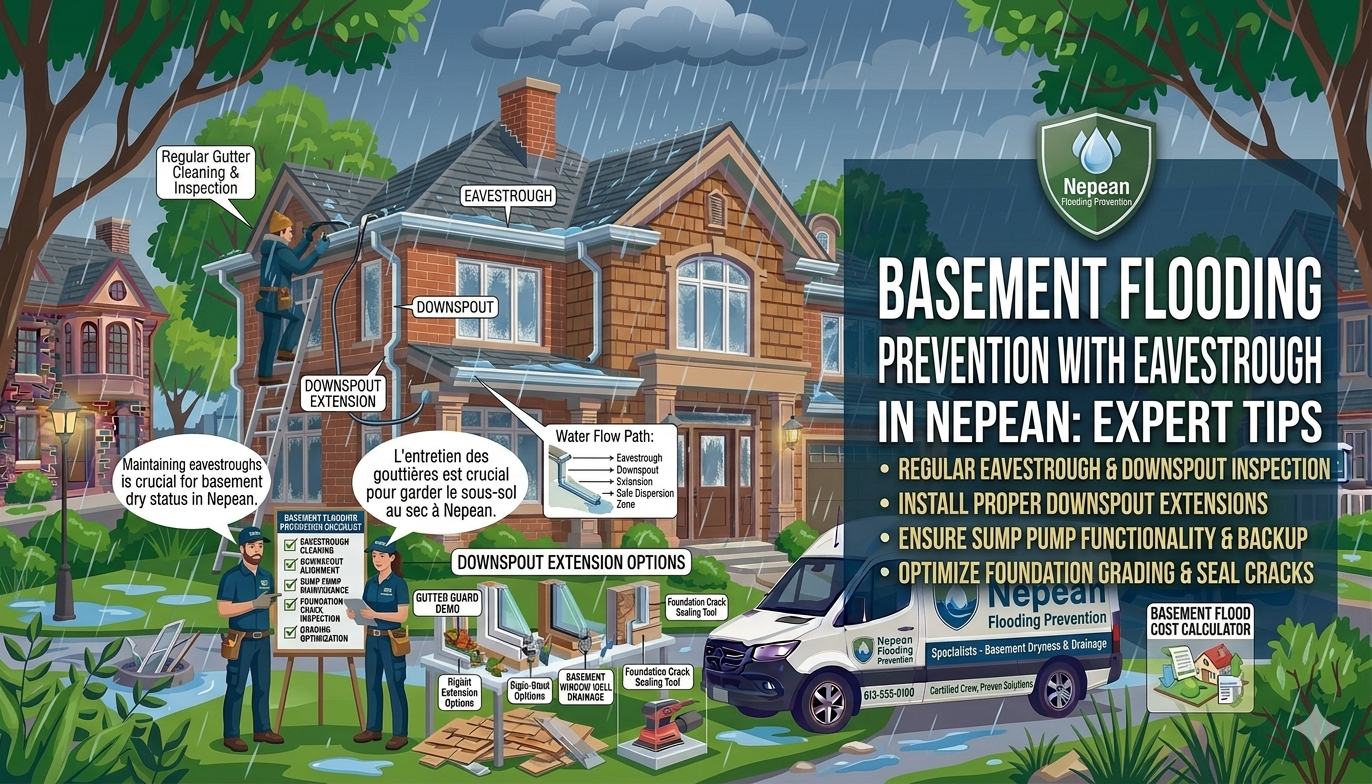
Basement flooding is one of the most expensive and stressful problems homeowners in Nepean can face. Between Ottawa’s heavy spring thaw, freezing winter conditions, and sudden rainstorms, water damage can quickly turn a healthy home into a costly repair project. One of the most overlooked but critical systems protecting your property is your eavestrough and drainage setup.
A properly designed eavestrough system controls rainwater, directs melting snow away from your foundation, prevents soil saturation, and protects your basement from leaks, cracks, mold, and structural deterioration. In neighborhoods throughout Nepean, aging gutters, clogged downspouts, and poor drainage grading are among the leading causes of basement moisture issues.
Homeowners often focus on waterproofing after damage happens, but prevention is far more affordable and effective. Investing in proper eavestrough installation, maintenance, and water management can save thousands in foundation repairs and interior restoration.
Modern homes in Ontario require advanced exterior drainage strategies that combine gutters, soffits, downspouts, siding integration, grading, and roofing systems into one complete moisture defense system.
For homeowners looking to protect their investment, professional eavestrough installation in Ottawa offers one of the most important first lines of defense against water infiltration.
Why Basement Flooding Happens in Nepean Homes
Nepean homes experience unique weather conditions that create major stress on exterior drainage systems. Heavy rainfall combined with freeze-thaw cycles causes water accumulation around foundations. When drainage systems fail, water naturally seeks the lowest entry point — your basement.
Common causes of basement flooding include:
- Clogged eavestrough systems
- Improperly sloped gutters
- Short downspout extensions
- Cracked foundations
- Poor soil grading
- Ice dam buildup
- Saturated landscaping
- Missing splash pads
- Improper siding-to-foundation sealing
According to the Government of Canada’s flooding prevention recommendations, proper drainage around the home is one of the most effective ways to reduce basement flood risk. Government of Canada Flood Protection Guide
When gutters overflow, water cascades directly beside the foundation walls. Over time, hydrostatic pressure forces moisture through cracks, joints, and porous concrete.
How Eavestrough Systems Protect Your Foundation
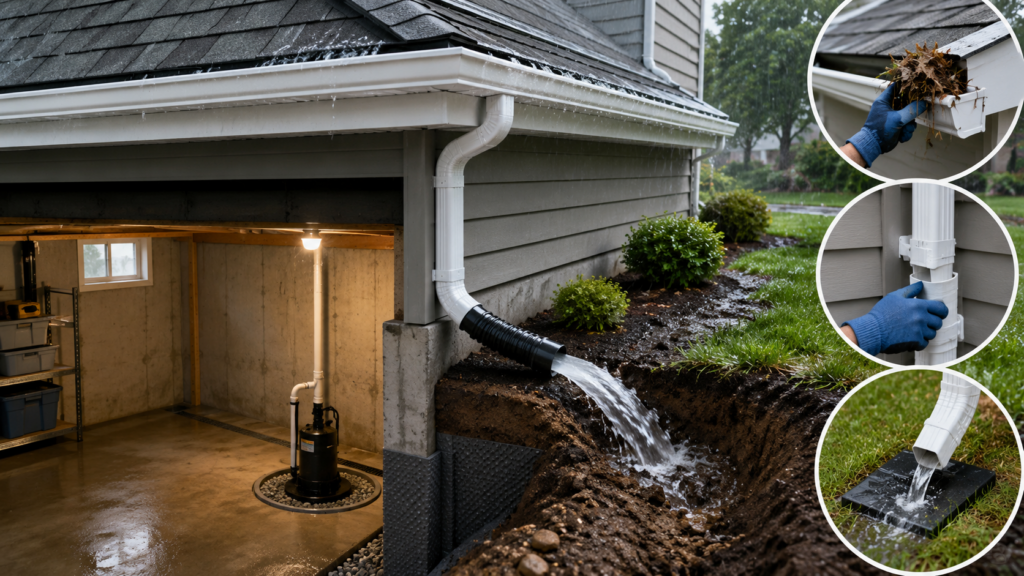
Your eavestrough system collects water from the roof and safely redirects it away from the house. Without effective drainage, thousands of gallons of water can pool near your foundation every year.
A professional drainage setup includes:
Seamless Gutters
Seamless aluminum gutters minimize leaks and improve water flow efficiency.
Proper Downspout Placement
Downspouts should extend at least 6–10 feet from the home foundation.
Slope Optimization
Incorrect gutter pitch leads to standing water and overflow.
Leaf Protection Systems
Gutter guards reduce debris accumulation and clogging.
Drainage Integration
Water should flow toward proper grading or underground drainage systems.
Many Nepean homeowners underestimate how quickly small drainage failures can escalate into major flooding events.
A complete services for siding and eavestrough systems helps create full exterior moisture protection for Ottawa-area homes.
Warning Signs Your Eavestrough System Is Failing
Early warning signs often appear long before a basement flood occurs.
Overflowing Gutters During Rain
If water spills over the edges during storms, your gutters are either clogged or undersized.
Pooling Water Near Foundation
Standing water around your home perimeter is extremely dangerous.
Basement Dampness
Musty odors or damp basement walls often indicate exterior drainage issues.
Ice Dams in Winter
Ice buildup causes water backup beneath roofing materials and behind siding.
Visible Foundation Cracks
Water pressure can slowly widen foundation cracks over time.
Mold or Mildew
Excess moisture creates ideal conditions for mold growth.
For homeowners dealing with siding moisture concerns, understanding how to spot hidden water damage behind siding can help identify early structural problems before they worsen.
The Importance of Proper Downspout Extensions
One of the biggest mistakes homeowners make is allowing downspouts to discharge too close to the foundation.
Even a perfectly functioning gutter system becomes ineffective if water is released directly beside the house.
Professional contractors recommend:
- Minimum 6-foot extensions
- Splash blocks for erosion prevention
- Underground drainage piping
- Proper grading slopes
- Seasonal inspection of discharge areas
In Nepean’s clay-heavy soil conditions, water absorption happens slowly. This means runoff can remain near the foundation for extended periods.
Strategically designed downspout repair and drainage systems help reduce saturation and protect basement walls.
Why Seamless Eavestrough Systems Perform Better
Older sectional gutter systems often fail at connection joints. Over time, expansion and contraction create leaks that allow water to drip directly beside the home.
Seamless systems provide:
- Fewer leak points
- Better structural strength
- Improved appearance
- Reduced maintenance
- Longer lifespan
- Higher water capacity
Modern seamless aluminum systems are ideal for Ottawa’s changing weather conditions.
Many homeowners upgrading their exterior also choose seamless aluminum gutters in Barrhaven because they provide better long-term durability and water management performance.
How Ice Dams Lead to Basement Moisture Problems
Winter weather creates major risks for homes throughout Nepean.
Ice dams form when attic heat melts rooftop snow, which then refreezes near the roof edge. This trapped water can:
- Overflow gutters
- Leak beneath shingles
- Soak fascia boards
- Damage siding
- Increase foundation saturation
Poorly insulated homes often experience worsening ice dam formation.
The Ontario government provides additional recommendations for moisture and drainage management in residential buildings. Ontario Building Code Resource Guide
Preventative upgrades such as heated gutter systems, insulation improvements, and professional roof ventilation dramatically reduce winter flooding risks.
The Role of Siding and Exterior Cladding in Water Protection
Many homeowners only focus on gutters while ignoring the surrounding exterior envelope.
Your siding system works together with your eavestrough system to protect against moisture intrusion.
Proper siding installation includes:
- Flashing systems
- Vapor barriers
- Rainscreen gaps
- Sealed penetrations
- Water-resistant sheathing
When siding deteriorates, water can penetrate wall cavities and eventually reach the basement area.
Understanding eavestrough and siding integration is essential for complete home moisture protection.
Why Professional Installation Matters
Improper DIY gutter installation often causes more problems than it solves.
Common installation mistakes include:
- Incorrect pitch angles
- Loose fascia attachment
- Inadequate fasteners
- Poor downspout placement
- Improper gutter sizing
Professional installers evaluate:
- Roof square footage
- Water volume capacity
- Drainage flow patterns
- Foundation grading
- Snow load conditions
Homes in Nepean frequently require customized drainage designs due to varying lot slopes and older subdivision layouts.
Hiring experienced exterior contractors ensures your drainage system performs effectively year-round.
How Landscaping Impacts Basement Flooding
Landscaping can either help or worsen drainage conditions around your home.
Common Landscaping Problems
- Mulch buildup against siding
- Negative grading toward foundation
- Dense garden beds trapping moisture
- Improper retaining walls
- Blocked drainage paths
Best Drainage Landscaping Practices
- Maintain positive grading away from home
- Use gravel drainage zones
- Keep plants away from foundation
- Install French drains where necessary
- Avoid excessive watering near walls
Exterior grading is often overlooked but plays a massive role in flood prevention.
The Financial Cost of Ignoring Drainage Issues
Many homeowners delay repairs because they underestimate the financial consequences of water damage.
Potential basement flooding costs include:
| Damage Type | Estimated Cost |
|---|---|
| Basement water extraction | $2,000–$8,000 |
| Foundation crack repairs | $5,000–$20,000 |
| Mold remediation | $3,000–$15,000 |
| Flooring replacement | $4,000–$12,000 |
| Structural repairs | $10,000+ |
By comparison, proactive eavestrough maintenance and drainage upgrades are far more affordable.
Routine inspections can identify issues before they become emergencies.
Seasonal Eavestrough Maintenance Tips for Nepean Homes
Spring Maintenance
- Remove winter debris
- Check for ice damage
- Inspect downspouts
- Test water flow
Summer Maintenance
- Monitor storm drainage
- Secure loose fasteners
- Clean gutter guards
Fall Maintenance
- Remove leaves and twigs
- Prepare for freezing temperatures
- Inspect roof runoff patterns
Winter Maintenance
- Watch for ice dam formation
- Clear dangerous snow accumulation
- Inspect attic ventilation
Professional annual maintenance significantly extends system lifespan.
Many homeowners schedule eavestrough cleaning in Nepean before winter to prevent seasonal overflow problems.
Signs Your Basement Flood Risk Is Increasing
Homeowners should watch carefully for:
- Efflorescence on basement walls
- Peeling paint
- Persistent humidity
- Wet insulation
- Warped flooring
- Rust stains
- Exterior soil erosion
These warning signs usually indicate worsening drainage conditions.
Early intervention can prevent catastrophic structural damage.
How Climate Change Is Increasing Flood Risks in Ottawa
Extreme weather events are becoming more frequent across Ontario.
Heavier rainfall and rapid snowmelt increase stress on aging residential drainage systems.
Modern eavestrough upgrades now prioritize:
- Larger-capacity gutters
- Oversized downspouts
- Enhanced drainage routing
- Ice-resistant systems
- Improved overflow protection
Homes built decades ago often lack sufficient drainage capacity for today’s climate conditions.
Upgrading your exterior water management system improves both property protection and long-term resale value.
Choosing the Right Eavestrough Contractor in Nepean
Not all contractors provide the same quality workmanship.
Look for Contractors That Offer:
- Seamless aluminum systems
- Detailed drainage assessments
- Warranty-backed installations
- Proper fascia inspections
- Ice prevention expertise
- Full exterior integration knowledge
Ask contractors about:
- Gutter gauge thickness
- Fastener spacing
- Drainage calculations
- Downspout sizing
- Winter performance considerations
A qualified contractor will design a complete moisture management strategy rather than simply replacing gutters.
The Long-Term Benefits of Flood Prevention Investments
Protecting your basement provides benefits far beyond avoiding water damage.
Advantages Include:
- Higher property value
- Reduced mold risk
- Better indoor air quality
- Lower insurance claims
- Improved structural longevity
- Enhanced curb appeal
- Better energy efficiency
Water management improvements are among the smartest investments homeowners can make in Nepean’s climate.
Modern drainage systems protect not only the foundation, but the entire building envelope.
Conclusion
Basement flooding prevention begins outside the home. A properly designed eavestrough and drainage system protects your foundation, siding, roofing, landscaping, and interior spaces from costly water damage.
In Nepean, where snow, rain, and freeze-thaw cycles create constant moisture challenges, proactive drainage maintenance is essential. Overflowing gutters, short downspouts, clogged systems, and poor grading can silently cause major structural damage over time.
Homeowners who invest in seamless eavestrough systems, professional installation, seasonal maintenance, and proper drainage planning dramatically reduce their risk of basement flooding and foundation deterioration.
Whether your home is experiencing early warning signs or you simply want preventative protection, upgrading your exterior water management system is one of the smartest long-term decisions you can make for your property.
For complete exterior protection solutions, homeowners can also explore professional contact and consultation services for customized drainage and moisture prevention assessments.
FAQs
How often should eavestroughs be cleaned in Nepean?
Most homes should have gutters cleaned at least twice per year — once in spring and once in fall. Homes with heavy tree coverage may require more frequent cleaning.
Can clogged gutters really cause basement flooding?
Yes. Overflowing gutters allow water to pool near the foundation, increasing hydrostatic pressure and raising the risk of basement leaks.
How far should downspouts extend from the house?
Downspouts should discharge water at least 6–10 feet away from the foundation whenever possible.
Are seamless gutters worth the investment?
Seamless systems reduce leaks, improve durability, and require less maintenance compared to sectional gutters.
What are the warning signs of poor drainage around a home?
Pooling water, foundation cracks, basement humidity, mold smells, siding damage, and overflowing gutters are all signs of drainage problems.