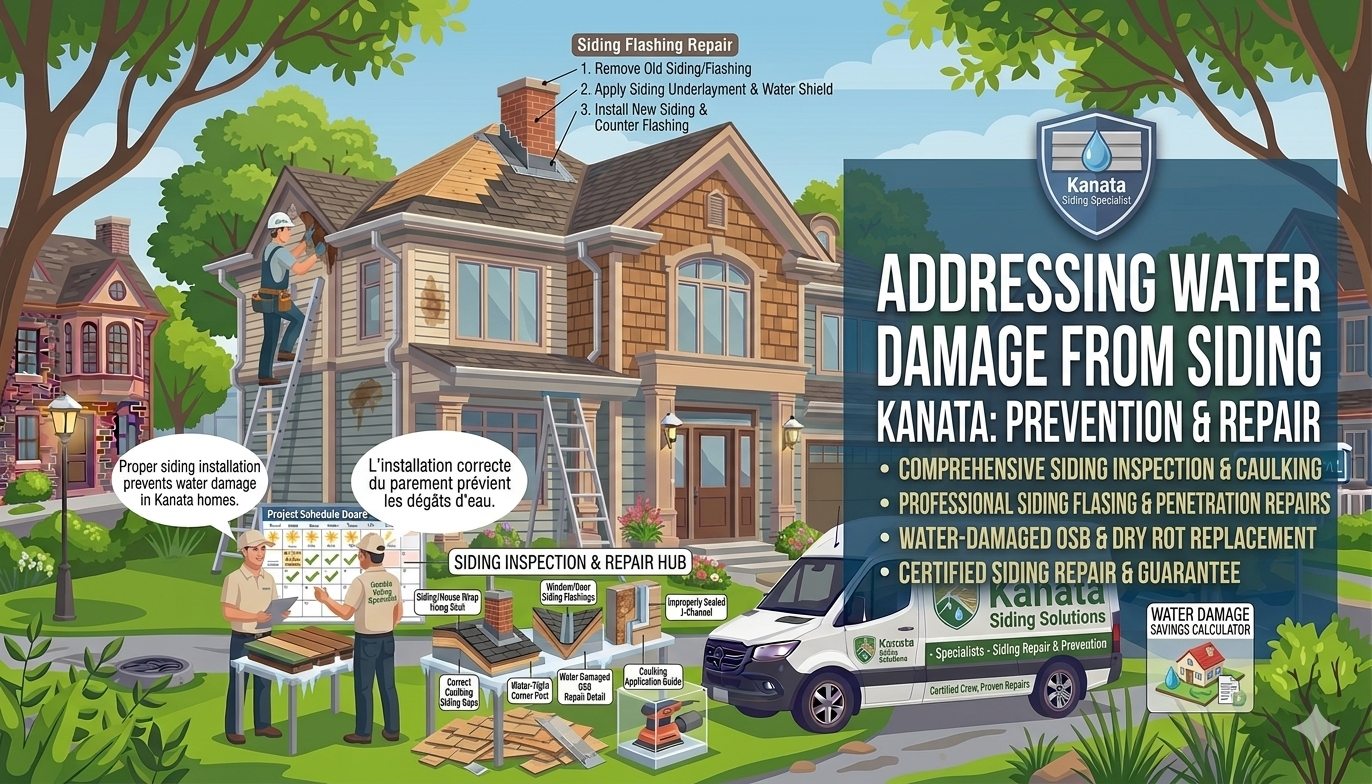
Kanata homeowners face harsh seasonal weather conditions that can silently destroy exterior siding systems over time. Heavy snow accumulation, freeze-thaw cycles, wind-driven rain, ice dams, and poor drainage create the perfect environment for moisture intrusion behind siding. Once water penetrates beneath the surface, the damage spreads quickly through sheathing, insulation, framing, and even interior drywall.
What makes siding-related water damage especially dangerous is that it often remains hidden for months or years before visible signs appear. By the time homeowners notice warped siding, bubbling paint, mold smells, or soft wall sections, extensive structural deterioration may already exist beneath the exterior cladding.
Proper siding installation and moisture management are essential for protecting homes in Kanata from long-term damage, costly repairs, mold growth, and energy inefficiency.
Homeowners looking to improve overall exterior durability should also explore professional siding contractor services in Ottawa to ensure their home is properly protected against Ottawa’s climate conditions.
Common Causes of Water Damage Behind Siding
1. Improper Siding Installation
Poor workmanship is one of the leading causes of siding leaks in Kanata homes. Incorrect fastening, missing flashing, improper overlap spacing, and lack of drainage gaps allow moisture to penetrate the building envelope.
Many contractors skip critical waterproofing components such as:
- House wrap
- Drip caps
- Flashing tape
- Ventilation gaps
- Proper sealants
Without these layers, siding becomes vulnerable during heavy storms and snow melts.
Kanata homeowners can learn more about proper installation techniques through this detailed guide on what to expect during a siding installation.
2. Cracked or Warped Siding Panels
Over time, siding materials expand and contract because of extreme temperature changes. Ottawa winters are especially hard on vinyl and older wood siding.
When panels crack, warp, or separate:
- Water enters behind the siding
- Moisture becomes trapped
- Mold begins forming
- Wood rot develops
Even small gaps can allow major moisture infiltration during wind-driven rainstorms.
3. Missing Flashing Around Windows and Doors
Window and door openings are among the most vulnerable areas on any home exterior. Improper flashing installation causes water to travel directly behind siding and into the wall cavity.
This often leads to:
- Rotting window frames
- Interior drywall stains
- Insulation damage
- Hidden mold growth
The Government of Canada highlights the importance of exterior moisture control in residential construction through the official Canada Mortgage and Housing Corporation resource:
https://www.cmhc-schl.gc.ca/
Proper flashing systems dramatically reduce moisture penetration risks.
4. Clogged Eavestroughs and Poor Drainage
Overflowing gutters dump water directly against siding walls. In Kanata, ice buildup and leaf accumulation frequently block eavestrough systems during seasonal changes.
Excessive water exposure near siding edges accelerates deterioration.
Homes with poor drainage often develop:
- Foundation moisture issues
- Rotting starter strips
- Siding discoloration
- Basement leaks
Homeowners should regularly inspect and maintain their drainage systems using professional eavestrough installation services in Ottawa.
Warning Signs of Hidden Water Damage Behind Siding
Warping or Buckling Panels
If siding panels appear uneven, swollen, or detached from the wall, moisture is likely trapped underneath.
Vinyl siding especially reacts visibly to moisture damage.
Mold or Mildew Smells
Persistent musty odors inside the home may indicate mold growth behind exterior walls.
This is particularly common after:
- Spring thaw periods
- Heavy rainfall
- Ice dam leaks
Peeling Interior Paint
When moisture enters the wall assembly, interior paint begins bubbling or peeling near windows and exterior-facing walls.
Soft Exterior Walls
Press gently against siding areas. Soft or spongy sections often indicate rotted sheathing beneath the cladding.
High Energy Bills
Water-damaged insulation loses effectiveness quickly. Homes with hidden moisture often experience:
- Drafts
- Cold walls
- Increased heating costs
- Reduced HVAC efficiency
Homeowners concerned about insulation performance should review this guide on how siding impacts home insulation in real numbers.
How Ottawa Weather Accelerates Siding Water Damage
Freeze-Thaw Cycles
Kanata experiences repeated freeze-thaw cycles throughout winter and spring. Water trapped behind siding expands when frozen, widening cracks and gaps.
This constant expansion damages:
- Fasteners
- Caulking
- Trim systems
- Sheathing
Heavy Snow Accumulation
Snow buildup against siding walls traps moisture for extended periods. Melting snow repeatedly saturates vulnerable areas near foundations and starter strips.
Wind-Driven Rain
Strong Ottawa storms push water horizontally against siding systems. Poorly installed seams quickly allow penetration.
Humidity and Condensation
Poor ventilation behind siding traps interior moisture, causing condensation buildup during seasonal humidity changes.
The Ontario Building Code emphasizes proper moisture management and ventilation practices:
https://www.ontario.ca/page/building-code
The Hidden Dangers of Ignoring Siding Water Damage
Structural Rot
Moisture eventually destroys wooden framing and structural supports.
Repair costs rise dramatically once rot spreads beyond exterior sheathing.
Toxic Mold Growth
Dark, damp wall cavities create ideal mold conditions.
Exposure may contribute to:
- Respiratory irritation
- Allergy symptoms
- Indoor air quality issues
Pest Infestations
Moisture-damaged wood attracts:
- Carpenter ants
- Rodents
- Insects
- Termites
Reduced Home Value
Visible siding damage and moisture issues significantly reduce resale value.
Home inspectors commonly identify siding moisture problems during property sales.
Best Siding Materials for Water Resistance in Kanata
Vinyl Siding
Vinyl remains one of the most popular siding choices because it resists moisture effectively when properly installed.
Benefits include:
- Low maintenance
- Affordable pricing
- Good weather resistance
- Mold resistance
Homeowners comparing materials can review vinyl vs aluminum siding in Ottawa.
Fiber Cement Siding
Fiber cement offers excellent durability and moisture protection.
Advantages:
- Fire resistance
- Minimal expansion/contraction
- Long lifespan
- Superior freeze-thaw performance
Engineered Wood Siding
Modern engineered wood siding includes advanced moisture barriers and protective coatings.
However, proper ventilation remains essential.
Metal Siding
Metal siding performs extremely well in wet climates due to:
- Water resistance
- Mold resistance
- Longevity
- Minimal maintenance
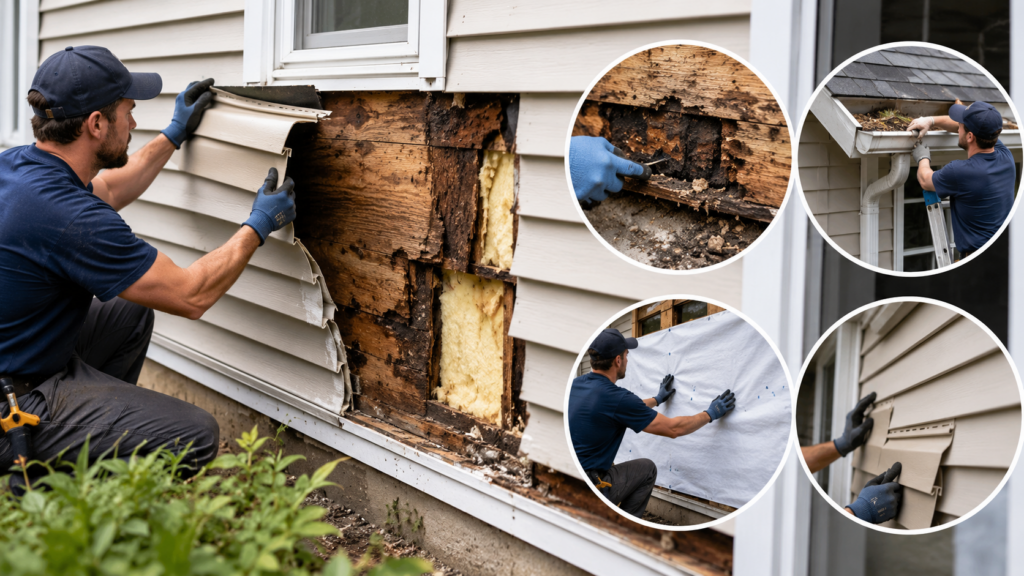
How Professionals Repair Water-Damaged Siding
Step 1: Moisture Inspection
Contractors first identify the full extent of moisture infiltration using:
- Moisture meters
- Thermal imaging
- Visual inspections
Step 2: Siding Removal
Damaged siding panels are carefully removed to expose the affected wall assembly.
Step 3: Sheathing and Framing Repairs
Rotten wood and compromised sheathing must be replaced completely before new siding installation begins.
Step 4: Waterproofing Improvements
Professionals install:
- House wrap
- Flashing systems
- Drainage planes
- Ventilation gaps
These systems help prevent future moisture issues.
Step 5: New Siding Installation
New siding is installed according to modern building standards for Ottawa climate conditions.
Homeowners considering full replacement can explore siding repair and replacement services.
How to Prevent Water Damage Behind Siding
Schedule Annual Exterior Inspections
Professional inspections identify small issues before they become major repairs.
Inspections should include:
- Flashing
- Caulking
- Ventilation
- Drainage
- Siding fasteners
Clean Gutters Regularly
Blocked eavestroughs are a major contributor to siding moisture problems.
Gutters should be cleaned:
- In spring
- In late fall
- After major storms
Repair Small Cracks Immediately
Even tiny siding gaps allow water infiltration over time.
Delaying repairs dramatically increases costs later.
Maintain Proper Landscaping Drainage
Avoid allowing soil, mulch, or plants to trap moisture against siding walls.
Water should always drain away from the home foundation.
Install Proper Ventilation Systems
Ventilation behind siding helps moisture escape before mold and rot develop.
Rainscreen systems are especially beneficial for Ottawa homes.
Why Professional Installation Matters
DIY siding work often creates hidden vulnerabilities that homeowners cannot detect immediately.
Experienced siding contractors understand:
- Ottawa weather conditions
- Building code requirements
- Moisture management systems
- Flashing integration
- Freeze-thaw protection
Improper installation frequently voids manufacturer warranties and leads to premature failure.
Homeowners seeking professional expertise should review this resource on how to choose a siding contractor you can trust.
When Should You Replace Instead of Repair Siding?
Repairs may no longer be cost-effective if:
- Water damage is widespread
- Mold has spread extensively
- Panels are severely warped
- Insulation is compromised
- Structural framing is damaged
In many cases, full siding replacement provides:
- Better long-term protection
- Improved energy efficiency
- Higher property value
- Lower maintenance costs
The Long-Term Value of Proper Siding Protection
High-quality siding systems do far more than improve curb appeal.
Properly installed siding protects:
- Structural integrity
- Indoor comfort
- Energy efficiency
- Air quality
- Property value
For Kanata homeowners, investing in moisture-resistant siding systems helps prevent thousands of dollars in future repairs.
Conclusion
Water damage behind siding is one of the most destructive hidden problems affecting homes in Kanata and the Ottawa region. Because moisture intrusion often develops silently, homeowners must remain proactive with inspections, maintenance, and repairs.
Proper flashing, drainage, ventilation, and professional siding installation are essential defenses against long-term structural damage. Whether dealing with cracked vinyl panels, hidden mold, or aging siding systems, immediate action helps prevent escalating repair costs.
Modern siding systems combined with expert installation can dramatically improve durability, efficiency, and protection against Ottawa’s demanding climate conditions.
For complete exterior protection solutions, homeowners should contact the team at Kaloozie Comfort Contact Page.
Frequently Asked Questions
How do I know if water is getting behind my siding?
Common warning signs include warped siding, mold smells, bubbling paint, soft walls, and rising energy bills.
Can water-damaged siding be repaired without replacement?
Minor localized damage can often be repaired, but widespread moisture intrusion may require full siding replacement.
What siding material is best for wet Canadian climates?
Fiber cement, insulated vinyl, and metal siding perform exceptionally well in Ottawa’s freeze-thaw climate.
How often should siding be inspected?
Professional inspections are recommended at least once annually and after major storms.
Does homeowners insurance cover siding water damage?
Coverage depends on the cause of the damage and policy details. Sudden storm-related damage may qualify, while long-term neglect often does not.