
Living near the water is a dream for many homeowners. The serenity, the views, and the lifestyle are unmatched. But coastal living comes with challenges—salt spray, high humidity, heavy winds, and constant exposure to UV rays. Choosing the right siding material for waterfront or coastal homes isn’t just about aesthetics; it’s about protection, durability, and long-term value. This guide explores the best siding options tailored for homes in coastal environments, with detailed insights on materials, benefits, and expert recommendations.
Why Coastal Homes Need Special Siding Considerations
The Harsh Reality of Salt and Moisture
Waterfront properties are constantly exposed to salt-laden air and heavy moisture. These conditions can accelerate corrosion, warping, mold, and premature wear. Traditional siding options often fail under these stresses, making material selection critical.
High Wind and Storm Resistance
Coastal storms bring strong winds, flying debris, and heavy rain. Siding must provide resilience against impact and prevent water infiltration.
UV Exposure
Direct and prolonged sunlight can cause fading, cracking, or deterioration. Coastal homeowners need siding with advanced UV resistance to maintain curb appeal.
Top Siding Materials for Waterfront Homes
1. Fiber Cement Siding
Fiber cement siding is one of the most recommended materials for coastal homes. It is resistant to rot, insects, and salt spray, making it a superior choice for humid environments.
- Advantages:
- Highly durable and long-lasting
- Non-combustible, adding fire protection
- Resistant to swelling, warping, and cracking
- Can mimic wood, stucco, or stone aesthetics
- Best Use Case: Homeowners who want a natural look with minimal maintenance.
- Further Reading: See our detailed breakdown on Fiber Cement Siding Service in Ottawa.
2. Vinyl Siding (Premium & Insulated Options)
Vinyl siding is cost-effective and versatile. For coastal areas, insulated vinyl siding provides added protection against wind and moisture.
- Advantages:
- Budget-friendly with many style options
- Easy to maintain and clean
- Resistant to rot and insects
- Insulated vinyl helps improve energy efficiency
- Limitations: Standard vinyl may warp under intense UV exposure, so premium-grade options are recommended.
- Related Guide: Learn about the Benefits of Insulated Siding.
3. Engineered Wood Siding
Engineered wood siding offers the warmth of natural wood with enhanced durability. It is treated to resist moisture, mold, and pests.
- Advantages:
- Authentic wood-like appearance
- Stronger resistance compared to natural wood
- Can withstand high humidity and salt air
- Lightweight and easy to install
- Limitation: Requires routine painting or sealing to maximize lifespan.
4. Aluminum and Metal Siding
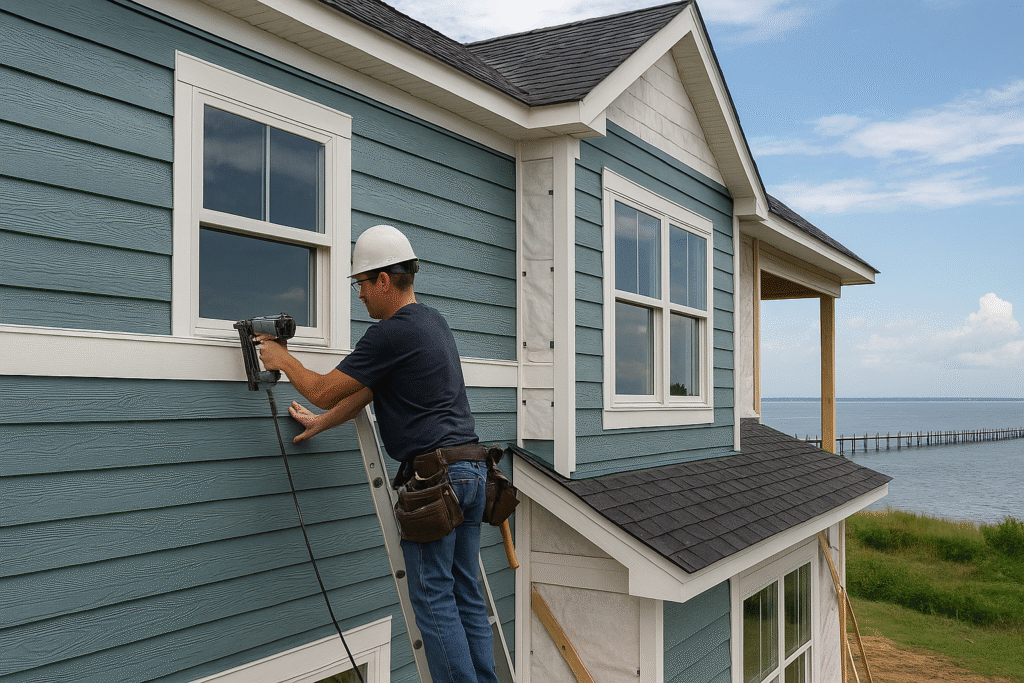
Metal siding, particularly aluminum, is a strong contender for coastal environments. It resists corrosion when properly coated and stands up to heavy winds.
- Advantages:
- Excellent wind resistance
- Minimal maintenance when factory-finished
- Fire-resistant
- Lightweight and recyclable
- Consideration: Without protective coatings, aluminum may oxidize near saltwater.
- Further Reading: Compare Vinyl vs. Aluminum Siding to see which fits your project.
5. Stucco (for Specific Coastal Regions)
Stucco can be a viable option in drier coastal climates. When applied with modern sealing techniques, it resists wind and offers excellent insulation.
- Advantages:
- Smooth, clean appearance
- Strong wind resistance
- Natural insulation properties
- Limitation: Not suitable for extremely humid or wet coastal climates due to cracking risks.
Key Factors to Consider When Choosing Coastal Siding
Resistance to Salt and Moisture
Always prioritize siding with high moisture resistance. Salt in the air accelerates rust, rot, and decay. Fiber cement and insulated vinyl excel here.
Impact Resistance
Look for siding that can handle flying debris during storms. Metal siding and engineered wood are strong options.
Energy Efficiency
Waterfront homes often face fluctuating temperatures. Insulated siding can reduce energy bills by improving thermal performance.
Longevity and Maintenance
Low-maintenance siding ensures your home retains value without frequent replacements. Fiber cement and metal siding outperform wood in this regard.
Design and Aesthetic Considerations for Waterfront Homes
Blending with the Natural Landscape
Coastal architecture often emphasizes harmony with the environment. Neutral tones, weathered finishes, and natural wood appearances are popular.
Color Retention
Choose siding with advanced UV protection coatings. Premium vinyl and fiber cement hold color longer, preventing fading.
Architectural Styles
From Cape Cod cottages to modern beachfront villas, siding materials should align with architectural style while providing durability.
Expert Installation Matters
Even the best siding materials will fail if improperly installed. Hiring experienced professionals ensures proper sealing, alignment, and stormproofing. Explore Why Hiring a Siding Expert Is Your Best Option for insights on choosing the right contractor.
Sustainable and Eco-Friendly Siding Options
Waterfront homeowners often prioritize sustainability. Fiber cement and metal siding are recyclable, while engineered wood reduces reliance on old-growth timber. For environmentally conscious homeowners, see our insights on Eco-Friendly Roofing and Siding Options.
Government and Building Code Requirements
Coastal properties may fall under stricter building codes. In the U.S., the FEMA Coastal Construction Manual outlines best practices for wind and flood resistance (FEMA.gov). Similarly, resources from Canada.ca provide regulatory guidance for waterfront construction. Compliance not only ensures safety but also protects insurance eligibility.
Conclusion: Choosing the Right Siding for Coastal Homes
Waterfront homes demand siding that balances beauty, durability, and resilience. Fiber cement leads the pack for longevity, vinyl offers affordability with upgrades, and engineered wood provides authentic charm. Metal siding remains the strongest for storm-prone areas, while stucco is best reserved for dry coastal climates. By combining the right material with expert installation and proper maintenance, homeowners can enjoy their coastal lifestyle without sacrificing peace of mind.