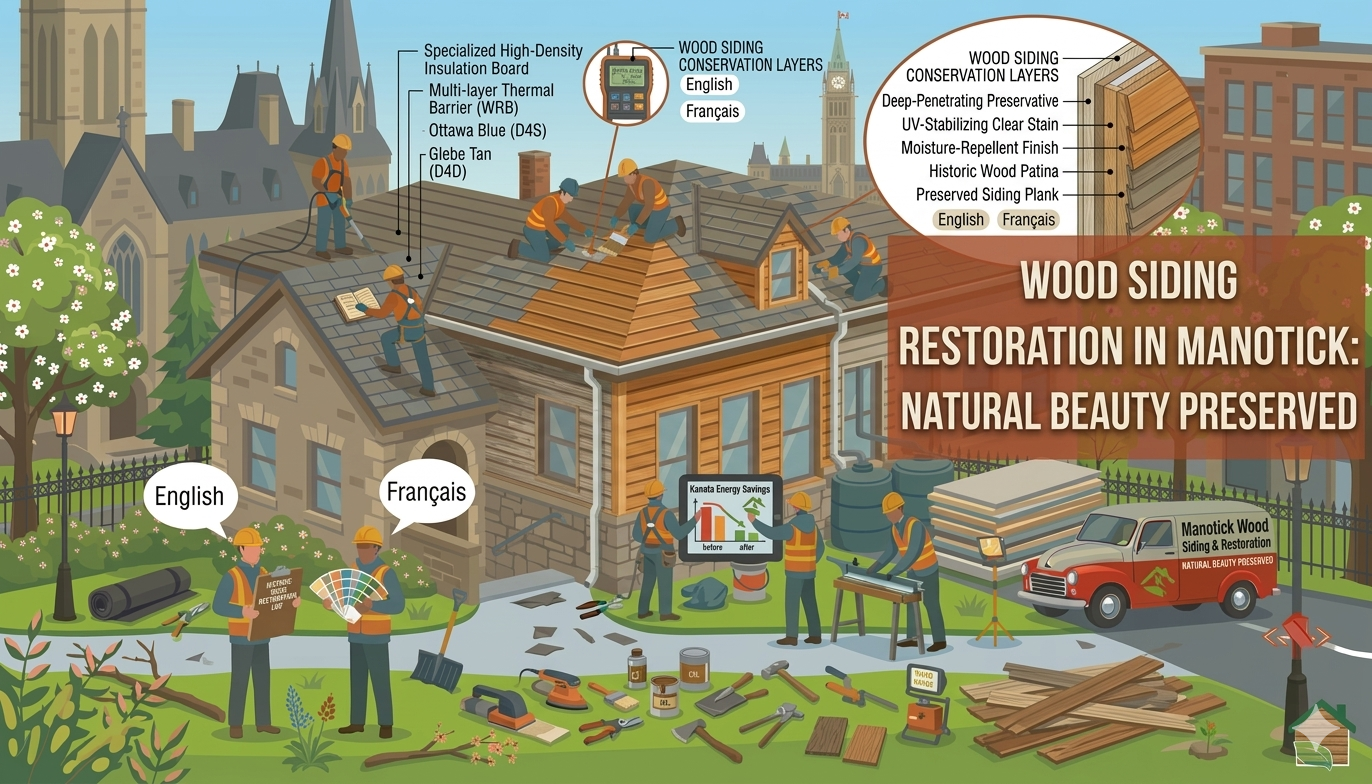
Wood siding has a character that newer synthetic materials often try to imitate but rarely match. In a place like Manotick, where homes often reflect warmth, craftsmanship, and timeless curb appeal, real wood siding remains one of the most visually striking exterior finishes available. It adds texture, depth, and a natural richness that suits village homes, custom properties, heritage-inspired builds, and upscale residential exteriors alike.
But wood siding is not a “set it and forget it” cladding. It lives on the outside of the home, exposed every day to sun, rain, humidity, freeze-thaw cycles, wind, insects, and the long Ontario winter. Over time, even beautiful wood siding can fade, crack, peel, cup, split, soften, or absorb moisture. When that happens, restoration becomes the smart path forward.
Wood siding restoration in Manotick is not simply about cosmetics. It is about protecting the structure beneath the cladding, preserving architectural value, extending material life, and keeping the home looking refined instead of tired. A properly restored wood exterior can transform a weathered façade into one that looks premium, cared for, and built to last.
Why Wood Siding Restoration Matters in Manotick
Manotick homeowners often place a high value on aesthetics, property character, and long-term upkeep. That makes wood siding restoration especially relevant in this area. Unlike full replacement, restoration focuses on preserving what is still worth saving while correcting deterioration before it becomes structural or financially painful.
Wood siding restoration matters because wood fails gradually. It does not always collapse dramatically or show obvious damage right away. Instead, it may begin with faded stain, hairline cracks, minor swelling around joints, soft spots near trim, or recurring paint blistering. Those small symptoms are often early warnings that the protective finish has broken down and moisture is starting to move where it should not.
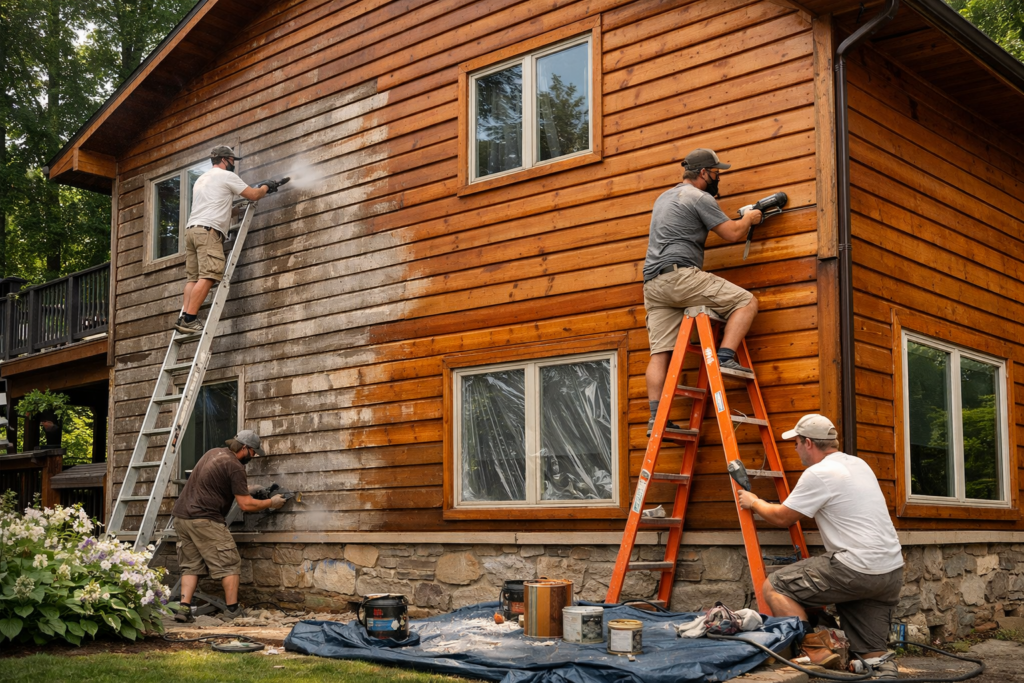
Restoration helps homeowners intervene at the right time. In many cases, a restoration program that includes inspection, targeted repairs, sanding, cleaning, caulking, priming, staining or painting, and sealing can add years of service life to the exterior. That means preserving the original appearance of the home while avoiding the cost and disruption of premature replacement.
For homeowners comparing materials or weighing the long-term demands of natural cladding, articles such as comparing vinyl vs wood siding: which is better for you help frame why wood remains desirable when maintained correctly.
Common Signs Your Wood Siding Needs Restoration
Wood siding rarely deteriorates all at once. More often, the signs develop in layers. The most obvious one is fading. A once-rich cedar tone may turn dull, grey, washed out, or uneven. Paint may lose adhesion, begin peeling, or show bubbles where moisture is trapped beneath the finish.
Other signs include:
Surface Cracking and Splitting
As wood expands and contracts with changing moisture and temperature, it can develop cracks. Small cracks may be repairable, but widespread splitting usually means the finish has failed and the boards are becoming vulnerable.
Warping or Cupping
Boards that no longer sit flat may be absorbing excess moisture. This can allow water intrusion behind the cladding and speed up deterioration of sheathing or framing.
Soft Spots and Rot
If a screwdriver easily sinks into a board, the siding may already be decaying. This is especially common near the bottom edges, around windows, beneath rooflines, and close to eavestrough discharge points.
Mold, Mildew, or Algae Staining
Discoloration is not always just dirt. Organic growth signals persistent moisture retention, shade exposure, poor drainage, or inadequate drying.
Gaps Around Trim and Joints
Movement in wood siding can open joints and create entry points for water and pests. These areas should be inspected before cosmetic work begins.
When homeowners notice those symptoms, restoration should not be delayed. Problems that begin on the finish can quickly move deeper into the wall assembly. That is why it also helps to understand how to spot hidden water damage behind siding before visible issues turn into expensive repairs.
What Wood Siding Restoration Actually Includes
Real restoration is more than pressure washing and a fresh coat of paint. A professional process starts with diagnosis. The goal is to determine what can be preserved, what needs localized repair, and whether the siding system is still fundamentally sound.
Inspection Comes First
Every restoration project should begin with a full exterior assessment. This includes checking for:
- loose or damaged boards
- rot at lower courses and corners
- failed caulking
- water entry around penetrations
- deteriorated trim
- peeling paint or failed stain
- flashing problems near windows, doors, and roof-to-wall transitions
- signs of underlying moisture in the wall assembly
Inspection separates appearance issues from system issues. A home may look like it only needs repainting, but if flashing or drainage details are compromised, the finish will fail again.
Cleaning and Surface Preparation
Preparation is where the long-term success of a restoration project is decided. Dirt, mildew, chalky residue, flaking finish, and loose fibres must be removed. Depending on the condition of the siding, this may involve soft washing, controlled rinsing, scraping, sanding, or surface neutralization.
Aggressive cleaning methods can damage wood fibres, force moisture deeper into the siding, or roughen the surface. Proper preparation should clean the wood without degrading it.
Repairing Damaged Areas
Not every board needs to be replaced. One of the advantages of restoration is that localized repairs can preserve much of the original material. Contractors may replace isolated boards, patch minor defects, reinforce loose sections, or restore trim profiles that define the character of the home.
If the damage is widespread, restoration may no longer be the best value. In those situations, homeowners should evaluate whether partial repair is just delaying a bigger problem. That is where guidance around siding repair in Ottawa: when to fix vs replace becomes especially useful.
Priming, Staining, Painting, and Sealing
Once the substrate is sound and dry, the finish system can be applied. This may include primer plus paint, or a premium stain system depending on the look of the home and the condition of the wood.
Transparent and semi-transparent stains highlight grain and natural variation. Solid stains and paints offer more UV protection and a more uniform appearance. The right choice depends on the siding species, prior coating history, desired maintenance cycle, and design goals.
Why Manotick Homes Need a Smarter Restoration Strategy
Manotick is not just another neighbourhood. The homes often carry stronger architectural identity and more visible exterior detailing than standard suburban developments. That means restoration work must respect proportions, trim depth, shadow lines, and overall design integrity.
Wood siding restoration in Manotick also has to account for local environmental realities. Homes in this area may face moisture from landscaping, tree shade, variable airflow, splash-back from grade, and seasonal exposure patterns that differ from one elevation to another. South-facing walls may be sun-beaten and dry, while north-facing walls remain damp longer and develop biological staining.
Because of that, restoration should never be approached as a one-size-fits-all exterior repaint. The right strategy depends on the home’s age, exposure, existing coating, drainage conditions, and the quality of previous workmanship.
Homeowners planning broader exterior upgrades may also want to review premium siding in Manotick luxury upgrades to align restoration work with long-term curb appeal and neighbourhood expectations.
Restore or Replace? How to Make the Right Call
One of the most important decisions is whether the siding is a good candidate for restoration at all. Restoration makes sense when the majority of boards are still structurally sound and the problems are mainly finish-related or limited to isolated areas. It is often the best choice when the wood species is high quality, the profile is architecturally important, or the homeowner wants to retain a natural wood appearance.
Replacement becomes more logical when there is widespread rot, major water intrusion, repeated finish failure, insect damage, or extensive board movement. If too many sections need to be removed, labour costs can approach the cost of a new system while still leaving older material in place.
A useful principle is this: restore when the wood is fundamentally healthy; replace when the substrate is no longer dependable. Many homeowners start with wood because they value authenticity, but once deterioration progresses, they begin comparing modern alternatives. That is where broader guidance such as wood vs engineered wood siding in Ottawa helps clarify what future-proofing options may look like if restoration is no longer practical.
The Biggest Enemies of Wood Siding
Understanding what damages wood siding helps homeowners protect their investment more effectively.
Moisture
Water is the biggest threat. Once protective coatings fail, wood begins to absorb moisture. Repeated wetting and drying weakens fibres, opens joints, and encourages decay.
UV Exposure
Sunlight breaks down finishes and dries wood unevenly. South and west elevations often show the earliest fading and coating failure.
Poor Drainage
Overflowing eavestroughs, short downspouts, and splash-back from hard surfaces can soak lower walls and accelerate rot.
Improper Caulking
Bad caulking can trap moisture instead of blocking it. Caulk belongs in some joints, but not everywhere. Misuse often creates concealed damage.
Deferred Maintenance
The most expensive wood siding projects often begin as inexpensive maintenance items that were postponed too long.
Homeowners looking to extend siding life should adopt a planned maintenance mindset. Resources like how to maintain your siding for longevity reinforce how regular inspections and seasonal upkeep prevent much larger restoration bills later.
Best Finishes for Restored Wood Siding
The finish chosen after restoration has a direct impact on appearance, durability, and maintenance frequency.
Transparent and Semi-Transparent Stains
These are ideal when the natural grain is a major design feature. They preserve the organic look of cedar and other premium woods but generally require more maintenance over time than heavier film-forming systems.
Solid Stains
Solid stains provide a painted look with good grain masking while still soaking into the wood more than traditional paint. They are often a strong middle-ground option for older siding with cosmetic variation.
Exterior Paint Systems
High-quality paint can offer strong UV resistance and a crisp finished appearance. It is often chosen when homeowners want a clean, upscale façade or when older repairs need to be visually unified.
The correct coating depends on moisture management, wood condition, preparation quality, and ongoing upkeep. A beautiful finish applied over damp or unstable wood is simply a short-term cover.
For foundational best practices around moisture and durability, homeowners can also consult Canada Mortgage and Housing Corporation resources and exterior building guidance from Natural Resources Canada, both of which offer helpful information related to building performance, energy durability, and envelope care.
How Wood Siding Restoration Protects Home Value
Curb appeal is not a superficial issue. Exterior condition shapes how a home is perceived by guests, neighbours, appraisers, and future buyers. Wood siding that looks neglected can make an otherwise strong property appear under-maintained. Freshly restored wood, on the other hand, signals pride of ownership and attention to detail.
In premium residential areas, exterior presentation matters even more. Manotick homes often compete on beauty, lot quality, and architectural finish. Restored wood siding can elevate all three. It highlights craftsmanship, improves colour harmony, sharpens trim lines, and makes landscaping feel more intentional.
Beyond appearance, restoration can also protect home value by addressing hidden moisture vulnerabilities before they become disclosure issues during a sale. Buyers are far more confident when a home’s exterior looks well-managed and properly maintained rather than patched together.
How Often Should Wood Siding Be Restored?
There is no single timeline that fits every home. The maintenance cycle depends on exposure, finish type, wood species, and installation quality. Some surfaces need attention sooner on sun-heavy elevations or moisture-prone walls. Others remain stable for years with only light upkeep.
A better approach is to inspect annually and act based on condition, not guesswork. Homeowners should look for finish wear, open joints, softness, discoloration, and recurring water marks. Catching deterioration early usually turns a major restoration into a more manageable service visit.
What Homeowners Should Expect From a Professional Restoration Contractor
Not every contractor who paints exteriors understands wood siding restoration. A proper restoration contractor should evaluate more than appearance. They should understand wall moisture behavior, flashing, trim integration, board movement, coating compatibility, and repair sequencing.
A professional approach should include:
- clear condition assessment
- honest distinction between repairable and non-repairable sections
- detailed prep plan
- moisture-aware finishing strategy
- attention to joints, trim, and drainage details
- realistic maintenance expectations after completion
Homeowners should also expect communication about what restoration can and cannot do. Good restoration dramatically improves the look and lifespan of wood siding, but it does not magically reverse severe structural decay. The best contractors are transparent about that from the start.
Wood Siding Restoration vs New Siding Installation
Restoration preserves original material and architectural authenticity. Replacement offers a reset with new product warranties, new moisture control layers, and often lower maintenance depending on the material selected.
For homeowners committed to the natural appearance of real wood, restoration is often the more satisfying choice when the siding remains salvageable. It protects the aesthetic that made the house attractive in the first place. For homeowners facing repeated repairs, chronic moisture issues, or heavy deterioration, replacement may offer better long-term economics.
The right answer depends on the house, not a generic sales pitch.
Final Thoughts on Preserving Natural Beauty in Manotick
Wood siding restoration in Manotick is about more than saving boards. It is about preserving the visual identity of the home, protecting the structure behind the exterior, and maintaining the kind of curb appeal that gives wood its lasting value. When done properly, restoration revives colour, restores clean lines, reinforces weather protection, and extends the life of an exterior that still deserves to be seen.
Natural wood remains one of the most elegant cladding choices available. It feels warmer than synthetic alternatives, richer than flat factory finishes, and more connected to the character of the property. But that beauty only lasts when maintenance is proactive and restoration is handled with care.
For homeowners noticing fading, peeling, cracking, or moisture concerns, early action almost always leads to better outcomes. Restore the wood while it is still worth preserving, correct the weak points before damage spreads, and protect the home’s exterior with workmanship that respects both performance and design.
When it is time to assess your siding, compare restoration options, or plan a full exterior improvement strategy, the best next step is to connect through the Kaloozie Comfort contact page and request an expert evaluation tailored to your Manotick home.
FAQs
What is wood siding restoration?
Wood siding restoration is the process of inspecting, cleaning, repairing, preparing, and refinishing existing wood siding so it looks better, performs properly, and lasts longer without full replacement.
Is restoring wood siding cheaper than replacing it?
In many cases, yes. If most of the wood is still structurally sound, restoration is often more cost-effective than full replacement. If rot or water damage is widespread, replacement may provide better long-term value.
How do I know if my wood siding can be restored?
If the boards are mostly solid, damage is localized, and the main issues are finish failure, minor cracking, or isolated repairs, restoration is usually possible. Severe rot, deep moisture damage, and broad structural failure may point toward replacement.
How long does restored wood siding last?
That depends on the wood species, preparation quality, coating system, weather exposure, and maintenance habits. A properly restored wood exterior can provide many additional years of performance when inspected and maintained regularly.
What is the best finish for restored wood siding?
The best finish depends on the look you want and the condition of the wood. Transparent and semi-transparent stains preserve natural grain, while solid stains and paint offer stronger coverage and a more uniform finish.
Why is wood siding restoration important in Manotick?
Manotick homes often place a premium on exterior beauty and architectural character. Restoration helps preserve that natural elegance while protecting the home from moisture, decay, and premature material loss.