
Choosing the right vinyl siding color in Nepean is not a small design decision. It shapes curb appeal, influences resale perception, affects how architectural details are noticed, and determines whether a home looks timeless or dated within a few years. In a market where exterior appearance matters instantly, the right siding palette can make a property feel cleaner, newer, more valuable, and more cohesive with the surrounding neighborhood.
For homeowners in Nepean, color selection should never be based on a tiny sample chip alone. Local architecture, seasonal light, snow reflection, mature trees, roof color, brick tones, trim lines, and long-term maintenance expectations all matter. The best siding color is not simply the trendiest color. It is the one that fits the home’s structure, complements permanent exterior materials, performs visually in Ottawa’s changing seasons, and still looks strong years after installation.
Vinyl siding remains one of the most practical exterior cladding choices for homes in Nepean because it combines affordability, style flexibility, durability, and low maintenance. It is available in a wide range of modern and classic tones, from warm neutrals and soft greys to rich blues, earthy greens, and bold charcoal-inspired hues. Homeowners planning an exterior update can benefit from comparing styles, textures, and contrast levels before making a final decision. For a deeper overview of product options and performance, the homeowner’s guide to vinyl siding in Ottawa is a strong starting point for understanding what modern vinyl siding can offer.
Why Vinyl Siding Color Matters More Than Most Homeowners Think
Color is the first thing people notice from the street. Before they notice trim details, soffits, fascia, or the quality of installation, they notice whether the house feels balanced, fresh, inviting, or outdated. That emotional reaction happens quickly, and it matters for both pride of ownership and resale value.
A good siding color does several things at once. It visually sharpens the home’s shape, highlights the roofline, works with brick or stone accents, and helps the property feel intentional rather than pieced together. A poor siding color does the opposite. It can flatten the home’s best features, clash with the roof, make the façade feel heavier than it should, or cause trim and windows to disappear.
In Nepean, exterior design also has to stand up to dramatic seasonal shifts. A house that looks warm and elegant in summer should not feel dull and lifeless under grey winter skies. Snow reflection can make pale colors appear brighter. Tree cover can make cooler shades feel darker. South-facing elevations receive stronger sunlight and may show contrast differently than shaded front façades. That is why professional color planning is less about personal preference alone and more about choosing a finish that performs well in real-world conditions.
What Makes Nepean Homes Unique for Siding Color Selection
Nepean includes a broad mix of property styles, from older detached homes and split-level houses to updated suburban family homes, townhomes, and newer infill properties. That architectural variety means there is no one universal “best” siding color. The right answer depends on the home’s age, proportions, lot setting, and the fixed materials that are already in place.
Many Nepean homes have a combination of brick and siding, which requires careful tone matching. Red brick tends to work best with warm neutrals, creamy whites, taupes, and certain muted greens. Brown or beige brick often pairs well with greige, sandstone, clay, or softer modern earth tones. If the roof is black, dark brown, or weathered grey, the siding color must bridge both the masonry tones and the roof tones without creating visual conflict.
The neighborhood setting also matters. In streets with mature trees and established landscaping, softer natural palettes often look more elegant than extreme high-contrast combinations. In newer subdivisions, crisp modern contrasts such as off-white siding with black accents or medium grey siding with bright white trim may fit better. Exterior harmony does not mean copying nearby homes, but it does mean choosing a color that feels right within the streetscape.
The Most Popular Vinyl Siding Color Families for Nepean Homes
Warm Whites and Soft Off-Whites
Warm whites remain one of the strongest choices for homeowners who want a clean, classic, high-end look. These colors brighten the façade, make trim details stand out, and suit both traditional and transitional architecture. They also work extremely well when paired with black shutters, charcoal roofing, wood-tone front doors, or subtle stone accents.
Pure stark white can sometimes look too sharp under bright daylight or too cold in winter, so softer whites with creamy or warm undertones often perform better. In Nepean, where seasonal light can be harsh and reflective, this slightly softened approach tends to look more polished and less clinical.
Light Grey and Greige
Grey remains a dependable siding color family because it is versatile, modern, and broadly appealing. Light grey works well on homes with white windows, dark roofs, and simple trim packages. Greige, which blends grey and beige, is especially useful when a home has mixed undertones in brick, stone, or roofing materials.
Greige avoids the coldness of some greys while still feeling current. It is often one of the safest choices for homeowners who want resale-friendly design without looking bland. For homes where value and broad buyer appeal are priorities, siding shades that improve exterior perception can have a measurable impact. That is why many homeowners also review guidance on siding colors that boost Ottawa home value before finalizing a palette.
Taupe, Sand, and Earth-Toned Neutrals
These colors are ideal for homeowners who prefer warmth, subtlety, and a more natural look. Earth-toned vinyl siding works especially well on homes with tan brick, brown roofing, natural wood accents, or established landscaping. It feels grounded and mature without drawing too much attention.
This palette is also forgiving in everyday conditions. Dust, splashback, and seasonal buildup tend to be less noticeable than on pure white siding. For homeowners who want understated elegance, taupe and sand tones remain excellent choices.
Blue-Grey, Slate Blue, and Muted Coastal Tones
Blue-based siding colors have become more popular because they deliver personality without feeling risky. Muted blue-greys, slate blues, and stormy navy-inspired shades can make a home stand out while still looking refined. These colors work especially well with white trim, natural wood doors, and light stone accents.
On classic suburban homes in Nepean, muted blue siding can feel fresh and upscale. It suits both horizontal lap profiles and accent combinations that use shakes or vertical panels in gables.
Deep Charcoal and Dark Modern Colors
Dark siding colors create a bold, architectural look. They can make a home feel dramatically updated and highly custom, especially when paired with modern lighting, black-framed accents, or clean white trim. However, dark colors must be used carefully. They magnify design flaws, create stronger contrast, and may not suit every roofline or lot condition.
Some homeowners are drawn to dark exteriors for their striking appearance, but not every house carries them equally well. Before choosing a darker palette, it is wise to consider the practical and visual tradeoffs discussed in pros and cons of going dark with your siding color.
How to Match Vinyl Siding Color with Roof, Brick, and Trim
A successful exterior palette always begins with the elements that are hardest or most expensive to change. For most homeowners, that means the roof, brick, stone, windows, and front walkway. Siding should be chosen to unify these elements rather than compete with them.
Roof First, Siding Second
If the roof is black or charcoal, the siding palette can move in a modern direction with whites, greys, blue-greys, or even certain darker tones. If the roof is brown or weathered wood in appearance, warm neutrals usually work best. The goal is to create flow rather than visual division.
Brick Undertones Must Be Respected
Brick is not neutral. Red brick, orange brick, brown brick, and buff brick each carry undertones that can either harmonize with siding or clash with it. A cool grey siding next to warm orange-toned brick can look wrong immediately. A soft cream or warm greige may solve the problem more effectively than a trend-driven cool tone.
Trim Creates the Final Definition
Trim is what sharpens the entire exterior composition. White trim produces crisp contrast and is one of the safest choices. Cream trim softens warm palettes. Dark trim can look dramatic on some homes, but it requires precision and is not as universally forgiving. If the siding is already dark, trim choices become even more important because they define whether the house looks elegant or too visually heavy.
Homeowners who want a more structured process for narrowing options should review practical selection principles in how to choose the right siding color for your home.
The Role of Natural Light in a Siding Color Consultation
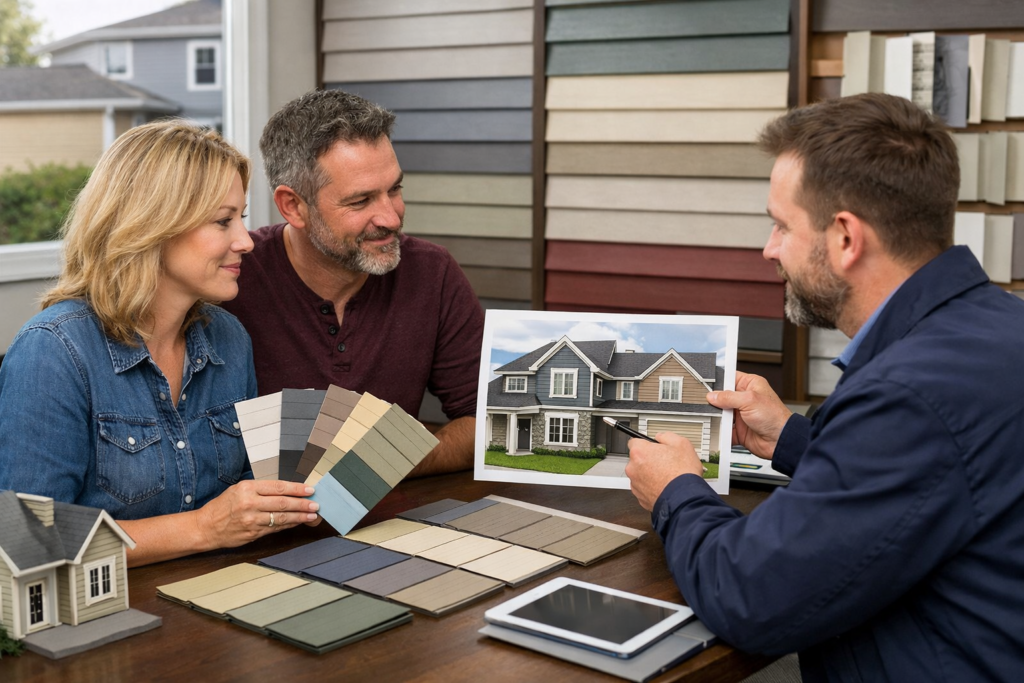
Color samples always look different in real life than they do in brochures or on screens. The same vinyl siding panel can appear brighter at noon, flatter under overcast skies, warmer at sunset, and darker in tree shade. In Nepean, winter light adds another layer because snow can intensify brightness and change contrast perception around trim, soffits, and windows.
That is why exterior design consultation should involve viewing samples at multiple times of day. Morning, afternoon, and cloudy-day checks are all useful. Large-format samples are far more reliable than tiny swatches. A shade that looks perfect indoors may look too yellow, too blue, or too washed out once installed across an entire elevation.
This is also where texture matters. Horizontal lap siding, board and batten accents, shakes, and shadow lines all alter how the color reads. Even the same shade can appear different depending on profile and exposure.
Best Vinyl Siding Color Strategies by Home Style
Traditional Detached Homes
Traditional homes often benefit from timeless colors such as warm white, almond, greige, light taupe, or muted blue-grey. These colors preserve a sense of stability and fit well with brick bases, shutters, and symmetrical façades.
Split-Level and Raised Bungalow Homes
These homes often have strong horizontal lines, so the right siding color should visually reduce bulk and create flow. Medium neutrals and soft contrast palettes often work better than stark extremes. Accent materials can be used to break up large wall expanses.
Townhomes and Semi-Detached Properties
For attached or closely spaced homes, color should balance individuality with cohesion. Strongly experimental tones may not age as well in these contexts. Clean neutrals and moderate contrast usually perform best, especially where resale appeal matters.
Modernized or Renovated Homes
For homes receiving a full exterior refresh, darker greys, modern whites, and well-planned accent colors can create dramatic transformation. These homes benefit from coordinated trim, updated doors, integrated eavestroughs, and modern lighting.
Common Mistakes Homeowners Make When Choosing Siding Colors
One of the biggest mistakes is choosing a color in isolation. Siding is not a paint sample on a blank wall. It is part of a complete exterior composition. Ignoring the roof, brick, landscaping, and trim almost always leads to disappointment.
Another common mistake is chasing trends too aggressively. What looks exciting on social media may not fit the architecture of the home or the visual tone of the neighborhood. Timeless design nearly always outperforms novelty in long-term satisfaction and resale value.
A third mistake is underestimating contrast. Some homeowners choose siding and trim colors that are too close in tone, which causes the home to look flat. Others choose contrast that is too severe, making the façade feel fragmented. The best result is usually balanced contrast with clear definition.
Finally, many homeowners ignore maintenance perception. Even though vinyl siding is low maintenance, some colors show dirt, pollen, splashback, or fading more readily than others. Choosing a beautiful but practical tone often produces better long-term results than choosing the most dramatic one.
Should You Go Safe or Bold with Vinyl Siding in Nepean?
The answer depends on the home’s architecture, the surrounding streetscape, and the homeowner’s goals. If resale, timelessness, and broad appeal matter most, a safe but polished palette is usually the strongest move. That does not mean boring. It means choosing colors with staying power.
If the property has strong architectural lines, upgraded exterior features, and a clear contemporary direction, a bolder palette may work extremely well. But bold does not mean random. It still needs discipline, proportion, and a clear design plan.
Many homeowners find that the best compromise is choosing a timeless main siding color and adding personality through doors, shutters, accent panels, lighting, or gable details. That approach allows the exterior to feel distinctive without becoming overly trendy.
For homeowners comparing local style direction and broader market preferences, reviewing best siding colours in Ottawa for 2025 can help frame which color families are gaining traction while still feeling suitable for real homes, not just showpieces.
A Practical Design Consultation Process for Choosing Vinyl Siding Colors
A smart siding consultation follows a clear sequence.
Step 1: Assess Fixed Exterior Elements
Identify roof color, brick tones, stone details, window frames, soffits, fascia, eavestroughs, and door finishes.
Step 2: Define the Style Goal
Decide whether the house should feel classic, modern, transitional, warm, bold, understated, or resale-focused.
Step 3: Narrow the Color Family
Choose the most suitable family first: white, greige, taupe, grey, blue-grey, or dark modern.
Step 4: Compare Main Body and Trim
Select the field color and then test trim, corner posts, shutters, fascia, and accent elements together.
Step 5: Review Samples Outdoors
Look at real samples outside in sun, shade, and overcast conditions. Never finalize from a digital screen alone.
Step 6: Think Beyond the Front Elevation
The color must look good on the entire house, including side walls, rear elevations, and garage-facing sections.
Step 7: Plan for Long-Term Satisfaction
A color should still feel right after five or ten years, not just on installation day.
How Vinyl Siding Colors Influence Resale Perception
Buyers notice exterior condition before they step through the door. A clean, coordinated siding palette signals care, investment, and reduced future work. That matters. Even when buyers cannot explain why a house feels more appealing, exterior color balance often plays a major role.
Homes with well-chosen siding colors tend to photograph better, show better in person, and create stronger first impressions. Neutrals with tasteful contrast often deliver the best resale return because they appeal to the broadest range of buyers. Overly personal or unusual colors can limit appeal, especially if they clash with fixed exterior features.
The exterior should feel updated but not forced. Fresh but not temporary. Distinctive but not risky. That is the sweet spot where good design meets practical value.
Final Thoughts on Choosing Vinyl Siding Colors in Nepean
The best vinyl siding colors in Nepean are the ones that make the home feel architecturally coherent, seasonally appropriate, visually balanced, and attractive from every angle. Great color selection is not about guessing what looks nice in a sample book. It is about understanding how color interacts with the home’s structure, roof, masonry, trim, neighborhood context, and natural light.
A successful design consultation helps homeowners avoid expensive mistakes, choose colors with confidence, and create a finished exterior that feels deliberate and high-value. Whether the goal is a subtle refresh, a modern upgrade, or a full siding replacement, color planning should be treated as a core part of the project rather than an afterthought.
For homeowners planning an exterior update, broader guidance from Natural Resources Canada’s home energy resources and CMHC homeowner maintenance guidance can also support smarter renovation decisions around durability, efficiency, and long-term performance.
If the next step is a professional exterior consultation, siding review, or replacement estimate, visit the Kaloozie Comfort contact page to discuss the right vinyl siding color strategy for a Nepean home.
FAQs About Vinyl Siding Colors in Nepean
What are the best vinyl siding colors for homes in Nepean?
The best vinyl siding colors for Nepean homes are usually warm whites, greiges, soft taupes, light greys, muted blue-greys, and carefully selected darker shades. The ideal choice depends on roof color, brick undertones, architectural style, and the amount of shade or natural light on the property.
Do dark vinyl siding colors work well in Ottawa-area climates?
Yes, dark vinyl siding colors can work very well when chosen carefully. They create strong visual impact and a modern look, but they must be matched properly with trim, roofing, and architectural proportions. Dark colors are best for homes with clean lines and a well-planned overall exterior palette.
Should siding color match the roof?
Siding color does not need to match the roof exactly, but it should coordinate with it. The roof is one of the largest visual elements on the house, so siding should complement its undertones and overall depth. Harmony matters more than exact matching.
What siding color has the best resale value in Nepean?
Resale-friendly siding colors are usually timeless neutrals such as warm white, greige, light grey, and soft taupe. These shades appeal to the widest audience, photograph well, and work with many roof and trim combinations.
How do you choose siding color when the house has brick?
Start with the brick undertone first. Red, brown, orange, and buff bricks all pair best with different siding families. The goal is to choose a siding tone that balances the brick rather than fighting it. A full exterior review is the best way to avoid clashes.
Can vinyl siding color make a home look bigger or newer?
Yes. Lighter and well-balanced colors can make a home look larger, brighter, and more updated. Good contrast around trim and corners can also sharpen the appearance of the home and make architectural features stand out more clearly.