
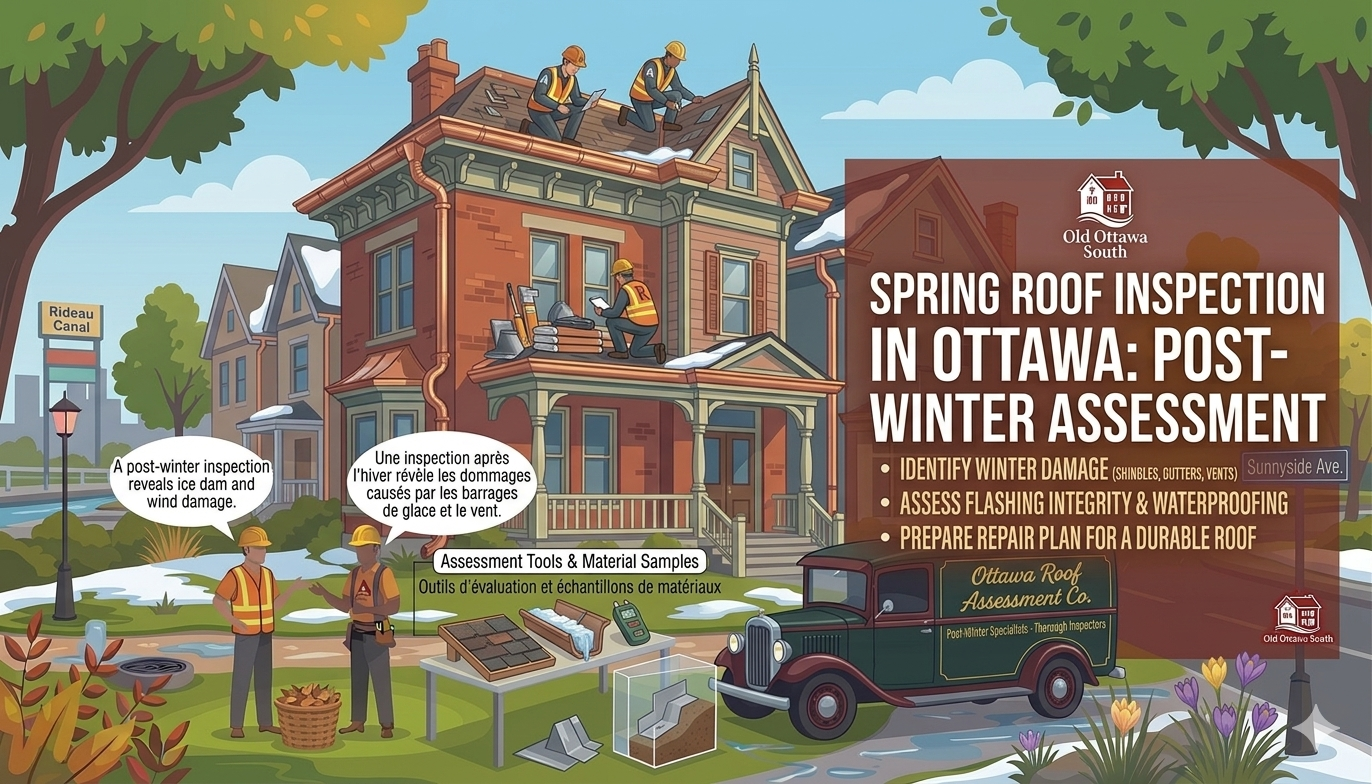
Ottawa winters are tough on roofs. Heavy snow, freezing rain, ice dams, wind, thaw cycles, clogged eavestroughs, and sudden temperature swings can slowly weaken roofing systems without homeowners noticing right away. By the time spring arrives, your roof may look fine from the ground, but hidden damage can already be developing under shingles, around flashing, along valleys, near vents, and at the roofline.
A proper spring roof inspection in Ottawa is one of the smartest ways to protect your home after winter. It helps identify small problems before they turn into leaks, insulation damage, mold growth, structural deterioration, and expensive emergency repairs. For homeowners who already understand the importance of exterior protection, spring is the ideal time to assess the full roofing system, from shingles and flashing to eavestroughs, soffit, fascia, attic ventilation, and siding connections.
Kaloozie Comfort provides professional exterior services for Ottawa homeowners, including roofing, siding, windows, doors, and eavestrough solutions. If your home has been through a harsh winter, reviewing your roof in spring can help you plan repairs early and avoid major seasonal surprises.
Why Spring Roof Inspections Matter After an Ottawa Winter
Ottawa’s freeze-thaw cycle is one of the biggest threats to roofing systems. Snow melts during warmer daytime temperatures, then refreezes overnight. This repeated expansion and contraction can loosen shingles, open gaps around flashing, lift sealants, and push moisture into vulnerable areas of the roof.
A winter-damaged roof does not always fail immediately. Often, the first signs appear weeks or months later when spring rain exposes weaknesses that formed during winter. That is why a post-winter roof assessment is not just a visual check; it is preventive maintenance.
Homeowners who want a broader understanding of roof performance can also review Kaloozie Comfort’s guide to common roofing problems and how to prevent them, which explains how small roofing issues can become larger home protection concerns.
The Main Winter Conditions That Damage Ottawa Roofs
Winter roof damage in Ottawa is usually caused by a combination of factors rather than one single event. Snow load adds pressure. Ice dams trap melting water. Wind lifts shingles. Moisture enters small gaps. Poor attic ventilation allows warm indoor air to melt snow unevenly. Clogged gutters cause water to back up under the roof edge.
This makes spring inspections especially important because several problems can overlap. A missing shingle may be obvious, but the larger concern could be water intrusion beneath the underlayment. A stained soffit may look minor, but it could point to ventilation or drainage problems. A loose flashing joint may appear small, but it can become a direct leak path during spring rainfall.
What Should Be Included in a Spring Roof Inspection in Ottawa?
A complete spring roof inspection should assess the visible roofing surface, drainage system, flashing details, exterior trim, attic conditions, and signs of water intrusion inside the home. The goal is not only to find damage but also to understand why it happened.
Shingle Condition and Surface Wear
Asphalt shingles are common across Ottawa homes, but winter can accelerate aging. During a spring inspection, shingles should be checked for curling, cracking, lifting, blistering, missing tabs, exposed nail heads, granule loss, and damaged edges.
Granule loss is especially important. The granules on asphalt shingles protect the roof from UV exposure and weathering. If you see heavy granules in your gutters or at the bottom of downspouts, your roof may be wearing faster than expected.
A roof with several damaged shingles does not always require full replacement, but repeated or widespread damage may indicate the system is nearing the end of its service life. For homeowners comparing roofing materials, Kaloozie Comfort’s roofing company in Ottawa page offers useful service context for residential roof repair and replacement planning.
Flashing Around Chimneys, Valleys, Skylights, and Vents
Flashing is one of the most important parts of any roofing system. It seals the areas where the roof meets another surface or penetration, including chimneys, vents, skylights, walls, dormers, and valleys.
After winter, flashing should be inspected for rust, separation, cracks, lifted edges, failed sealant, missing fasteners, and water stains nearby. Ottawa’s freeze-thaw cycles can break down sealants and widen small gaps. Once flashing fails, water can enter quickly during spring rain.
Homeowners should never assume that a roof is safe just because the shingles look intact. Many leaks begin at flashing details, not in the open shingle field.
Roof Valleys and Snow Runoff Areas
Roof valleys handle large amounts of water and melting snow. They are also high-risk areas for debris buildup, ice formation, and shingle wear. During a spring roof inspection, valleys should be checked for loose shingles, exposed underlayment, trapped branches, granule buildup, and signs of water staining.
Homes with complex rooflines, dormers, additions, or multiple slopes need extra attention because water flow can concentrate in specific areas. A valley that worked fine during light rain may fail under heavy snowmelt or spring storms.
Eavestroughs, Downspouts, and Drainage Flow
A roof does not work alone. Your eavestrough system plays a major role in directing water away from the home. If gutters are clogged, sagging, leaking, or pulling away from the fascia, water can back up under the roof edge, overflow onto siding, or pool near the foundation.
Kaloozie Comfort offers dedicated eavestrough installation in Ottawa for homeowners who need better water management after winter. Spring is the right time to check whether your existing gutters are still properly sloped, securely fastened, and able to handle runoff.
For homeowners looking for practical drainage guidance, the Government of Canada’s homeowner maintenance resources explain how controlling moisture around the home helps reduce water-related damage risks: Government of Canada — Maintaining your home.
Soffit, Fascia, and Roof Edge Details
Soffit and fascia protect the roof edge while helping with ventilation. Winter damage in these areas can create serious problems because the roof edge is where snow, ice, and water often collect.
During a spring inspection, look for peeling paint, soft wood, dark staining, animal entry points, sagging sections, cracked panels, and loose aluminum trim. Damage near the roof edge may also indicate past ice dam activity.
If soffit and fascia issues are connected to water overflow, it may be time to inspect both the roof and the eavestrough system together. Kaloozie Comfort’s eavestrough and siding services can support complete exterior water-control improvements.
Signs Your Ottawa Roof May Have Winter Damage
Not all roof damage is obvious from the street. Some symptoms appear inside the home, while others show up around the exterior envelope. Homeowners should take spring warning signs seriously because delays can increase repair costs.
Water Stains on Ceilings or Walls
Brown stains, bubbling paint, damp drywall, or ceiling discoloration can point to roof leaks. These stains may appear after snow melts or during spring rain. Even a small stain should be investigated because water may have traveled through insulation, framing, or wall cavities before becoming visible.
Missing or Lifted Shingles
Strong winter winds can loosen shingles, especially on older roofs or roofs with poor fastening. Missing shingles expose the underlayment and increase the risk of water intrusion. Lifted shingles may reseal in warmer weather, but they can still indicate weakened adhesive strips or fasteners.
Ice Dam Evidence Along the Eaves
Ice dams form when heat escapes from the attic and melts snow on the roof. The water runs down to the colder eaves and refreezes, creating a barrier that can force water backward under shingles.
If you noticed large icicles, thick ice at the roofline, or water stains near exterior walls during winter, your spring inspection should include attic ventilation, insulation, roof edge details, and eavestrough performance. Natural Resources Canada provides helpful information on improving home energy efficiency and reducing heat loss through better insulation and air sealing: Natural Resources Canada — Keeping the heat in.
Loose or Damaged Flashing
Flashing problems often appear after winter because metal expands, contracts, and shifts with temperature changes. If flashing around chimneys, skylights, or vents looks lifted or cracked, it should be repaired before heavy spring rain.
Sagging Gutters or Overflow Marks
Black streaks, splash marks, soil erosion near the foundation, and water stains on siding may indicate gutter overflow. Overflow can damage fascia, siding, foundation areas, and landscaping. It can also send water behind exterior cladding.
This is where roof and siding maintenance often overlap. Kaloozie Comfort’s article on how to prevent ice dams from damaging your siding is especially relevant for Ottawa homes where roof runoff and exterior wall protection are connected.
Spring Roof Inspection Checklist for Ottawa Homeowners
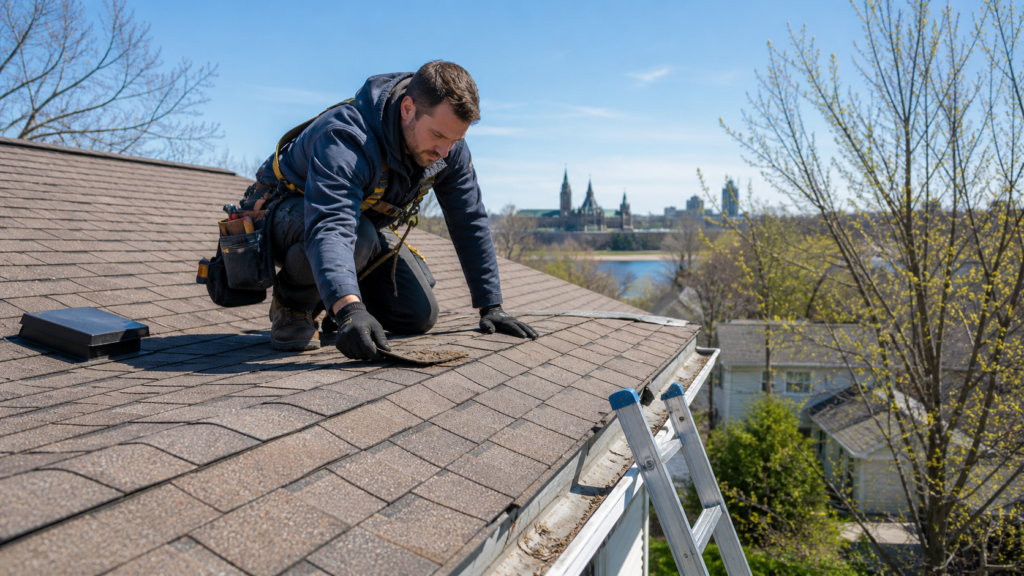
A homeowner can complete a basic ground-level inspection, but climbing on the roof is not recommended without proper safety training and equipment. Many issues can be spotted from the ground with binoculars, from upper windows, or during a walkaround of the property.
Exterior Roof Checklist
Inspect the roof surface for missing shingles, curled shingles, cracked shingles, exposed nails, dark patches, uneven areas, sagging sections, damaged ridge caps, and visible debris. Check roof valleys for buildup and look around chimneys, vents, and skylights for obvious flashing problems.
Drainage Checklist
Look for clogged gutters, loose downspouts, water pooling near the foundation, overflowing sections, bent gutter runs, gaps at joints, and signs of fascia staining. Downspouts should discharge water away from the home, not directly beside the foundation.
Attic Checklist
Inside the attic, look for damp insulation, moldy smells, dark roof deck stains, frost marks, daylight entering around roof penetrations, and poor ventilation signs. A healthy attic helps protect the roof from moisture buildup and reduces ice dam risk.
Interior Checklist
Check ceilings, upper walls, closets, window frames, and attic access areas for staining, peeling paint, bubbling drywall, or musty odours. Interior signs may indicate roof leaks, condensation problems, or insulation failures.
Exterior Wall and Siding Checklist
Because roof leaks and gutter overflow can affect siding, inspect the exterior walls below roof edges, valleys, and downspouts. Look for staining, warped siding, loose panels, and moisture damage. For full exterior protection, Kaloozie Comfort’s spring siding checkup for Ottawa maintenance is a strong companion resource to roof inspection planning.
When Should You Call a Professional Roofing Contractor in Ottawa?
A professional roof inspection is recommended when you see visible damage, suspect a leak, had ice dams during winter, experienced windstorms, own an older roof, or plan to sell your home. Professional roofers can safely inspect areas that homeowners cannot access and identify subtle problems around flashing, ventilation, underlayment, and roof penetrations.
Spring is also a busy season for exterior contractors, so early assessment gives homeowners more flexibility. Waiting until a leak becomes urgent can limit scheduling options and increase repair costs.
Professional Inspection Advantages
A professional roofing contractor can identify whether damage is cosmetic, repairable, or a sign of deeper roof failure. They can also separate roofing issues from ventilation, insulation, eavestrough, siding, or window-flashing problems.
For example, a ceiling stain may not always be caused by a hole in the shingles. It could come from condensation, poor attic airflow, failed flashing, ice dam backup, or a roof-wall transition problem. A proper inspection helps prevent unnecessary repairs and targets the real cause.
Roof Repair vs Roof Replacement After Winter
Not every spring roof issue requires a full replacement. Many homes only need targeted repairs, such as shingle replacement, flashing resealing, vent boot repair, gutter correction, or fascia repair. However, if the roof is older, leaking in multiple areas, losing granules heavily, or showing widespread shingle failure, replacement may be the better long-term choice.
When Roof Repair Makes Sense
Roof repair may be appropriate when damage is limited to a small section, the roof is still within its expected lifespan, the shingles are generally in good condition, and the underlying roof deck is dry and stable.
When Roof Replacement Makes Sense
Replacement may be the better option when leaks are recurring, shingles are brittle, granule loss is severe, flashing failures are widespread, roof decking is compromised, or repair costs are becoming repetitive. Homeowners planning broader exterior upgrades may also coordinate roofing with siding, eavestroughs, windows, or attic improvements.
Kaloozie Comfort’s guide to Ottawa roofing and siding upgrades explains how coordinated exterior improvements can improve durability, curb appeal, and long-term home performance.
The Role of Attic Ventilation in Spring Roof Health
Many winter roof problems begin below the roof surface. If warm indoor air escapes into the attic, it can melt snow from underneath. That melted snow refreezes near the eaves, forming ice dams. Poor ventilation can also trap moisture in the attic, leading to frost, mold, and roof deck deterioration.
A spring roof assessment should include a ventilation review. Intake vents, exhaust vents, soffit vents, and attic airflow pathways should be checked to ensure the roof system can breathe properly.
Common Ventilation Problems in Ottawa Homes
Blocked soffit vents, inadequate attic insulation, bathroom fans venting into the attic, insufficient ridge or roof vents, and air leaks from living spaces can all contribute to roof moisture problems. These issues may not be visible from outside, but they can shorten roof lifespan and create indoor comfort problems.
How Eavestroughs Protect Your Roof After Winter
Eavestroughs help move water away from the roof edge, siding, and foundation. After winter, gutters may be packed with shingle granules, leaves, twigs, ice debris, or loosened fasteners. If water cannot flow properly, it can overflow and damage the fascia, soffit, siding, and foundation area.
A spring roof inspection should always include eavestrough performance. This is especially important for homes with large roof surfaces, steep slopes, mature trees, or previous ice dam issues.
Downspout Placement Matters
Downspouts should carry water away from the home. If they discharge too close to the foundation, water can pool around the basement walls. If they drain onto walkways or driveways, they can create safety issues during late freeze events. Downspout extensions may be needed to move water safely away from the property.
Spring Roof Maintenance Tips for Ottawa Homeowners
Spring maintenance does not need to be complicated, but it should be consistent. The goal is to remove winter stress, restore drainage, and prepare the home for spring rain and summer storms.
Clean Gutters and Downspouts
Remove debris, flush downspouts, check for leaks, and confirm water flows freely. Clogged gutters are one of the easiest problems to fix and one of the most expensive to ignore.
Trim Overhanging Branches
Branches can scrape shingles, drop debris, and provide access points for pests. Trimming trees near the roof helps reduce wear and improves roof visibility during future inspections.
Check Sealants and Caulking
Roof sealants around penetrations can crack after winter. Professional repair may be needed if caulking has failed around vents, flashing, or roof-wall connections.
Monitor After Heavy Rain
After the first major spring rainfall, check the attic, ceilings, gutters, and exterior walls. This helps catch leaks early before they spread.
Schedule Repairs Early
Spring roofing repairs should be handled before summer heat and heavy storm cycles. Early action protects the home and gives homeowners better planning control.
Why Ottawa Homes Need Climate-Specific Roof Care
Ottawa homes experience hot summers, cold winters, heavy snow, ice, rain, wind, and freeze-thaw movement. A roofing approach that works in a milder climate may not be enough here. Materials, installation details, flashing, ventilation, and drainage all need to be suited to local weather.
A proper spring roof inspection should be based on Ottawa’s climate realities. That means looking beyond obvious damage and understanding how winter conditions affect the whole exterior system.
Book a Spring Roof Assessment with Kaloozie Comfort
A spring roof inspection is one of the most important post-winter maintenance steps for Ottawa homeowners. It protects your home from leaks, water damage, mold, insulation problems, premature roof failure, and avoidable repair costs.
Whether you need roof repair, roof replacement advice, eavestrough service, siding inspection, or a complete exterior assessment, Kaloozie Comfort can help you evaluate your home after winter and prepare it for the seasons ahead.
For expert support, visit the Kaloozie Comfort contact page to request a professional spring roof inspection in Ottawa.
FAQs About Spring Roof Inspections in Ottawa
How often should I inspect my roof in Ottawa?
Ottawa homeowners should inspect their roof at least twice a year: once in spring after winter and once in fall before snow returns. A spring inspection is especially important because winter can damage shingles, flashing, gutters, and roof edges.
Can I inspect my roof myself after winter?
You can perform a basic ground-level inspection by checking shingles, gutters, downspouts, attic stains, and exterior walls. However, professional inspection is recommended for roof access, flashing details, leak tracing, and safety.
What are the most common signs of winter roof damage?
Common signs include missing shingles, lifted shingles, ceiling stains, ice dam marks, granules in gutters, loose flashing, sagging gutters, wet attic insulation, and water stains near roof edges.
When is the best time to schedule a spring roof inspection?
The best time is after snow has melted and before heavy spring rainfall becomes frequent. Early spring gives homeowners time to repair winter damage before leaks become worse.
Does roof damage affect siding and eavestroughs too?
Yes. Roof runoff, ice dams, and gutter overflow can damage siding, soffit, fascia, and foundation areas. That is why a full exterior inspection is often better than checking the roof alone.