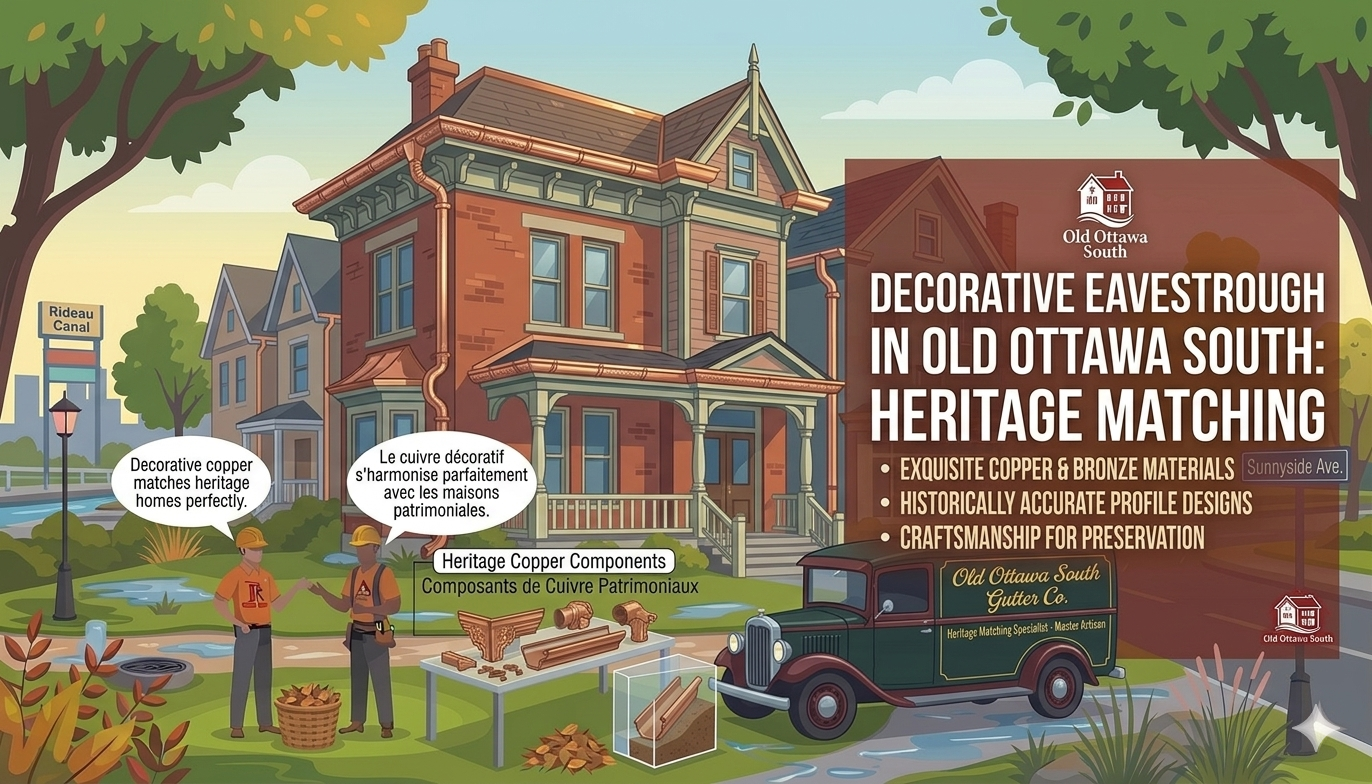
Old Ottawa South is one of Ottawa’s most character-rich neighbourhoods, known for mature tree-lined streets, traditional brick homes, gabled rooflines, original trim details, covered porches, and historic architectural charm. In a community where exterior details matter, eavestroughs should do more than move rainwater away from the roof. They should protect the structure, respect the home’s original style, and blend into the architecture with the same care as siding, roofing, windows, doors, fascia, and soffit.
Decorative eavestrough installation in Old Ottawa South is about balancing heritage appearance with modern water management. A standard gutter system may technically move water, but it can look visually flat, oversized, poorly matched, or out of place on an older home. Heritage-style eavestroughs require better planning: profile selection, colour matching, downspout placement, fascia compatibility, roofline proportion, drainage capacity, and long-term durability through Ottawa’s freeze-thaw climate.
For homeowners upgrading a historic or older property, decorative eavestroughs are one of the most overlooked exterior improvements. They frame the roofline, protect painted wood, reduce splashback, help prevent foundation moisture, and complete the visual connection between the roof and siding. When paired with professional eavestrough installation in Ottawa, the result is a home exterior that looks period-appropriate while performing like a modern drainage system.
Why Decorative Eavestroughs Matter for Old Ottawa South Homes
Many homes in Old Ottawa South were built with architectural proportions that are very different from newer suburban builds. Older rooflines often include steeper slopes, multiple dormers, detailed fascia boards, wood soffits, exposed rafter tails, decorative brackets, and narrower trim lines. Installing a generic gutter system without considering these features can flatten the character of the home.
Decorative eavestroughs help preserve the visual rhythm of the building. Instead of looking like a modern add-on, the gutter system becomes part of the exterior design. This is especially important for homes with brick façades, wood siding, painted trim, cedar accents, traditional porches, and older roof profiles.
The right decorative system can improve curb appeal while also protecting vulnerable areas from water damage. Ottawa’s weather brings heavy rain, melting snow, ice, wind-driven moisture, and rapid freeze-thaw cycles. Without properly sized and positioned eavestroughs, water can overflow at the roof edge, stain brick, rot fascia, damage siding, pool near the foundation, and contribute to basement moisture.
A properly matched decorative eavestrough system protects the home without compromising its historic charm.
Heritage Matching: What It Really Means
Heritage matching does not mean copying old, inefficient materials exactly as they were. It means respecting the home’s architectural style while using modern materials and installation methods that perform better over time.
For Old Ottawa South homes, heritage matching may include:
Matching the Original Roofline Proportions
Older homes often have slimmer fascia details than newer builds. Oversized gutters can look heavy or awkward if they are not proportioned correctly. A heritage-sensitive installation considers the depth of the fascia, the roof pitch, the overhang, and how visible the eavestrough will be from the street.
Choosing a Profile That Complements the Home
K-style gutters are common, but decorative profiles can better suit traditional homes because they create a more finished trim-like appearance. Half-round eavestroughs may also suit certain heritage-inspired properties, especially where the goal is a softer, classic roofline.
Using Colour to Blend or Highlight
Colour selection is critical. On some Old Ottawa South homes, eavestroughs should disappear into the fascia or trim. On others, a contrasting colour can highlight architectural lines. White, cream, black, bronze, clay, dark brown, and custom aluminum colours can all work depending on the siding, brick, roof, and window trim.
Homeowners planning a wider exterior update can also review siding and trim coordination through resources like how to match new siding to existing siding to ensure the gutter system supports the full design.
Respecting Downspout Placement
Downspouts should be functional, but they should not interrupt major architectural features. Poorly placed downspouts can run across decorative trim, cut through porch details, or visually divide a façade. A better design places downspouts along corners, porch posts, vertical trim lines, or less visible elevations where possible.
Best Decorative Eavestrough Options for Heritage Homes
Not every eavestrough style suits every house. The best choice depends on the age of the property, roof design, exterior materials, drainage needs, and desired level of visual authenticity.
Seamless Aluminum Decorative Eavestroughs
Seamless aluminum is one of the most practical choices for Old Ottawa South homes because it offers durability, clean lines, colour flexibility, and fewer leak-prone joints. It can be shaped to suit traditional profiles while keeping maintenance manageable.
Aluminum also works well in Ottawa because it resists rust and handles seasonal moisture better than many older metal systems. When installed correctly, seamless aluminum eavestroughs provide a refined appearance without the constant upkeep associated with some historic materials.
Half-Round Eavestroughs
Half-round gutters are often associated with older homes, traditional architecture, and premium exterior restoration. Their curved profile feels softer and more historic than standard rectangular systems. They can be an excellent fit for brick homes, heritage-inspired renovations, and properties where preserving character is a top priority.
Half-round systems can cost more and may require specialized hangers, but the visual result can be worth it for homeowners who want a more authentic heritage appearance.
Copper-Inspired and Premium Metal Looks
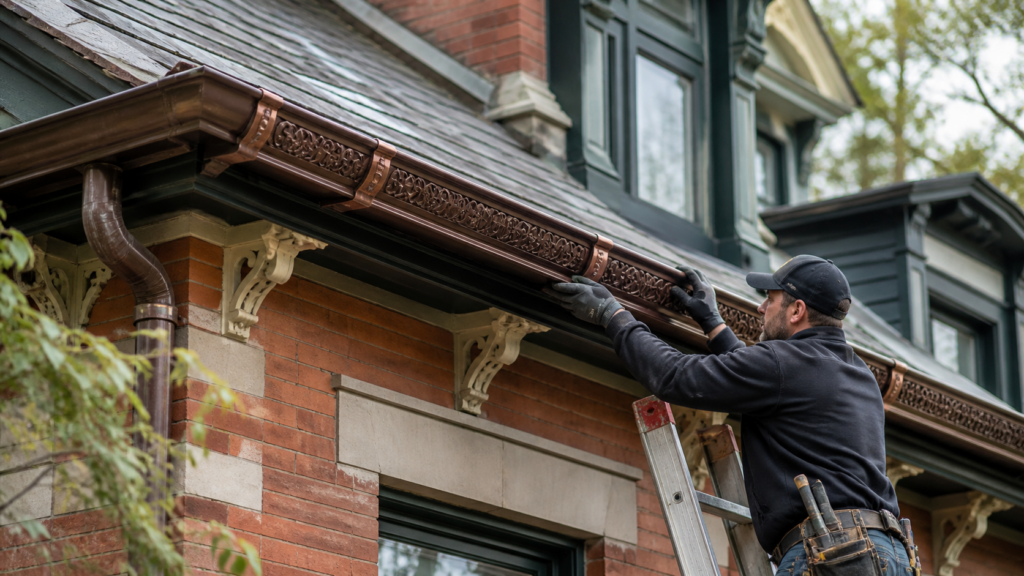
Copper eavestroughs are strongly associated with historic homes and luxury restoration. Real copper develops a natural patina over time, creating a classic look that suits certain heritage properties. For homeowners who want the look without the full cost or maintenance considerations, copper-tone aluminum or specialty finishes may be an option.
Copper-style systems are especially effective on homes with stone, brick, cedar, slate-inspired roofing, or dark trim. They should be chosen carefully, though, because the wrong finish can look forced if it does not match the rest of the exterior.
Decorative Fascia and Eavestrough Integration
A decorative gutter system performs best when paired with properly maintained fascia and soffit. If the fascia is rotting, uneven, undersized, or poorly flashed, even the best eavestrough installation can fail prematurely.
For homes with aging roof edges, it may be wise to assess the full eaves area, including soffit, fascia, drip edge, and siding transitions. The guide on soffit and fascia basics explains how these smaller exterior components prevent larger moisture problems.
How Eavestroughs Protect Heritage Brick, Wood Trim, and Foundations
Old Ottawa South homes often include materials that are beautiful but vulnerable when water is mismanaged. Brick, wood trim, painted fascia, older mortar joints, porch framing, and foundation walls all need reliable drainage protection.
Protecting Brick Walls from Staining and Moisture
When gutters overflow or leak, water can run directly down brickwork. Over time, this may cause staining, mortar wear, algae growth, and freeze-thaw stress. Older brick and mortar can be more sensitive than newer masonry, making proper water control essential.
Reducing Wood Rot Around Fascia and Soffits
Many older homes include wood fascia, decorative trim, porch ceilings, and exposed wood details. Constant water exposure can lead to peeling paint, swelling, soft spots, and rot. A properly installed decorative eavestrough system keeps water moving away from these vulnerable areas.
Preventing Foundation Water Issues
Downspouts that discharge too close to the home can create pooling around the foundation. In older neighbourhoods, grading may have shifted over time, and mature landscaping can affect drainage patterns. Downspout extensions, splash blocks, and underground drainage planning can help move water safely away from the house.
For homeowners concerned about eavestrough overflow, rot, and roof-edge moisture, eavestrough and siding integration is especially important because gutters, siding, fascia, and flashing all work together.
Decorative Eavestrough Colour Matching for Old Ottawa South
Colour can make or break a heritage exterior. The right eavestrough colour should support the architecture rather than distract from it.
White and Cream for Traditional Trim
White and cream remain popular for older homes with painted wood trim, classic windows, porch columns, and lighter fascia boards. These colours create a clean heritage look and often blend naturally with traditional exterior details.
Black for Strong Roofline Definition
Black eavestroughs can look elegant on homes with black window frames, dark roofing, black railings, or modern heritage updates. On red brick homes, black can provide crisp contrast without looking too modern if balanced with matching trim details.
Brown, Bronze, and Clay for Warm Brick Homes
Earth-tone gutters can work beautifully on Old Ottawa South homes with red brick, brown roofing, natural wood, or warm stone. These colours soften the roofline and prevent the eavestrough from standing out too sharply.
Custom Colour Matching
For homes with unique trim colours or restoration requirements, custom colour matching may be the best route. This helps the gutter system blend into existing fascia, siding, or painted architectural details.
Homeowners making broader exterior colour decisions can also review Ottawa siding colour guidance to coordinate gutters, siding, trim, roofing, and windows with a consistent design plan.
Old Ottawa South Climate Challenges: Rain, Snow, Ice, and Freeze-Thaw
Ottawa’s climate is hard on exterior drainage systems. Decorative eavestroughs must look good, but they also need to perform under real seasonal pressure.
Heavy Rainfall
Sudden storms can overwhelm undersized gutters. If the eavestrough profile is too small or the downspout count is insufficient, water may spill over the edge and damage fascia, siding, landscaping, and foundations.
Snow Melt
During winter thaws, melting snow moves down the roof and into the eavestrough system. If gutters are clogged, poorly sloped, or blocked by ice, water can back up and refreeze.
Ice Dams
Ice dams can form when roof heat loss melts snow that later refreezes near the eaves. This can push water under roofing materials and create leaks around the roof edge. While eavestroughs alone do not solve ice dams, correct roof-edge drainage and exterior detailing help reduce related water problems.
The Government of Canada provides homeowner guidance on moisture control and housing durability through resources from the Canada Mortgage and Housing Corporation, which can be useful for understanding how water management affects long-term home performance.
Freeze-Thaw Expansion
Water that enters small cracks or gaps can freeze, expand, and worsen damage. This is especially important for older masonry, painted trim, and aging exterior materials. Decorative eavestroughs need proper slope, secure fastening, and clean drainage paths to minimize freeze-thaw stress.
Signs Your Old Ottawa South Home Needs New Decorative Eavestroughs
Aging or mismatched gutters can create both visual and structural problems. Homeowners should consider replacement when they notice:
Overflow During Rain
Overflow usually means the gutters are clogged, undersized, poorly sloped, or failing. On older homes, overflow at roof valleys and porch edges can cause serious damage.
Sagging or Pulling Away from Fascia
Sagging eavestroughs can indicate weak fasteners, rotted fascia, heavy debris, or ice damage. This should be inspected before water starts entering behind the gutter.
Peeling Paint Near Roof Edges
Paint failure on fascia, soffits, or trim may be a sign of repeated water exposure. Decorative replacement should include inspection of the wood behind the old system.
Basement Dampness or Water Pooling
If water collects near the foundation after rain, downspouts may not be moving runoff far enough away from the house.
Poor Visual Match
Sometimes the issue is aesthetic. A newer, boxy, oversized, or poorly coloured gutter system can reduce curb appeal on an otherwise beautiful heritage-style home.
Decorative Eavestrough Installation Process
A quality installation starts before any material is attached to the home. Heritage-sensitive eavestrough work requires measurement, planning, and design judgment.
Step 1: Exterior Assessment
The roofline, fascia, soffit, siding, brick, downspout locations, grading, landscaping, and drainage paths should be inspected. On older homes, this assessment may reveal hidden rot, loose trim, failing caulking, or outdated flashing.
Step 2: Profile and Colour Selection
The installer should help choose a profile and colour that suit the home’s age, roof shape, trim, and architectural style. The goal is not just to install gutters, but to improve the entire exterior composition.
Step 3: Drainage Planning
Downspouts should be placed where they can move water efficiently without damaging visual symmetry. Extensions should direct water away from foundations, walkways, driveways, and garden beds.
Step 4: Fascia Preparation
Any damaged fascia should be repaired or replaced before installation. Installing new eavestroughs over compromised wood can shorten the lifespan of the system.
Step 5: Seamless Installation and Proper Slope
The eavestroughs must be securely fastened and sloped correctly so water flows toward the downspouts. Poor slope leads to standing water, ice buildup, staining, and premature wear.
Step 6: Final Water Flow Check
A finished system should be checked for alignment, outlet performance, downspout discharge, and clean visual integration.
Why Heritage Homes Need Experienced Exterior Contractors
Decorative eavestrough installation is not the place for rushed work. Older homes can have uneven fascia, unique rooflines, layered renovations, fragile trim, and previous repairs hidden beneath paint or aluminum coverings. A contractor needs to understand both exterior performance and visual restraint.
The best results come from a team that can look at the whole building envelope: roofing, siding, fascia, soffit, flashing, windows, doors, and drainage. That matters because eavestrough problems are often connected to other exterior issues.
For homeowners planning a larger restoration or exterior upgrade, siding for heritage homes in Ottawa is a helpful related resource, especially when eavestroughs, trim, and cladding need to work together.
Decorative Eavestroughs and Property Value
Curb appeal is not just about big-ticket upgrades. Small exterior details often shape the first impression of a home. On a heritage-style property, mismatched gutters can make the exterior look unfinished, while a well-designed decorative system can make the roofline look cleaner, sharper, and more intentional.
Decorative eavestroughs can support property value by improving:
Street-Facing Appearance
Old Ottawa South homes often have strong front elevations with porches, gables, dormers, and detailed trim. A properly matched gutter system enhances these features instead of hiding them.
Exterior Longevity
By controlling water, eavestroughs help protect siding, brick, paint, fascia, soffit, landscaping, and foundations.
Buyer Confidence
A clean, well-installed drainage system signals that the home has been maintained carefully. Buyers notice when exterior details are coordinated and functional.
Reduced Future Repair Risk
Water damage can be expensive. A properly designed eavestrough system helps prevent avoidable repairs caused by overflow, rot, and foundation moisture.
Maintenance Tips for Decorative Eavestroughs in Old Ottawa South
Decorative systems still need maintenance, especially in a neighbourhood with mature trees.
Clean Gutters Seasonally
Leaves, twigs, seeds, and roof debris should be removed regularly. Spring and late fall are especially important.
Check Downspout Flow
Downspouts should discharge freely and direct water away from the foundation. If water backs up, the outlet may be clogged.
Inspect After Major Storms
High winds and heavy rain can loosen fasteners, shift extensions, or reveal overflow points.
Watch for Ice Problems
In winter, large icicles, frozen gutters, or water backing up near roof edges may suggest insulation, ventilation, or drainage issues.
Preserve Painted Trim
If the eavestrough is mounted to painted wood fascia, keep paint and caulking in good condition to prevent moisture absorption.
The National Research Council Canada offers building science information through its construction research resources, which can help homeowners better understand how moisture, materials, and exterior assemblies affect building performance.
When to Combine Eavestrough Replacement with Other Exterior Work
Replacing decorative eavestroughs can be more efficient when combined with other exterior upgrades. If the roof, siding, fascia, soffit, or windows are also aging, coordinated work can reduce duplication and improve final results.
Consider combining eavestrough replacement with:
Roofing Repairs or Replacement
Roof edge details, drip edge, and gutter placement all connect directly to roofing performance.
Fascia and Soffit Upgrades
New gutters should not be installed on failing fascia. Repairing this area first protects the investment.
Siding Repairs or Replacement
If siding near the roofline has water damage, both systems should be addressed together.
Window and Trim Work
Downspouts should be positioned carefully around windows, trim, and architectural features.
For full exterior planning, homeowners can explore Ottawa roofing and siding upgrade guidance to coordinate materials, timing, and design decisions.
Choosing the Right Decorative Eavestrough Contractor in Old Ottawa South
The right contractor should understand both water management and architectural matching. For Old Ottawa South homes, the cheapest installation is rarely the best value if it ignores roofline character, drainage strategy, or fascia condition.
Look for a contractor who can:
- Recommend profiles suitable for older homes
- Match colours to trim, siding, brick, and roofing
- Identify fascia or soffit damage before installation
- Plan downspouts discreetly and effectively
- Install seamless systems with proper slope
- Explain maintenance requirements clearly
- Respect the property’s heritage appearance
A strong exterior contractor does not simply attach gutters. They protect the home, preserve its style, and improve its long-term performance.
Professional Decorative Eavestrough Services in Old Ottawa South
Decorative eavestroughs are one of the most practical ways to protect an older home while enhancing its exterior character. In Old Ottawa South, where architecture matters and water protection is essential, the right system should be selected with care.
A well-designed eavestrough installation can preserve historic charm, reduce moisture risks, protect trim and masonry, and complete the home’s exterior with a polished roofline. Whether the goal is subtle colour matching, traditional half-round gutters, seamless aluminum performance, or a full exterior refresh, professional planning makes the difference.
For homeowners ready to improve drainage, protect heritage details, and upgrade curb appeal, Kaloozie Comfort provides exterior solutions for roofing, siding, windows, doors, and eavestrough systems across Ottawa. Start with a professional consultation through the Kaloozie Comfort contact form to discuss decorative eavestrough options for an Old Ottawa South home.
Frequently Asked Questions About Decorative Eavestroughs in Old Ottawa South
1. What makes an eavestrough “decorative”?
A decorative eavestrough is designed to complement the home’s exterior style, not just manage water. It may include a heritage-style profile, custom colour, premium finish, half-round shape, or careful placement that blends with architectural trim.
2. Are decorative eavestroughs suitable for older homes in Old Ottawa South?
Yes. Decorative eavestroughs are especially suitable for older homes because they can match traditional rooflines, painted trim, brick façades, and heritage-style exterior details while still offering modern drainage performance.
3. What colour eavestrough works best for a heritage home?
The best colour depends on the home’s trim, siding, brick, roof, and windows. White, cream, black, bronze, clay, and brown are common options. The goal is either to blend into the fascia or intentionally highlight the roofline.
4. Should I replace fascia before installing new eavestroughs?
If the fascia is rotted, soft, warped, or poorly attached, it should be repaired or replaced before the new eavestrough system is installed. Strong fascia is essential for long-term gutter performance.
5. Do decorative eavestroughs require more maintenance?
Not necessarily. Maintenance depends more on trees, debris, roof design, and gutter guards than on decorative styling. Old Ottawa South homes often need seasonal cleaning because of mature trees and heavy leaf fall.