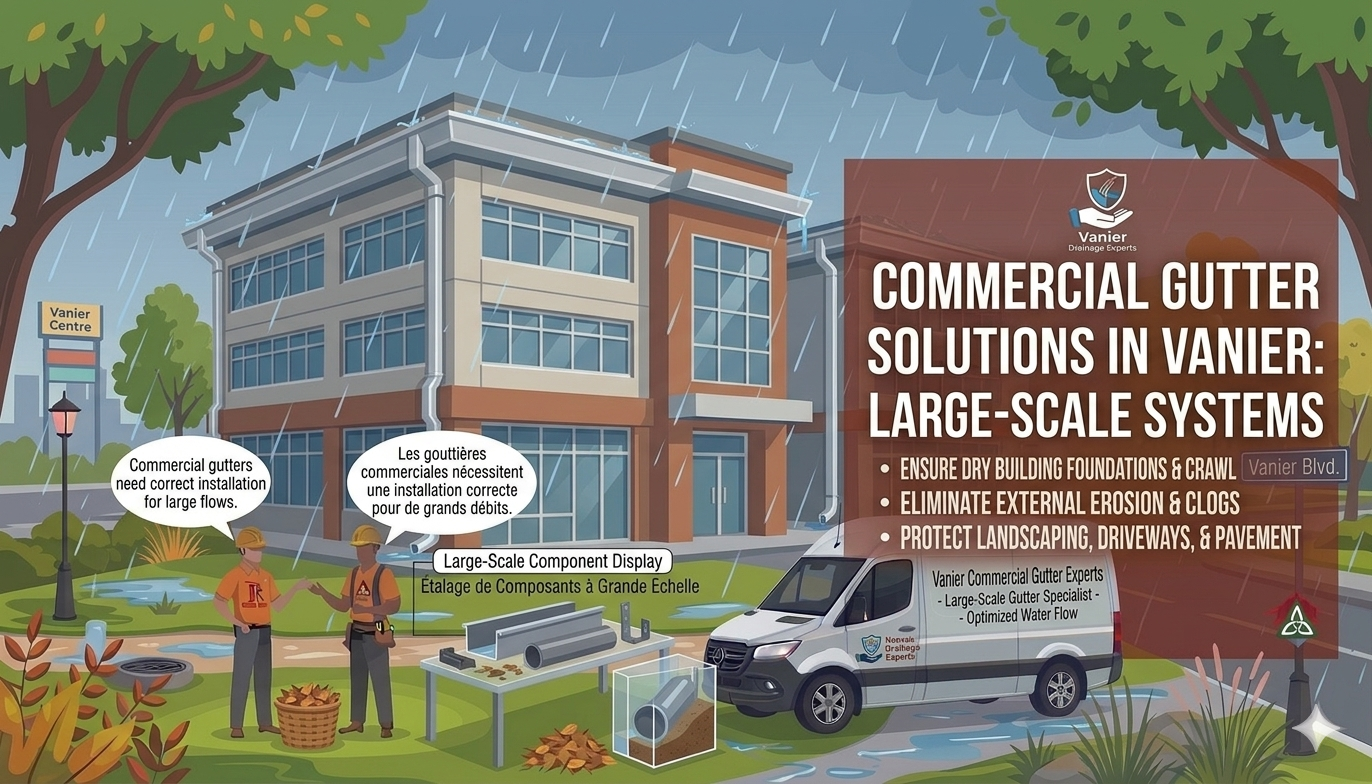
Commercial properties in Vanier need more than basic residential gutters. Larger roof surfaces, heavier runoff volume, flat and low-slope roofing sections, multi-level elevations, winter ice buildup, and high-traffic building entrances all create drainage demands that require a properly planned commercial gutter system. When a building’s eavestroughs, downspouts, scuppers, fascia, soffit, and drainage paths are not working together, water can quickly become one of the most expensive threats to the property.
A properly designed commercial gutter solution protects the roofline, exterior walls, siding, walkways, foundation, loading areas, storefronts, parking edges, and tenant entrances. In Vanier, where commercial buildings often include older structures, mixed-use properties, apartment-style buildings, retail units, restaurants, small offices, and service-based businesses, gutter performance must be practical, durable, and built for Ottawa’s freeze-thaw climate.
Why Commercial Gutter Systems in Vanier Require Specialized Planning
Commercial buildings collect far more roof water than a typical home. A wide roof area can send hundreds or thousands of litres of water toward the roof edge during a heavy storm. Without properly sized gutters and downspouts, that water can overflow, pool, freeze, or discharge in the wrong location.
For Vanier business owners and property managers, the goal is not simply to “install gutters.” The goal is to create a complete drainage system that moves water safely away from the building without damaging siding, fascia, foundation walls, windows, doorways, pedestrian zones, or neighbouring properties.
This is where large-scale gutter planning matters. A commercial system should account for roof square footage, slope direction, drainage volume, building height, downspout placement, ice risk, exterior cladding, access for maintenance, and long-term durability. For properties already upgrading exterior cladding, combining drainage planning with commercial siding services in Vanier can help protect the building envelope as one complete system.
The Role of Large-Scale Gutters in Protecting Commercial Buildings
A commercial gutter system does more than catch rain. It controls water movement across the entire exterior structure. When properly installed, it helps prevent:
Foundation Moisture Problems
Uncontrolled roof runoff can saturate the soil around a commercial foundation. Over time, this may contribute to basement dampness, cracking, settlement pressure, or water entry. This is especially important for older Vanier properties where foundation systems may already be under stress.
Siding and Wall Damage
When gutters overflow, water can run down siding and wall assemblies. That repeated wetting can stain exterior surfaces, speed up deterioration, and increase the risk of hidden moisture behind cladding. Property owners dealing with exterior wall protection should also review moisture management behind cladding because gutters and siding must work together to keep the wall system dry.
Unsafe Walkways and Entrances
Poorly discharged water can freeze on sidewalks, steps, ramps, parking lots, and storefront entrances. For commercial buildings, that is not just a maintenance issue; it can become a safety and liability concern.
Roof Edge and Fascia Deterioration
When water does not drain correctly, fascia boards, trim, roof edges, and soffit areas can become damaged. Commercial buildings with long rooflines need strong, secure gutter fastening and proper slope to prevent sagging and overflow.
Landscape and Pavement Erosion
Large volumes of water discharged in one spot can wash out soil, damage asphalt edges, erode landscaping, and create pooling near parking areas. A proper commercial downspout plan directs water where it can safely drain.
Commercial Eavestrough Sizing: Why Bigger Systems Matter
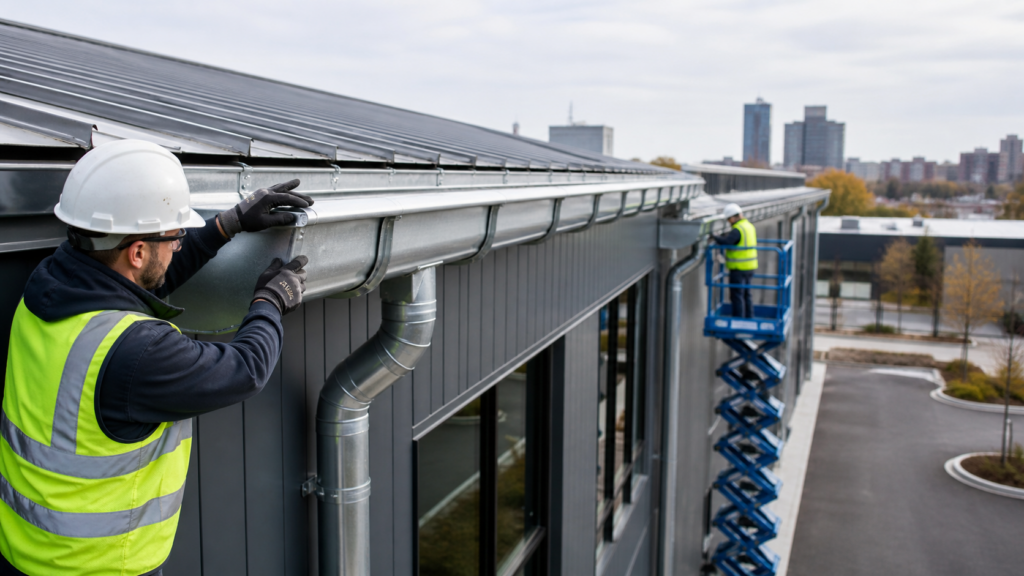
Standard residential gutters are often not enough for commercial buildings. Many commercial properties require larger trough profiles, additional downspouts, heavier-gauge aluminum, box-style gutters, collector boxes, or custom drainage layouts.
A large-scale commercial gutter system should be sized based on the roof area draining into each gutter run. The bigger the roof section, the more water the system must carry. If the gutter is undersized, it may look acceptable on a dry day but fail during heavy rain.
In Vanier, commercial buildings may also experience rapid snowmelt from sun exposure, roof heat loss, and freeze-thaw cycles. That means a system must handle both rain and melting snow. The National Research Council Canada provides building science resources on moisture and building envelope performance, which reinforces why drainage design is so important for long-term durability: NRC Construction Research Centre.
Best Commercial Gutter Materials for Vanier Properties
Choosing the right gutter material is critical for long-term commercial performance. The best option depends on budget, building type, exposure, appearance, and maintenance expectations.
Aluminum Commercial Gutters
Aluminum is one of the most common choices for commercial eavestrough systems because it is lightweight, corrosion-resistant, cost-effective, and available in seamless profiles. For many Vanier buildings, aluminum offers the best balance of performance and price.
Steel Gutters
Steel gutters offer added strength and may be suitable for buildings exposed to impact, heavy snow, or demanding commercial conditions. They are heavier and typically require stronger fastening, but they can perform well when properly coated and maintained.
Copper Gutters
Copper is a premium option often used on heritage-style buildings, high-end storefronts, or properties where appearance matters as much as function. It is durable and visually distinctive, but it comes with a higher material cost.
Custom Box Gutters
Some commercial buildings require custom-fabricated box gutters for flat roofs, parapet edges, or larger roof drainage systems. These systems must be carefully designed and installed because improper slope or poor seams can create serious water issues.
Downspout Design for Large-Scale Commercial Drainage
Downspouts are just as important as the gutters themselves. A commercial gutter can only perform properly if the water has enough exit points. Too few downspouts cause backup, overflow, and excess weight inside the gutter.
For commercial properties in Vanier, downspouts should be placed strategically to avoid doorways, accessible entrances, walkways, neighbouring properties, and high-traffic areas. Water should be directed toward safe drainage zones, storm systems where permitted, splash pads, extensions, or proper discharge routes.
For buildings with complex drainage requirements, the principles are similar to the systems discussed in eavestrough siding integration, where water control at the roof edge directly affects siding, trim, fascia, and wall durability.
Commercial Gutter Guards for Vanier Buildings
Gutter guards can be valuable for commercial properties with nearby trees, high rooflines, difficult access points, or frequent debris buildup. In Vanier, mature trees, urban debris, roof granules, leaves, and windblown material can quickly clog large systems.
A commercial gutter guard system can reduce maintenance frequency, improve water flow, and help prevent blockages. However, gutter guards are not a replacement for inspections. Commercial properties still need periodic cleaning and review, especially after major storms or heavy fall leaf drop.
For Vanier businesses considering debris protection, gutter guard installation in Vanier is one of the most relevant upgrades for keeping large-scale systems performing longer between service visits.
Flat Roof and Low-Slope Commercial Drainage Considerations
Many commercial buildings use flat or low-slope roof designs. These buildings may rely on scuppers, internal drains, collector boxes, perimeter gutters, or custom drainage systems. Poor drainage on a flat roof can lead to ponding water, membrane stress, ice buildup, and leaks.
Flat roof drainage must be handled carefully because water may not naturally shed as quickly as it does on a steep roof. The gutter system must be coordinated with the roofing design, roof edge, flashing, and discharge points.
The Canada Mortgage and Housing Corporation provides useful building envelope and moisture guidance for property owners reviewing water management and exterior durability: CMHC Building and Renovating Resources.
Signs a Commercial Gutter System Needs Replacement
Commercial gutters often fail gradually. The signs may be easy to ignore until damage becomes visible inside or around the building.
Common warning signs include:
- Water overflowing during moderate rain
- Gutters pulling away from fascia
- Rust, holes, cracks, or separated seams
- Downspouts discharging too close to the foundation
- Ice buildup along roof edges
- Water stains on siding or brick
- Pooling near entrances or loading areas
- Soil erosion around the building
- Fascia or soffit deterioration
- Repeated clogs despite cleaning
If several of these issues are present, repairs may no longer be enough. A full commercial gutter replacement may provide better long-term value than repeated patchwork.
Why Winter Performance Matters in Vanier
Ottawa winters are tough on gutter systems. Snow, ice, freezing rain, thaw cycles, and roof runoff all create stress. A commercial eavestrough system must be installed with secure fastening, proper slope, enough downspouts, and durable materials.
When water freezes inside a gutter, it adds weight. When downspouts freeze, water can back up and spill over. When ice forms near entrances, it creates safety concerns. This is why winter-ready drainage planning matters for every commercial building in Vanier.
Large commercial buildings should also consider how the roof, siding, insulation, and eavestrough system interact. Poor roof drainage can worsen wall moisture problems, while poor siding details can allow water to enter behind the exterior finish. For larger exterior upgrades, reviewing commercial siding in Ottawa can help property owners think beyond gutters and plan a stronger building envelope.
Commercial Gutter Installation Process
A professional large-scale gutter installation typically includes a detailed inspection, measurements, water flow planning, material selection, removal of failing sections, fascia review, installation, downspout placement, sealing, testing, and final cleanup.
1. Building Inspection
The process begins with assessing roof size, roof pitch, current drainage issues, existing gutters, fascia condition, downspout routes, and problem areas.
2. Drainage Planning
The system is designed to move water safely away from the building. This includes gutter sizing, downspout quantity, discharge locations, and high-risk overflow areas.
3. Material Selection
The contractor recommends the best material and profile based on the building’s size, budget, exposure, and design requirements.
4. Removal of Old Gutters
Damaged, undersized, or poorly sloped gutters are removed. Fascia and mounting areas should be inspected before new installation begins.
5. Installation and Fastening
Commercial gutters require secure fastening because they carry more water and are exposed to greater weight during storms and winter conditions.
6. Downspout and Discharge Setup
Downspouts are installed to move water efficiently away from the structure while avoiding entrances, sidewalks, and foundation walls.
7. Final Testing and Review
A final review confirms slope, alignment, attachment, seams, drainage flow, and overall system performance.
Maintenance Plan for Commercial Gutters in Vanier
Commercial gutter systems should be inspected at least twice per year, usually in spring and fall. Properties with trees, flat roofs, nearby construction, or past drainage issues may need more frequent service.
A proper maintenance plan should include gutter cleaning, downspout flushing, seal inspection, bracket checks, debris removal, fascia review, and winter risk assessment. After heavy storms, property managers should also look for overflow marks, detached sections, new leaks, or pooling water.
Routine maintenance is far less expensive than water damage repairs. For larger properties, scheduled gutter service also helps protect tenants, customers, employees, and building assets.
Choosing the Right Commercial Gutter Contractor in Vanier
A commercial gutter contractor should understand large roof drainage, Ottawa weather, proper fastening, safe access, material options, and full exterior water management. The cheapest quote is not always the best value if the system is undersized, poorly sloped, or installed without proper drainage planning.
Look for a contractor who can explain the system clearly, recommend appropriate materials, identify hidden risks, and coordinate gutters with siding, fascia, soffit, roofing, and windows where needed.
The best commercial gutter solution is not just an installation. It is a water-management strategy for the entire building.
Final Thoughts: Large-Scale Gutter Systems Protect Commercial Value
Commercial gutter solutions in Vanier must be built for volume, durability, safety, and year-round performance. A well-designed system protects the building from water damage, reduces maintenance stress, improves winter safety, and helps preserve the exterior structure for years.
For property owners, managers, landlords, and business operators, investing in properly sized gutters, strong downspouts, quality materials, and routine maintenance is one of the smartest ways to protect a commercial building. To plan a professional exterior drainage upgrade, connect with Kaloozie Comfort through the contact form.
FAQs About Commercial Gutter Solutions in Vanier
1. What size gutters are best for commercial buildings in Vanier?
Most commercial buildings need larger gutter systems than residential homes. The right size depends on roof area, slope, drainage volume, and downspout placement.
2. Are gutter guards worth it for commercial properties?
Yes, gutter guards can reduce debris buildup and maintenance frequency, especially on buildings near trees or with difficult roof access.
3. How often should commercial gutters be cleaned?
Commercial gutters should usually be cleaned at least twice per year, with additional inspections after major storms or heavy leaf fall.
4. Can poor gutters damage commercial siding?
Yes. Overflowing gutters can send water down the exterior walls, staining siding, damaging trim, and increasing the risk of hidden moisture behind cladding.
5. Do commercial gutters need special downspouts?
Often, yes. Larger buildings usually need more downspouts, larger downspout profiles, or custom discharge planning to move water safely away from the property.