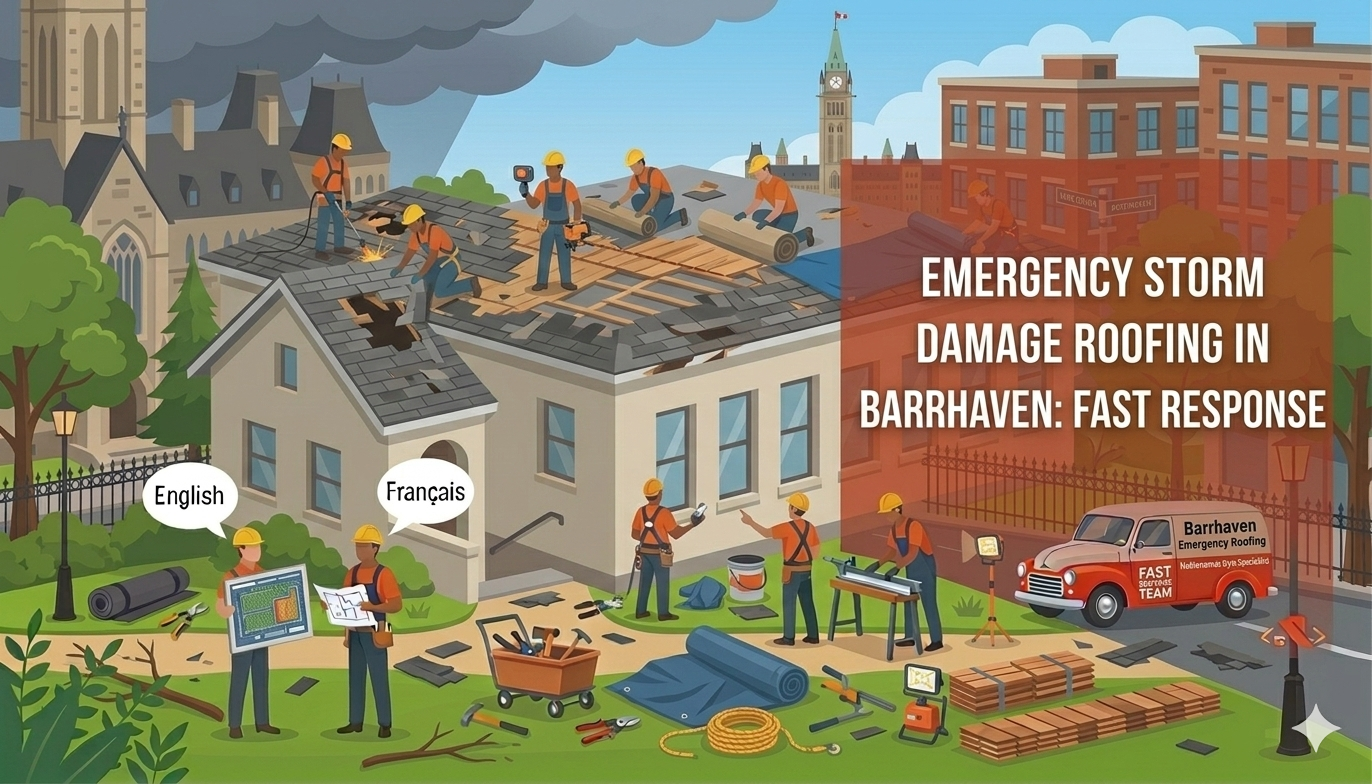
Storm damage rarely arrives with a warning that gives homeowners time to prepare. In Barrhaven, heavy rain, strong winds, freezing rain, snow loads, and sudden temperature swings can all put a roof under serious stress. One violent storm can loosen shingles, tear flashing, clog drainage systems, drive water beneath roofing layers, and turn a small vulnerability into a major emergency. When that happens, fast action matters. A delayed response can allow water to spread through insulation, ceilings, attic spaces, wall cavities, and even the structural framing of the home.
Emergency storm damage roofing in Barrhaven is not simply about patching what is visible from the ground. It is about protecting the entire building envelope before a temporary problem becomes a long-term and expensive failure. A damaged roof can lead to interior leaks, mold growth, rotted decking, damaged soffits, compromised ventilation, stained drywall, peeling paint, and rising energy costs. In serious situations, it can also create electrical hazards and structural weakening that affect occupant safety.
Barrhaven homeowners need a roofing response that is fast, organized, and built around local weather realities. The goal is always the same: stabilize the roof immediately, stop water intrusion, assess the extent of the storm impact, and move toward a durable repair or replacement strategy that restores protection and peace of mind.
Why Fast Emergency Roofing Response Matters After a Storm
A storm-damaged roof should never be treated as a minor inconvenience. Even when damage appears limited, the real problem is often what cannot be seen from the driveway. Missing shingles may be obvious, but lifted shingle tabs, punctured underlayment, cracked vents, broken flashing seals, and moisture trapped under roofing materials can continue to worsen after the storm has passed.
Fast emergency roofing response matters because water does not stay in one place. Once it enters the roof system, it follows the path of least resistance. It can travel along rafters, soak insulation, drip behind walls, and create stains far away from the original entry point. What starts as one loose section of roofing can quickly become a larger repair involving ceilings, attic insulation, trim, drywall, and ventilation systems.
Barrhaven homes experience seasonal weather that can be especially hard on roofing assemblies. Wind can rip shingles loose. Hail can bruise and crack materials. Freeze-thaw cycles can expand tiny entry points and worsen water penetration. Ice buildup near roof edges can push meltwater back under the shingles. A fast response limits this chain reaction and reduces the total scope of damage.
Common Types of Storm Damage on Barrhaven Roofs
Storm damage is not always dramatic from the outside. Some roofs lose whole sections of shingles, while others develop subtle but dangerous failures that are easy to overlook. The most common types of storm-related roofing damage in Barrhaven include wind uplift, hail impact, flashing separation, debris punctures, and water infiltration around vulnerable roof penetrations.
Wind Damage to Shingles and Roofing Components
Strong winds can break the adhesive seal on asphalt shingles and lift them enough to expose the underlayment beneath. Once that seal is broken, even moderate rain can enter under the roofing surface. Ridge caps, starter strips, vents, and flashing details are also vulnerable during high-wind events. Repeated gusts can worsen partially lifted sections until pieces tear away completely.
For homeowners comparing repair urgency and long-term durability, it helps to understand broader roofing performance issues such as material wear, flashing weakness, and weather-related failure points. A useful internal reference is common roofing problems and how to prevent them, which supports a better understanding of how storm damage often begins.
Hail Damage That Weakens the Roof Surface
Hail does not always create holes, but it can still shorten the lifespan of a roofing system. Impact marks may knock protective granules off shingles, expose the asphalt layer, or create bruising that weakens the surface. Over time, those areas become more vulnerable to UV damage, cracking, and moisture intrusion. Hail can also dent metal roof elements, damage vents, and compromise flashing performance.
Heavy Rain and Active Roof Leaks
Driving rain is often what turns storm damage into an emergency. If a roof already has weak spots, heavy rainfall can exploit them immediately. Water may enter through valleys, flashing joints, skylight edges, vent boots, chimney interfaces, or areas where shingles have been displaced. Once a leak reaches interior finishes, the urgency becomes much higher because secondary property damage begins quickly.
Fallen Branches and Debris Impact
Tree limbs, airborne debris, and storm-thrown objects can puncture roofing materials or crush localized sections of the roof deck. Even small branches scraping repeatedly against shingles can strip away protective layers. Larger impacts can break sheathing, damage gutters, bend flashing, and open pathways for serious water penetration.
Signs Your Roof Has Storm Damage Even If Leaks Have Not Started
Not every storm-damaged roof leaks right away. In many cases, homeowners notice subtle warning signs first. Acting at this stage can save substantial money and prevent interior damage later.
Watch for shingles on the lawn, granules collecting near downspouts, visible roof sagging, bent flashing, dented vents, lifted shingle edges, or pieces of fascia displaced after a storm. Indoors, warning signs may include a damp attic smell, fresh stains on ceilings, bubbling paint, damp insulation, or a draft that seems stronger than usual after severe weather.
If the storm affected more than just the roofline, integrated exterior inspection becomes even more important. Elements like eavestroughs and drainage systems can worsen roof leaks when they overflow or detach. Homeowners dealing with broader exterior storm exposure may also benefit from reviewing eavestrough installation in Ottawa, especially when roof drainage performance may have contributed to water intrusion.
What Homeowners Should Do Immediately After Storm Damage
The first priority is safety. A storm-damaged roof can involve slippery surfaces, unstable materials, exposed fasteners, and hidden structural weakness. No homeowner should climb onto the roof during or immediately after a storm to investigate damage. Ground-level observation and interior checks are safer starting points.
Document visible signs of damage from the yard and from inside the home. Take photos of missing shingles, fallen debris, water stains, active leaks, and any damaged roof accessories. Move valuables away from leak areas and place buckets or protective coverings where necessary. If water is entering near lights or electrical fixtures, shut off power to affected areas if it can be done safely.
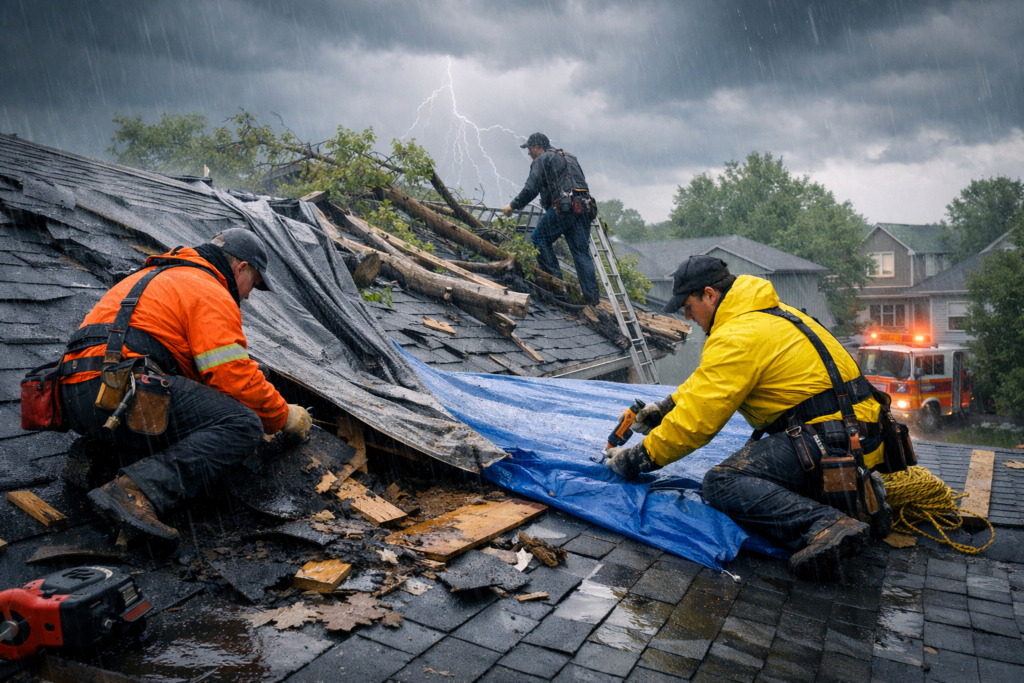
The next step is arranging professional emergency roofing service. Temporary protection measures such as tarping, sealing exposed areas, or stabilizing compromised sections can reduce further damage while the full repair plan is prepared.
For homeowners facing urgent leak issues, emergency roofing repair service in Ottawa is one of the most directly relevant internal resources to support immediate action after a storm.
How Emergency Roofing Service in Barrhaven Typically Works
A proper emergency roofing response follows a clear process. Speed matters, but so does methodical assessment. The best results come from fast stabilization followed by a careful inspection that identifies both visible and hidden failures.
Initial Damage Assessment
The first stage involves identifying the storm’s impact on shingles, flashing, vents, valleys, roof edges, decking, gutters, and attic areas. This helps determine whether the issue can be solved with targeted repairs or whether the roof has wider system damage.
Temporary Protection Measures
Temporary measures are often necessary to keep water out until permanent repairs can be completed. These may include emergency tarping, sealing exposed areas, securing loose materials, and redirecting water away from vulnerable points. Temporary protection should never be the final solution, but it is critical in limiting immediate damage.
Repair Scope and Permanent Restoration
Once the roof is stabilized, permanent repairs can begin. These may involve replacing shingles, repairing underlayment, re-flashing penetrations, replacing damaged vents, repairing roof decking, or correcting water pathways around edges and transitions. If storm damage is severe or widespread, partial or full replacement may be the more durable and cost-effective path.
Homeowners planning for long-term roofing performance should also understand what a full roofing service involves beyond emergency stabilization. A strong service overview can be found at roofing contractor services in Ottawa, which complements emergency response with broader repair and installation context.
Repair or Replace: What Makes More Sense After Major Storm Damage
After a major storm, one of the biggest decisions is whether to repair the damaged sections or replace more of the roofing system. The answer depends on several factors: the age of the roof, the condition of surrounding materials, the extent of moisture intrusion, and whether matching materials are available.
A localized repair can be the right solution when the damage is isolated and the rest of the roof remains sound. This is common after a branch impact or a small section of wind loss. However, if multiple areas were affected, if the shingles are already near the end of their life, or if the storm exposed underlying structural issues, a broader replacement may be the smarter investment.
A patch-only approach on an aging roof can sometimes delay the inevitable while leaving the home vulnerable to the next major weather event. A durable solution should focus on restoring full weather resistance, not just hiding the visible damage.
Insurance Considerations After Storm Damage
Many Barrhaven homeowners are unsure what to do about insurance after a storm. The safest approach is to document everything early and keep a clear record of the timeline. Photos, leak notes, repair invoices, and emergency service reports all help create a complete picture of the loss.
The Insurance Bureau of Canada provides homeowner guidance on understanding coverage and claims responsibilities, which can be helpful when navigating next steps after storm damage. See the Insurance Bureau of Canada’s homeowner resources here: Insurance Bureau of Canada. For broader emergency preparedness and severe weather awareness, Environment and Climate Change Canada offers practical public guidance through its weather resources: Environment and Climate Change Canada Weather.
A professional roofing inspection also helps establish the real scope of damage. Insurance discussions often go more smoothly when the condition of the roof has been properly assessed, photographed, and described in clear terms.
Why Barrhaven Homes Need Roofing Built for Local Conditions
Barrhaven homes face a mix of weather conditions that can punish an aging or poorly installed roof. Winter snow loads, spring thaw cycles, summer windstorms, and heavy rain all affect the roofing system differently. A roof that performs well over time is one that has been installed and repaired with local conditions in mind.
That means attention to ventilation, flashing, drainage, ice-prone areas, shingle fastening, and the relationship between the roof and the rest of the home’s exterior envelope. Roofing does not work in isolation. If windows, siding, soffits, fascia, and eavestroughs are neglected, storm water can still find a way into the structure.
Homeowners thinking beyond the emergency itself may find it valuable to explore weathering Ottawa winters: choosing the right roofing and siding services for your home, since long-term weather resilience depends on the full exterior system working together.
How Delaying Roof Repairs Increases Costs
A storm-damaged roof rarely stays the same from one week to the next. Moisture spreads. Wood softens. Insulation loses effectiveness. Mold risk increases. Ceiling repairs become more extensive. What could have been solved with emergency intervention and targeted restoration may later require structural carpentry, insulation replacement, drywall repair, repainting, and mold remediation.
There is also the hidden cost of lost energy efficiency. Wet insulation performs poorly. Air leaks increase when roofing materials separate or flashing fails. That means heating and cooling systems work harder while indoor comfort drops.
Fast response protects more than the roof itself. It protects the attic, walls, indoor air quality, resale value, and overall condition of the property.
Choosing the Right Emergency Storm Damage Roofing Company in Barrhaven
Not every roofing company is equally prepared for storm emergencies. Homeowners should prioritize a contractor that understands rapid response, temporary protection, full-scope assessment, and durable restoration. The right contractor should be able to identify both obvious and hidden damage while explaining the difference between a quick patch and a long-lasting repair.
Look for a company that communicates clearly, documents damage thoroughly, and understands the importance of restoring the entire protective function of the roof. Storm repair is not just about replacing a few shingles. It is about rebuilding confidence in the home’s ability to withstand the next major weather event.
Preventing Future Storm Damage After Repairs Are Complete
Once emergency repairs are handled, prevention becomes the next priority. Regular roof inspections, attic checks, prompt replacement of damaged flashing, gutter maintenance, and tree trimming near the roofline all help reduce future storm vulnerability. Small seasonal maintenance steps can prevent major emergency calls later.
A strong preventive plan often includes checking roof penetrations, ensuring downspouts are draining properly, confirming there are no loose shingles, and inspecting attic ventilation for signs of moisture or heat imbalance. The more proactive the maintenance, the better the roof performs when severe weather hits.
Final Thoughts on Emergency Storm Damage Roofing in Barrhaven
Emergency storm damage roofing in Barrhaven is about urgency, protection, and smart decision-making. When a storm hits, the roof becomes the first line of defense for everything underneath it. Fast response reduces water intrusion, limits structural damage, protects interior finishes, and keeps repair costs from spiraling.
A proper emergency roofing strategy starts with safe assessment, immediate stabilization, and a repair plan built for local conditions. Whether the damage involves missing shingles, active leaks, hail impact, flashing failure, or debris punctures, timely action is what protects the home and restores lasting security.
For homeowners who need help with urgent roof issues or want a professional assessment after a storm, the best next step is to reach out through the official contact page.
FAQs
What qualifies as emergency storm damage roofing in Barrhaven?
Emergency storm damage roofing usually includes active leaks, missing shingles, exposed roof decking, flashing failure, punctures from debris, or any roof condition that allows water into the home or creates an immediate safety risk.
How quickly should storm roof damage be repaired?
Storm roof damage should be assessed as soon as possible and stabilized immediately if water intrusion is present. Even small delays can lead to soaked insulation, drywall damage, mold growth, and more expensive repairs.
Can a roof leak start days after a storm?
Yes. Some storm damage weakens the roofing system without causing an immediate visible leak. Water may begin entering later when the next rainfall hits or when snow and ice melt across the damaged area.
Should homeowners go on the roof after a storm?
No. Storm-damaged roofs can be slippery, unstable, and dangerous. Ground-level inspection and professional assessment are safer and more effective than attempting to walk the roof.
Will insurance cover storm damage roof repairs?
Coverage depends on the policy and the cause of damage, but many policies may help with sudden storm-related losses. Documentation, photos, and a professional inspection report are important when starting a claim.
Is temporary tarping enough after storm damage?
Temporary tarping helps prevent further water entry, but it is not a permanent repair. The roof still needs a full inspection and proper restoration to ensure long-term protection.
How do I know if I need repair or full replacement?
The decision depends on the age of the roof, the amount of storm damage, the condition of surrounding materials, and whether hidden moisture or structural issues are present. A professional inspection is the best way to determine the most cost-effective solution.