
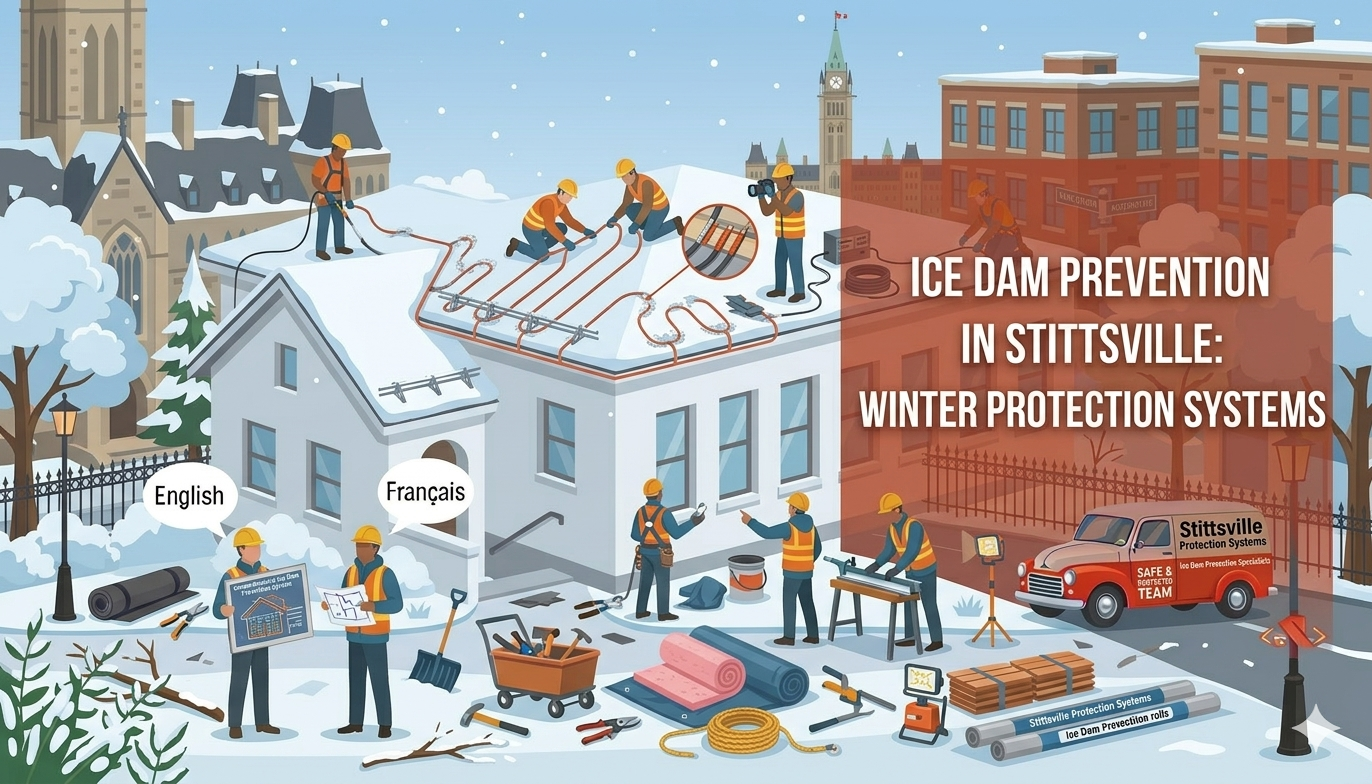
Winter in Stittsville is not gentle on homes. Snowfall, freeze-thaw cycles, wind exposure, roof runoff, and prolonged cold can turn a small exterior weakness into major water damage. Among the most destructive winter problems for homeowners is the ice dam. It often starts quietly along the roof edge, then builds into a system-wide issue affecting shingles, underlayment, soffits, fascia, siding, insulation, eavestroughs, and even interior drywall.
Ice dam prevention in Stittsville is not just a roofing topic. It is a whole-home exterior performance issue. A home that resists ice dams usually has the right combination of attic insulation, balanced ventilation, proper flashing, efficient drainage, durable siding details, and smart winter maintenance. A home that lacks one or more of these elements is far more likely to develop trapped meltwater, frozen eaves, overflow, and hidden moisture intrusion.
For homeowners in Stittsville, prevention matters more than emergency response. Once water backs up under shingles or behind cladding, the cost of repairs rises quickly. Wet insulation loses performance. Fascia boards can rot. Siding joints may open. Freeze-thaw expansion can damage trim lines. Interior stains may appear long after the original problem started. That is why the most effective approach is to install winter protection systems that work together before severe damage occurs.
Why Ice Dams Are Such a Serious Problem for Stittsville Homes
Ice dams form when heat escaping from the house warms the roof surface enough to melt snow. That meltwater flows down toward colder roof edges, where it refreezes. Over time, a ridge of ice forms at the eaves. More meltwater collects behind it, and instead of draining safely off the roof, it backs up beneath shingles and into vulnerable areas of the building envelope.
In Stittsville, this process is made worse by repeated daytime warming and nighttime refreezing, heavy snow loads, and long periods of subzero temperatures. Homes with uneven attic temperatures, poor air sealing, clogged gutters, insufficient overhang ventilation, or aging exterior details are especially vulnerable.
The real problem is not the visible ice. The real problem is the water trapped behind it.
Once that water has nowhere to go, it can seep into roof decking, soak wood components, stain ceilings, loosen fasteners, damage paint, and compromise siding assemblies. This is why homeowners dealing with winter exterior issues should understand how ice dams can damage siding and why small warning signs should never be ignored.
How Ice Dams Start: The Chain Reaction Behind Winter Roof Leaks
Ice dams are rarely caused by one single defect. They are usually the result of several related problems working together.
Heat Loss from the Attic
Warm air rising from the living space can escape through attic hatches, recessed lights, plumbing penetrations, top plates, and poorly sealed insulation gaps. That heat warms the underside of the roof deck, which melts the snow above.
Cold Roof Edges and Overhangs
The eaves and roof overhangs extend beyond the heated building envelope, so they stay colder than the main roof area. Meltwater reaching these colder edges freezes again.
Poor Ventilation Balance
If attic intake and exhaust ventilation are not properly balanced, warm moist air remains trapped. That raises roof deck temperatures and encourages uneven snowmelt.
Drainage and Gutter Issues
Blocked or undersized gutters, frozen downspouts, and poorly sloped eavestroughs prevent meltwater from draining. Water then pools at the edge and accelerates ice formation.
Exterior Weak Points
Damaged flashing, old caulking, loose soffits, cracked siding, and worn trim create entry points once water begins backing up. Homeowners can learn more about these risk factors in this guide on ice dams and siding warning signs.
The Hidden Cost of Ice Dams: More Than Just Roof Edge Ice
Many homeowners think of ice dams as a roof nuisance. In reality, they are one of the most expensive winter exterior problems because the damage spreads across multiple systems.
Water intrusion from ice dams can lead to:
- roof deck moisture damage
- attic mold risk
- wet insulation and heat loss
- stained ceilings and wall finishes
- fascia and soffit rot
- siding distortion or staining
- compromised house wrap performance
- peeling paint and trim deterioration
- frozen overflow around windows and doors
- repeated repair bills every winter
The longer the problem continues, the more likely it becomes that structural wood, exterior sheathing, or hidden insulation layers are being affected. This is why winter prevention systems are not optional upgrades for exposed homes in Stittsville. They are protective investments.
The Best Winter Protection Systems for Ice Dam Prevention in Stittsville
Effective ice dam prevention requires a system-based approach. No single product solves the problem if the rest of the home remains vulnerable.
1. Attic Air Sealing and Insulation Upgrades
The first line of defense is controlling heat loss. If warm interior air keeps escaping into the attic, snow will continue melting unevenly no matter how often the roof is cleared.
Professional air sealing focuses on the overlooked gaps that create big performance issues, including attic hatches, electrical penetrations, duct chases, exhaust fan housings, plumbing stacks, and wall-to-ceiling transitions. Once air leakage is reduced, insulation can perform more effectively and help maintain a colder, more consistent roof surface.
This is also where broader exterior planning matters. Homeowners comparing cold-climate exterior improvements often benefit from understanding the best siding options for cold climates like Ottawa, especially when insulation, air sealing, and cladding upgrades are being considered together.
2. Proper Roof Ventilation
A well-ventilated attic allows cold outdoor air to move through the roof structure and helps keep the deck temperature consistent. The goal is simple: reduce warm spots that trigger snowmelt.
Balanced intake at the soffits and exhaust near the ridge or upper roof area is essential. Ventilation should not be blocked by compressed insulation at the eaves. Baffles, airflow paths, and proper vent sizing all matter. Without them, attic heat gets trapped and encourages the exact freeze-thaw pattern that creates ice dams.
3. Ice and Water Shield at Vulnerable Roof Areas
A properly installed waterproof membrane beneath roofing materials provides a secondary barrier where ice dams are most likely to force water backward. This is especially important at eaves, valleys, around penetrations, and other critical roof transitions.
While underlayment alone does not prevent ice dams from forming, it helps reduce the chance of water entering the structure if backup occurs. It is one of the most important defensive layers during roof replacements or major exterior upgrades.
4. Eavestrough and Downspout Performance
Gutters are a crucial part of winter water control. When they sag, clog, freeze, or overflow, roof-edge ice buildup becomes much worse. In many homes, ice dam problems are not only about attic heat; they are also about poor drainage design.
A strong drainage system should move water away efficiently, reduce pooling at the edge, and keep downspouts functioning even during freeze-thaw periods. Homeowners addressing recurring edge overflow should review eavestrough installation solutions in Ottawa as part of a complete winter protection strategy.
5. Siding, Flashing, and Wall Transition Protection
When ice dams force water out of normal drainage paths, that water often ends up behind trim, around window heads, at wall intersections, and under siding edges. This is where exterior detailing matters.
Well-installed flashing, sealed penetrations, drip edges, corner trims, and durable cladding transitions all help prevent water from moving into wall cavities. If the siding system is already loose, cracked, warped, or poorly integrated with the roofline, winter moisture has an easier path inward.
This is why the best prevention plans do not isolate roofing from siding. They treat the whole exterior envelope as one connected defense system.
Stittsville-Specific Risk Factors That Make Ice Dams More Likely
Stittsville homes face a combination of suburban exposure and harsh winter weather patterns that increase ice dam risk. Open wind corridors, drifting snow, variable roof styles, and repeated thaw-freeze conditions put stress on roof edges and wall assemblies.
Several common local home conditions can make ice dam formation more aggressive:
Complex Rooflines
Multiple valleys, dormers, intersecting slopes, and long roof runs create pockets where snow accumulates and meltwater slows down.
Large Roof Overhangs
The farther the eaves extend beyond the heated wall, the colder they remain, which increases the likelihood of refreezing at the edge.
Older Insulation Standards
Many homes were built before current expectations around air sealing and thermal performance. Even well-maintained homes may still lose more attic heat than owners realize.
Deferred Exterior Maintenance
Loose siding panels, aging caulking, damaged soffits, and deteriorated trim create the small openings that winter moisture exploits.
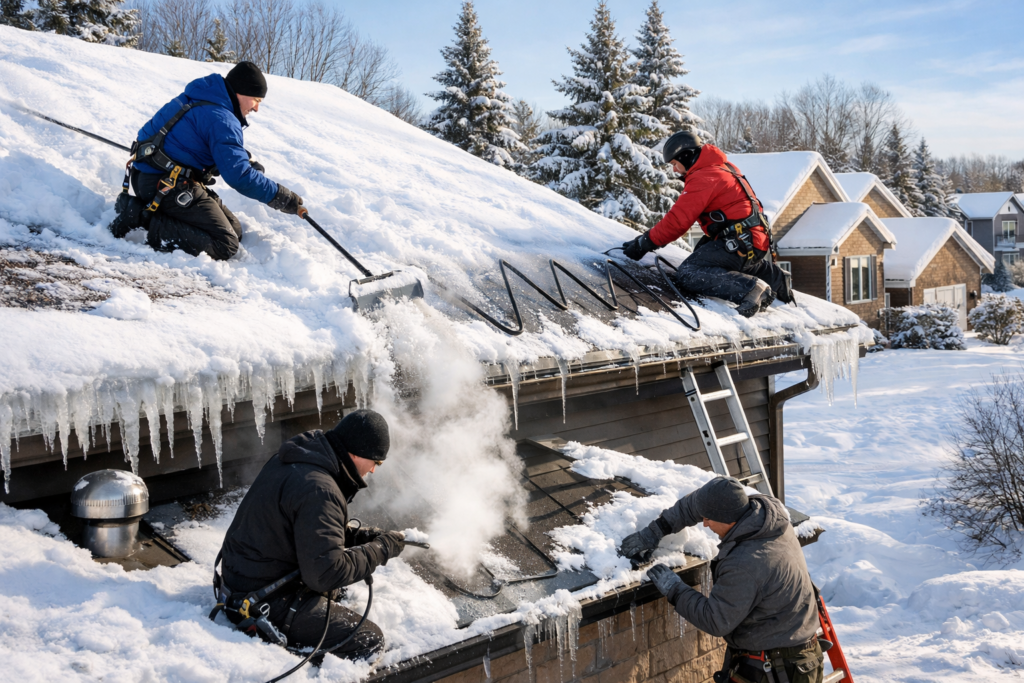
Warning Signs You May Already Have an Ice Dam Problem
A serious ice dam issue often starts with subtle clues. The earlier these signs are recognized, the lower the repair cost tends to be.
Watch for:
- thick ridges of ice along roof edges
- large icicles forming repeatedly in the same area
- water stains on ceilings near exterior walls
- damp attic insulation
- peeling paint near soffits or trim
- warped, cracked, or buckled siding near the roofline
- frozen overflow behind gutters
- drafty upper rooms after snow accumulation
- moldy odors in attic-adjacent spaces
- repeated winter leaking after storms or sunny thaw days
These signs suggest the home is not managing heat, water, and drainage correctly.
How to Prevent Ice Dams Before Winter Starts
The best time to stop ice dams is before the first major snowfall. A proactive inspection and protection plan in early fall can prevent emergency winter repairs.
Inspect the Roof Edge and Drainage Path
Check shingles, flashing, drip edges, gutters, downspouts, and soffits for signs of weakness. Even small defects become major entry points under ice pressure.
Seal Attic Bypasses
Air leakage from the home into the attic should be identified and sealed professionally where needed.
Evaluate Insulation Depth and Coverage
Uneven or compressed insulation creates hot spots on the roof. Consistent coverage matters.
Confirm Ventilation Function
Soffit vents should be open and unobstructed, and upper exhaust ventilation should be adequate for the roof size.
Trim Overhanging Branches
Branches can increase snow retention, debris buildup, and moisture at roof edges.
Clean Eavestroughs Before Freeze-Up
Leaves, granules, and debris trap water right where winter drainage needs to work most efficiently. For broader seasonal care, homeowners should also review these winter maintenance tips for protecting siding from snow and ice.
What Not to Do When Ice Dams Appear
When homeowners see large icicles or roof-edge ice, the instinct is often to break or chip it off. That can make the problem worse.
Avoid:
- hammering or prying ice off shingles
- climbing onto icy roofs without proper safety equipment
- using rock salt that can stain or damage materials
- ignoring interior water stains because the leak “stopped”
- assuming spring melt will solve hidden moisture problems
- replacing only visible trim without correcting the cause
Quick fixes do not correct heat loss, poor drainage, or failing exterior details. In many cases, they only delay more expensive repairs.
Long-Term Ice Dam Prevention Through Exterior System Upgrades
The most durable solution is to combine maintenance with strategic upgrades. Homes that repeatedly experience ice dams often need more than seasonal cleanup. They need better exterior performance.
Long-term winter protection may include:
Roof Replacement with Better Edge Detailing
New underlayment, drip edge design, membrane protection, and flashing integration can dramatically improve resistance to winter backup.
Siding Replacement or Repair
If winter moisture has already affected the wall assembly, replacing damaged siding and correcting water management details can stop recurring infiltration.
Soffit and Fascia Upgrades
These components are critical to ventilation and drainage. When they fail, the roof edge becomes far more vulnerable.
Gutter Redesign
Proper sizing, pitch, fastening, and discharge locations help meltwater move away before freezing becomes a problem.
Window and Wall Transition Sealing
Upper-floor window heads, trim details, and cladding transitions should be checked for weak flashing or sealant failure.
For homeowners planning larger exterior improvements, guidance from Natural Resources Canada can be helpful when considering energy performance, while winter planning should always account for local weather exposure and storm conditions tracked through Environment and Climate Change Canada.
Why Integrated Roof, Siding, and Drainage Protection Works Best
The strongest homes in winter are not the ones with the most expensive roofing product. They are the ones where all exterior systems work together.
A properly insulated attic without good ventilation still risks uneven snowmelt. A new roof without proper gutter drainage still risks frozen edge backup. Strong siding without correct flashing can still allow water into the wall. That is why integrated protection is the real answer.
In practical terms, that means looking at:
- attic heat control
- roof deck temperature balance
- membrane protection
- drainage performance
- siding condition
- flashing integrity
- wall moisture resistance
- seasonal maintenance consistency
When these systems are aligned, ice dams become far less likely and winter water intrusion becomes much easier to prevent.
Why Stittsville Homeowners Should Take Ice Dam Prevention Seriously Now
A small winter leak can become a spring repair bill, a summer mold issue, and a future resale concern. Exterior water problems do not stay small for long. The cost of acting early is almost always lower than the cost of repairing rot, insulation loss, interior damage, and repeated seasonal patchwork.
Homes in Stittsville need winter protection systems built for real Canadian conditions. That means planning for snow load, edge freezing, attic heat movement, overflow, and moisture management across the entire exterior envelope.
Waiting until water is already entering the house is the expensive route. Preventing the problem at the roof edge, in the attic, and along the wall assembly is the smarter one.
When to Call for Professional Help
If your home has recurring icicles, ceiling staining, freezing at the eaves, winter siding moisture, or visible roof-edge ice buildup, a professional assessment is the right next step. The goal is not just to remove the symptom. It is to identify where the home is losing heat, trapping water, or failing to drain correctly.
For tailored exterior solutions, inspections, and upgrade planning, visit the Kaloozie Comfort contact page to discuss winter roof, siding, eavestrough, and exterior protection options for your Stittsville home.
Frequently Asked Questions
What causes ice dams on homes in Stittsville?
Ice dams are usually caused by heat escaping into the attic, which melts roof snow unevenly. The meltwater then refreezes at the colder eaves, creating a ridge of ice that traps more water behind it.
Can ice dams damage siding as well as the roof?
Yes. When water backs up or overflows incorrectly, it can get behind siding, soak trim, damage house wrap, stain exterior walls, and create freeze-thaw stress on cladding and wall transitions.
Do gutters help prevent ice dams?
Properly functioning gutters and downspouts help manage meltwater and reduce pooling at the roof edge. Poorly maintained or frozen gutters, however, can make ice dam problems worse.
Is attic insulation enough to stop ice dams?
Not by itself. Insulation is important, but effective prevention also requires air sealing, ventilation, flashing, drainage, and strong roof-edge detailing.
What are the first signs of an ice dam problem?
Common early signs include large icicles, thick roof-edge ice, ceiling stains near exterior walls, drafty upper rooms, damp attic insulation, and siding or trim deterioration near the eaves.
Should ice dams be removed by force?
No. Chipping or prying ice off the roof can damage shingles, flashing, and gutters. The safer solution is to address the underlying cause and have the system assessed properly.
Can exterior upgrades reduce future winter damage?
Yes. Improvements to roofing, siding, soffits, fascia, insulation, ventilation, and eavestroughs can significantly reduce the likelihood of recurring ice dams and related water intrusion.