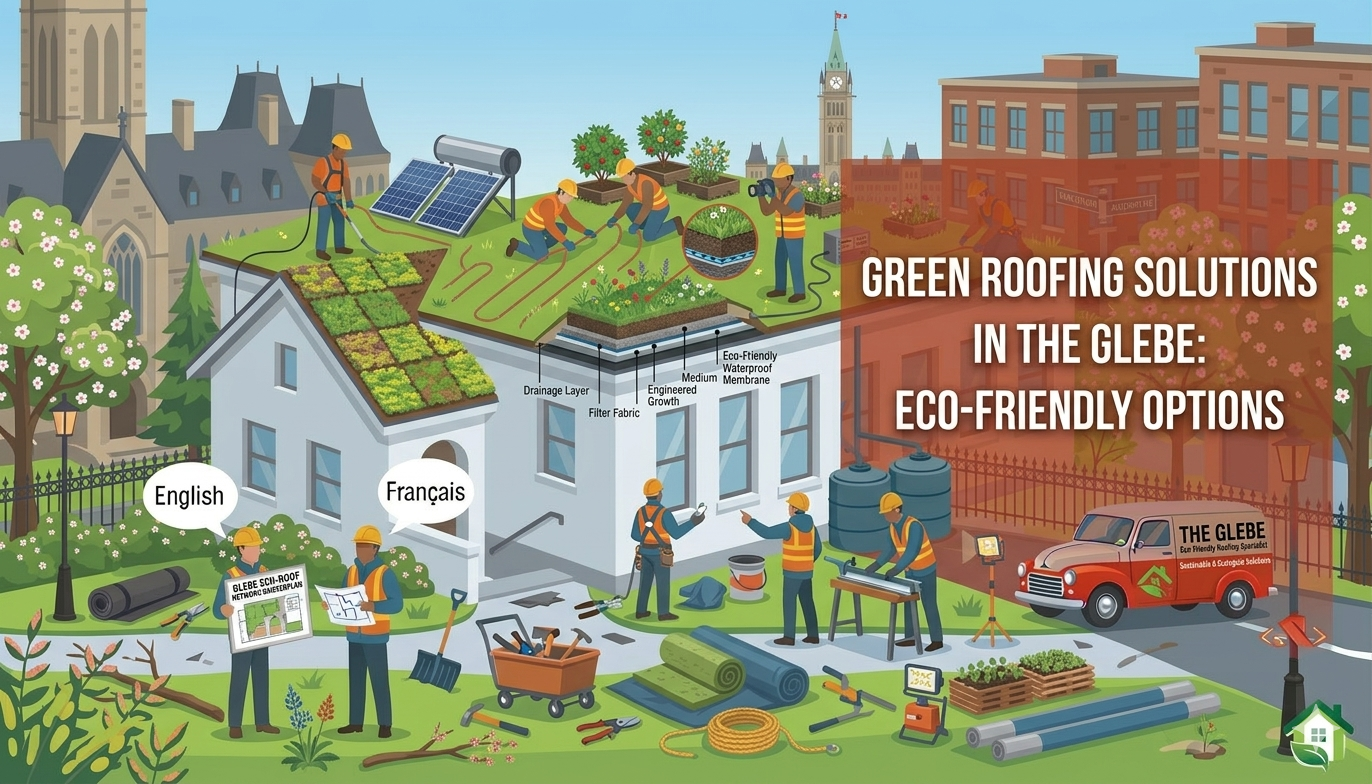
The Glebe is one of Ottawa’s most distinctive neighbourhoods, known for mature trees, character homes, walkable streets, and a strong appreciation for thoughtful design. In a community where curb appeal, longevity, and responsible homeownership matter, green roofing solutions are no longer a niche idea. They are becoming a practical, high-value decision for homeowners who want better performance, lower environmental impact, and a more durable exterior system.
A roof does more than cover a house. It regulates temperature, manages water, protects structural components, affects ventilation, and directly influences long-term operating costs. In a place like Ottawa, where homes must stand up to snow loads, freeze-thaw cycles, wind, rain, summer heat, and seasonal moisture, choosing the right roofing system is not just about appearance. It is about efficiency, resilience, and total lifecycle value.
For homeowners in The Glebe, eco-friendly roofing should be viewed as part of a bigger exterior strategy. The best results usually come from combining sustainable roofing materials, proper insulation, ventilation, drainage, and compatible siding or window upgrades. That is why many property owners start by reviewing trusted local resources such as eco-friendly roofing and siding options in Ottawa before selecting the most suitable system for their home.
Why Green Roofing Matters in The Glebe
The Glebe has a housing stock that ranges from historic homes and renovated century properties to updated family residences and premium infill builds. These homes often require more care than standard suburban construction because design integrity, aging materials, and long-term efficiency all need to be balanced carefully.
Green roofing matters in this neighbourhood for several reasons.
First, energy performance is increasingly important. Older homes in The Glebe can lose significant heat through the roof assembly if insulation, ventilation, and roofing materials are outdated. A sustainable roofing approach helps reduce unwanted heat loss in winter and excessive heat gain in summer.
Second, durability matters. Ottawa weather is demanding. A roof that fails early creates waste, cost, and avoidable repairs. Eco-friendly roofing is not only about recycled content or environmental branding. It is also about choosing materials that last longer, perform better, and reduce replacement frequency.
Third, appearance matters. The Glebe is a neighbourhood where homeowners care how exterior upgrades look from the street. Sustainable roofing today is available in styles that complement heritage-inspired architecture, transitional homes, and clean modern renovations.
Fourth, water management matters. Snowmelt, heavy rain, and ice buildup can all put stress on roofing edges, flashings, valleys, and drainage systems. A properly designed green roofing solution considers runoff, eavestrough integration, ventilation, and long-term moisture control.
What Makes a Roofing Solution “Green”
A green roofing solution is not limited to one specific material. It is better understood as a roofing system that reduces environmental strain while improving building performance.
That may include roofing products made from recycled or recyclable materials. It may also include systems with longer lifespans, which reduce landfill waste over time. In other cases, it means roofing that reflects more heat, improves insulation performance, or supports better moisture control and ventilation.
A roof becomes more environmentally responsible when it delivers several advantages at once:
Long service life
The longer a roof lasts, the fewer raw materials are consumed over the life of the home. Frequent replacement creates more waste, more transportation emissions, and more labour-intensive tear-offs.
Energy efficiency
Roofing materials that reflect solar heat or support stronger attic performance can reduce heating and cooling strain. In Ottawa, this is especially valuable because homes face both hot summers and cold winters.
Low maintenance needs
Roofing that requires fewer repairs, fewer replacement parts, and less chemical treatment typically has a lower lifecycle footprint.
Recyclability and material efficiency
Some green roofing products can be recycled at the end of their useful life. Others contain recycled content from the start.
Compatibility with the full exterior
A truly sustainable roof works with the rest of the building envelope. That means proper airflow, flashing, insulation, siding transitions, and drainage management all play a role.
Homeowners exploring a full upgrade path often benefit from comparing roofing with other exterior systems through pages like Ottawa’s guide to durable and stylish roofing and siding upgrades, especially when the goal is a coordinated, higher-efficiency renovation.
Best Eco-Friendly Roofing Options for Homes in The Glebe
Not every sustainable roofing material fits every home. Architecture, slope, budget, maintenance goals, and neighbourhood aesthetics all influence the best choice. The most practical green roofing solutions in The Glebe usually include the following.
Metal Roofing for Long-Term Sustainability
Metal roofing remains one of the strongest eco-friendly options for Ottawa homeowners who want durability, energy efficiency, and strong year-round performance. It is especially attractive for homeowners who want a long service life and minimal maintenance over time.
A quality metal roof can last decades longer than many conventional roofing materials. That extended lifespan means fewer replacements, less waste, and better long-term value. Metal roofing also sheds snow effectively when installed correctly, which can be beneficial during Ottawa winters.
Another key advantage is reflectivity. Many modern metal roofing products are engineered to reflect more solar radiation than darker conventional materials, helping reduce heat buildup during warmer months. This can improve indoor comfort and reduce cooling demand.
From a design standpoint, metal roofs are no longer limited to industrial or agricultural appearances. Today’s profiles can suit contemporary homes, traditional residences, and premium neighbourhoods like The Glebe. Homeowners considering this option can review metal roofing company in Ottawa to better understand where this material fits in a sustainable exterior plan.
Why metal roofing performs well in Ottawa
- It handles freeze-thaw conditions well when properly installed
- It resists rot, insect damage, and many moisture-related issues
- It can be manufactured with recycled content
- It is often recyclable at the end of its lifespan
- It supports long-term value through durability and low maintenance
Steel Roofing as a Durable, Recyclable Upgrade
Steel roofing is another strong green option for homeowners who prioritize resilience and lifecycle value. It shares many of the same environmental and performance benefits as other metal roofing systems, while offering excellent strength and weather resistance.
For Glebe homeowners, steel roofing can be a smart fit when the goal is to combine sustainability with architectural presence. It performs well under harsh climate conditions and is often chosen for its balance of durability, finish options, and structural reliability.
A well-designed steel roof can also support better snow management and reduce the need for early replacement. For many homes, that alone makes it a stronger environmental choice than materials with shorter service lives. Homeowners interested in this direction can explore steel roofing company in Ottawa as part of their evaluation process.
Cool Roof Principles for Urban Comfort
A cool roof is designed to reflect more sunlight and absorb less heat than traditional dark roofing surfaces. While the term is often associated with commercial buildings, the principle is increasingly relevant for residential properties as well.
In The Glebe, where homes can experience significant summer sun exposure and urban heat retention, cool roof concepts can improve comfort and reduce attic heat buildup. This does not always require a bright white roof. Many modern roofing products are available in more attractive tones while still delivering better reflectivity than older materials.
Cool roof performance is particularly effective when paired with:
- proper attic insulation
- ventilation upgrades
- air sealing
- improved soffits and exhaust pathways
This is where sustainable roofing shifts from product selection to system design. Material alone is never enough if the underlying ventilation and thermal strategy are weak.
Recycled and Low-Waste Roofing Materials
Some roofing products are manufactured using recycled metals, reclaimed inputs, or engineered composites designed to reduce waste. These options can appeal to homeowners who want a roof with a lighter environmental footprint from the manufacturing stage onward.
The best choice depends on quality and local suitability. In Ottawa’s climate, performance should never be sacrificed for marketing language. Homeowners should focus on materials that can handle snow, wind, moisture, and thermal cycling while still supporting sustainability goals.
The most effective low-waste roofing strategy is often not the most heavily advertised product. In many cases, it is the system that lasts the longest, needs the fewest repairs, and integrates properly with drainage, trim, and insulation.
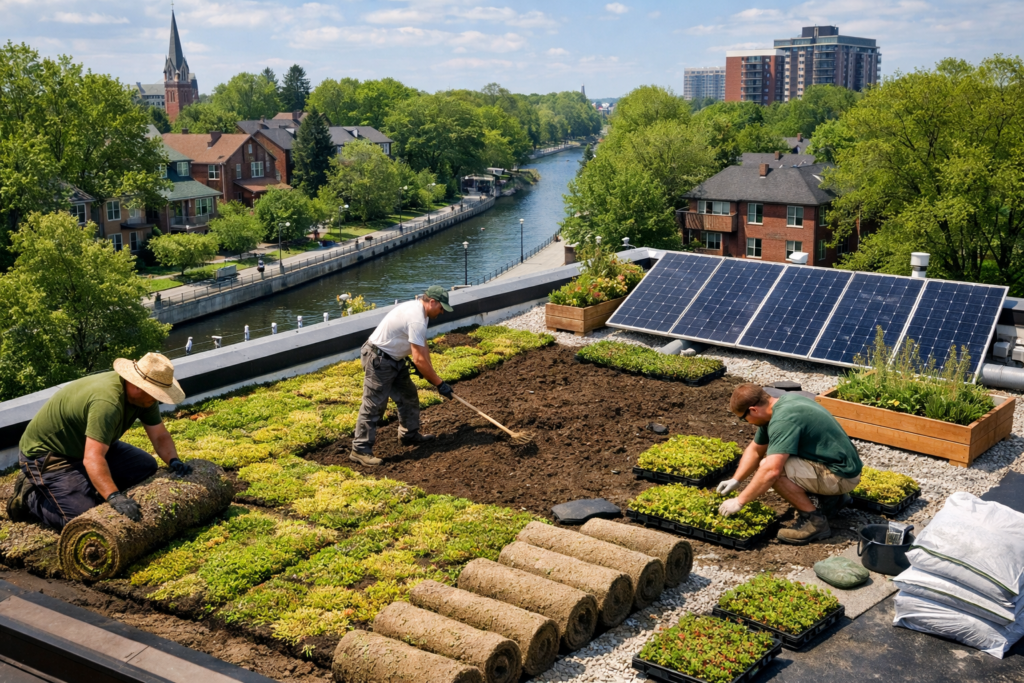
How Green Roofing Lowers Energy Costs
One of the biggest reasons homeowners in The Glebe invest in green roofing is energy performance. A properly selected and installed eco-friendly roof can contribute to lower heating and cooling costs in several ways.
Better heat reflection in summer
Roofing materials with higher reflectance reduce the amount of heat transferred into attic spaces. That can reduce upper-floor overheating and lessen air conditioning demand.
Improved insulation support in winter
A roofing system that works with proper ventilation and attic insulation helps reduce heat loss. In Ottawa winters, even moderate gains in roof efficiency can translate into meaningful comfort improvements.
Reduced moisture-related inefficiency
When roofing systems allow trapped moisture, insulation can lose effectiveness. Sustainable roofing depends on dry, healthy assemblies that maintain their performance over time.
More stable indoor comfort
Homes with strong roofing and ventilation design often experience fewer temperature swings, fewer draft issues, and more consistent room comfort.
For broader information on how roofing and siding choices influence total exterior efficiency, many homeowners also review roofing company in Ottawa when planning upgrades that go beyond a simple material swap.
Green Roofing and Heritage-Sensitive Design in The Glebe
One of the biggest concerns in The Glebe is choosing roofing that respects the architectural style of the home. Sustainability should not force a homeowner into a look that feels out of place.
That is why material profile, colour selection, edge detailing, and trim design are all critical. A green roofing solution can still feel elegant, timeless, and neighbourhood-appropriate. Many roofing systems now come in finishes that complement brick facades, classic porches, dormers, and traditional exterior palettes.
For older homes, the goal should be balance. The roof should improve performance while preserving or enhancing visual coherence. It should not overpower the structure or create a mismatched exterior. This is especially important in established Ottawa neighbourhoods where rooflines are highly visible and architectural character matters.
The Role of Drainage, Eavestroughs, and Moisture Control
A sustainable roof is never just the top layer. It is part of a full water-management system. Even the most durable eco-friendly roofing material can underperform if runoff is not controlled properly.
In The Glebe, where snow accumulation and seasonal melt are common, effective drainage is essential. Water that overflows, backs up, or lingers near roof edges can damage fascia, soffits, siding, and foundation-adjacent areas.
That is why green roofing plans should include:
- properly sized eavestroughs
- clean drainage paths
- secure flashing
- effective attic ventilation
- controlled roof edge runoff
When homeowners ignore these supporting details, they often end up with premature wear, ice issues, or hidden moisture damage. Sustainable roofing works best when the entire exterior is treated as one connected protective system.
Should Roofing Be Upgraded Together With Siding or Windows?
In many Glebe homes, the answer is yes. Not always, but often.
If a homeowner is already dealing with heat loss, drafts, moisture intrusion, aging trim, or visible exterior wear, upgrading the roof alone may leave performance gains on the table. Roofing, siding, windows, and ventilation all affect one another.
For example, replacing a roof while leaving poor wall transitions, failing trim, or inefficient windows can limit the full return on the investment. When practical, coordinated exterior work tends to produce a cleaner finish, fewer labour inefficiencies, and stronger long-term performance.
That is one reason homeowners often consult broader service pages like services before deciding how much of the exterior envelope should be addressed in one project.
How to Choose the Right Green Roofing Solution
The best eco-friendly roof for one home in The Glebe may not be the best for another. Decision-making should be based on performance, home style, budget, and long-term goals.
Consider the age and design of the home
A century home may need a different visual approach than a newer infill property. Roof pitch, visible slopes, and architectural detailing all matter.
Think in lifecycle cost, not just upfront cost
A cheaper roof that fails early can be far more expensive over time than a premium product with decades of strong performance.
Prioritize installation quality
Even high-end materials can fail when flashing, ventilation, fasteners, and edge details are done poorly.
Look beyond marketing claims
Not every product labeled sustainable delivers strong real-world value. Focus on lifespan, maintenance, recyclability, and climate suitability.
Plan for the full system
Roofing decisions should account for eavestroughs, soffits, attic airflow, insulation, and transitions to siding or masonry.
Environmental Benefits Beyond the House Itself
Green roofing is not just about reducing utility bills. It also supports broader environmental responsibility.
Longer-lasting roofs reduce landfill waste by lowering replacement frequency. Recyclable materials reduce disposal pressure. Better thermal performance reduces energy demand. Proper moisture control extends the life of surrounding building components, which prevents unnecessary renovation waste in adjacent systems.
In established neighbourhoods like The Glebe, where homeowners often invest carefully in long-term property stewardship, these advantages align with both financial and environmental priorities.
Authoritative resources such as Natural Resources Canada and the City of Ottawa can also help homeowners better understand energy efficiency, renovation planning, and local housing considerations when evaluating sustainable exterior upgrades.
Signs It May Be Time to Replace an Older Roof With a Greener Option
Many homeowners wait too long to act. By the time a roof is visibly failing, there may already be damage underneath.
Common warning signs include:
- recurring leaks or moisture staining
- curling, cracking, or aging roofing materials
- rising heating or cooling costs
- poor attic ventilation
- repeated ice buildup at roof edges
- visible wear around flashing, valleys, or penetrations
- an exterior upgrade plan that makes the current roof look outdated or inefficient
When these signs appear, replacement may be more cost-effective than repeated patching. A greener roofing solution can solve current problems while improving long-term energy performance and curb appeal.
Why Green Roofing Is a Strong Investment in The Glebe
The Glebe is a neighbourhood where quality matters. Buyers, homeowners, and renovators all recognize the value of durable, attractive, and efficient exterior improvements. Green roofing aligns with that mindset because it offers practical performance, not just trend-driven appeal.
A sustainable roof can:
- enhance curb appeal
- support resale value
- reduce maintenance needs
- improve comfort year-round
- strengthen long-term building durability
- reduce environmental impact over time
For homeowners who want a roof that looks refined, performs well in Ottawa’s climate, and supports responsible property ownership, green roofing is one of the smartest exterior investments available.
Conclusion: Eco-Friendly Roofing That Fits The Glebe
Green roofing solutions in The Glebe should be selected with the neighbourhood, the home, and the climate in mind. The right system is one that performs through Ottawa winters, supports energy efficiency, complements the property’s architecture, and delivers durable protection with lower long-term waste.
Metal roofing, steel roofing, cool roof principles, improved ventilation, and full-envelope planning all deserve serious consideration. The best result usually comes from viewing the roof not as a standalone upgrade, but as part of a complete strategy for exterior performance and sustainable homeownership.
For homeowners ready to move forward with a greener exterior upgrade, the next step is a professional assessment of the roof, insulation, drainage, and visible wear points so the recommended solution fits both the structure and the long-term goals of the property. For project planning and next steps, visit the contact page.
FAQs
What is the most eco-friendly roofing option for homes in The Glebe?
Metal roofing is often one of the strongest eco-friendly choices because it lasts a long time, requires relatively low maintenance, can contain recycled content, and is frequently recyclable at the end of its lifespan. The best option still depends on the home’s design, budget, and performance goals.
Does green roofing really save money on energy bills?
Yes, green roofing can support lower energy bills when paired with proper insulation and ventilation. Reflective materials can reduce summer heat gain, while a well-designed roofing assembly helps reduce heat loss in winter.
Is metal roofing too modern for older Glebe homes?
Not necessarily. Many metal roofing profiles and finishes work well with traditional and heritage-style homes. The key is choosing the right colour, profile, and installation details so the final appearance complements the architecture.
How long does an eco-friendly roof usually last?
That depends on the material and installation quality. In general, sustainable roofing systems are often chosen because they last longer than standard alternatives. A long service life is one of the main reasons they are considered environmentally responsible.
Can green roofing help with Ottawa winters?
Yes. A well-designed green roofing system can improve snow shedding, reduce moisture-related problems, support stronger ventilation, and help stabilize indoor comfort during freezing weather.
Should roofing and siding be replaced together?
In many cases, combining roofing and siding upgrades can improve exterior performance, reduce labour inefficiencies, and create a cleaner finished result. It is especially worthwhile when the home has drafts, moisture issues, visible wear, or broader efficiency goals.