
Ice dams are one of the most damaging wintertime hazards for homeowners across cold regions like Ottawa. Beyond roof leaks, they can compromise your siding, leading to costly repairs, water infiltration, and even structural damage. Understanding how ice dams form, what signs to look for, and how to prevent them is essential for protecting your home’s exterior investment.
What Are Ice Dams and How Do They Form?
An ice dam is a ridge of ice that forms along the edges of your roof. When heat escapes from the home, snow on the roof melts. The melted water runs down toward the eaves and refreezes in colder areas. Over time, this ice buildup prevents melting snow from draining properly, causing water to back up under the roof shingles and overflow down the siding.
Key factors in ice dam formation include:
- Poor insulation or air leaks in the attic
- Inadequate ventilation in the roof space
- Heavy snowfall combined with fluctuating winter temperatures
When water overflows, it doesn’t stop at your roof. It often runs down your siding, leading to hidden moisture problems that can compromise both appearance and structural integrity.
How Ice Dams Damage Siding
1. Water Infiltration
Trapped water behind siding can seep into wall cavities, causing mold, mildew, and rot. Over time, this weakens the structure and reduces the siding’s effectiveness.
2. Staining and Discoloration
Repeated water exposure leaves unsightly streaks, stains, and discoloration on siding, reducing curb appeal and potentially lowering property value.
3. Warping and Cracking
Moisture that freezes and expands can cause siding panels to warp or crack, requiring premature replacement.
4. Insulation Inefficiency
Compromised siding allows heat loss, which worsens ice dam formation, creating a vicious cycle of damage.
Signs Homeowners Should Watch For
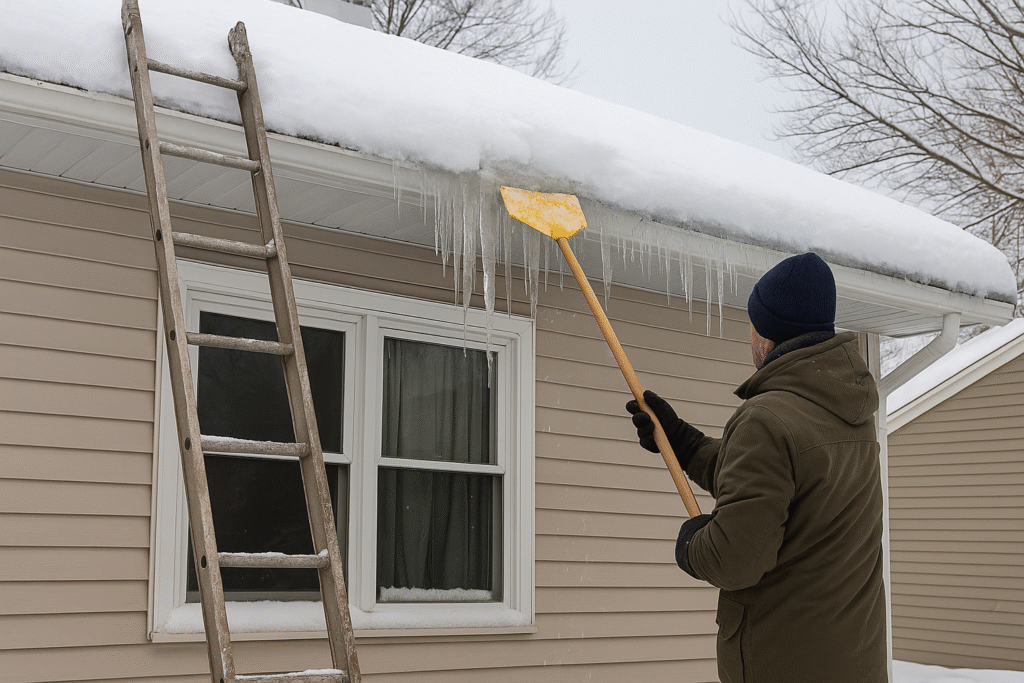
- Icicles forming along the eaves and gutters
- Water stains on exterior siding panels
- Bubbling or peeling paint near rooflines and walls
- Damp or musty smells inside the home during winter
- Siding gaps or warping after snowstorms
If you see these indicators, it’s time to act before minor issues turn into expensive repairs.
For an in-depth look at siding red flags, see Top 5 Signs It’s Time to Replace Your Siding.
Best Siding Materials to Withstand Ice Dam Challenges
Not all siding reacts to ice dam damage the same way. Choosing durable siding can limit risks:
- Vinyl Siding – Affordable and flexible but prone to cracking in extreme cold.
- Fiber Cement Siding – Highly resistant to moisture and cold-weather damage.
- Engineered Wood – Offers the warmth of wood with enhanced durability.
- Metal Siding – Provides excellent weather resistance but requires professional installation.
To explore long-lasting siding options, visit What Type of Siding Lasts the Longest?.
Preventing Ice Dams and Protecting Siding
1. Improve Attic Insulation
Keeping the attic properly insulated prevents heat from melting snow unevenly, reducing ice dam formation.
2. Enhance Ventilation
Ridge and soffit vents maintain consistent roof temperatures. Without ventilation, ice dams form quickly.
3. Install Ice and Water Shield
A protective membrane under shingles helps block water from reaching siding and walls.
4. Regular Roof and Gutter Maintenance
Clearing gutters and downspouts ensures proper drainage. Debris clogs make ice dams worse. For seasonal tips, check How to Maintain Your Siding for Longevity.
5. Professional Siding Inspection
Hiring experts ensures problems are identified early and fixed properly. Learn more in Why Hiring a Siding Expert Is Your Best Option.
When to Repair vs. Replace Damaged Siding
Sometimes, patch repairs are enough. However, if water damage has spread behind the siding or multiple sections are warped, replacement is the more cost-effective solution.
Homeowners often underestimate the true cost of waiting. For insights, see Is It Worth Replacing Siding on a House?.
Government and Expert Resources
Homeowners should also review external resources for guidance:
- Government of Canada – Protect Your Home in Winter
- U.S. Department of Energy – Ice Dam Prevention
These resources provide science-backed advice on winter home protection.
Conclusion: Proactive Prevention Saves You Thousands
Ice dams are more than just a roofing issue—they’re a siding and home investment threat. Left unchecked, they can cause long-term water damage, rot, and structural compromise. By improving insulation, ensuring ventilation, and investing in durable siding, you can prevent costly repairs. Regular inspections and professional support provide peace of mind and protect your home against Ottawa’s harsh winter conditions.
For expert siding and roofing services tailored to Ottawa homes, Contact Kaloozie Comfort today.

