
When storms hit, the exterior of your home often takes the brunt of the damage. From high winds and hail to heavy rain and falling debris, your siding, roofing, windows, and gutters can all sustain costly impacts. Having a structured storm damage checklist ensures you can assess problems quickly, prevent further deterioration, and restore your home’s protection and curb appeal.
Inspecting Siding After a Storm
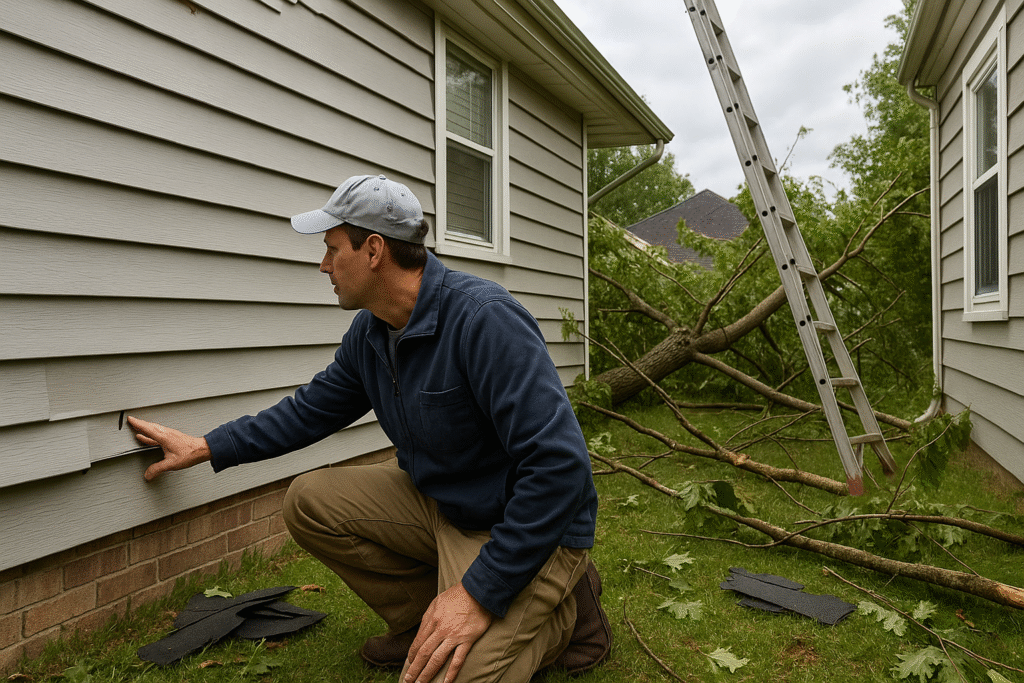
Siding is one of the first defenses against harsh weather. After any significant storm, walk around your home and look for:
- Cracks, dents, or holes caused by hail or flying debris.
- Warping or buckling panels that indicate water penetration.
- Loose or missing siding pieces which can leave the sheathing exposed.
- Water stains or soft spots pointing to hidden moisture damage behind the siding.
If siding damage is left unchecked, water intrusion can lead to mold, rot, or structural decay. Homeowners can explore professional insights on how to maintain siding for longevity to prevent repeated issues.
Roofing Damage Assessment
Your roof is vulnerable to wind and hail, both of which can dislodge shingles, puncture underlayment, or weaken flashing.
Key areas to check:
- Shingles – Missing, curling, or broken shingles should be addressed immediately.
- Flashing – Inspect around chimneys, vents, and skylights for gaps.
- Granule loss – Look in gutters for an excess of granules from asphalt shingles.
- Leaks or water spots indoors – These indicate roof damage has already compromised your home.
In Ottawa, where winters are harsh, homeowners often turn to emergency roofing repair services to handle urgent post-storm issues.
Windows and Doors Check
Broken seals or cracks in windows and doors allow water and drafts into the home.
- Inspect window frames for cracks or chips.
- Check seals and weatherstripping for displacement.
- Look for fogging between panes – a sign of broken thermal seals.
- Test doors to ensure they close tightly without gaps.
For persistent issues, homeowners in Ottawa can rely on expert window repair services to restore energy efficiency and security.
Eavestroughs and Gutters
Storms often clog gutters with leaves, branches, and shingle debris. Damaged or clogged gutters can lead to overflow, foundation cracks, or siding stains.
Checklist:
- Ensure gutters are clear of debris.
- Check for dents, cracks, or sagging sections.
- Verify that downspouts are firmly attached and draining away from the foundation.
Professional eavestrough installation services in Ottawa can address damaged systems and improve drainage performance.
Exterior Structures and Landscaping
Beyond siding and roofing, storms can compromise other exterior features:
- Fences – Look for leaning posts or broken panels.
- Decks and patios – Check for loose boards or shifting foundations.
- Trees near the home – Inspect branches for cracks that could cause future damage.
Removing hazards early can save thousands in potential repairs.
Documenting Damage for Insurance
Before making repairs, document all storm damage for your insurance provider:
- Take high-resolution photos of every damaged area.
- Write a detailed list of visible issues.
- Save any receipts from temporary fixes (tarps, plywood, etc.).
- Contact your insurance provider promptly with all documentation.
Government resources like Canada’s guide to protecting your home from natural hazards offer additional advice on navigating claims.
Temporary Protection Measures
If you cannot get immediate professional repairs, take steps to prevent worsening damage:
- Use tarps to cover roof leaks.
- Apply plywood to broken windows or doors.
- Remove loose debris from siding and gutters.
- Seal minor cracks temporarily with weatherproof tape or caulking.
Temporary solutions buy time but should never replace professional repairs.
Hiring Qualified Professionals
Attempting DIY repairs after a storm can lead to incomplete fixes or safety risks. Choosing experienced contractors ensures long-lasting results.
For siding-specific repairs, Ottawa homeowners can refer to trusted local siding installers for expert service. Understanding why hiring a siding expert is your best option is critical when safeguarding your home after major storm events.
Preventative Upgrades for Future Storms
Storms are inevitable, but you can minimize risks through preventative measures:
- Impact-resistant siding (fiber cement or engineered wood).
- Metal or steel roofing designed for Ottawa’s climate.
- Storm-rated windows and doors.
- Proper gutter systems with leaf guards.
Homeowners considering upgrades can explore Ottawa’s durable roofing and siding options for long-term resilience.
Conclusion
Storm damage can escalate quickly if not handled properly. A proactive inspection checklist covering siding, roofing, windows, gutters, and outdoor structures allows homeowners to respond swiftly. Documenting damage for insurance and working with trusted contractors ensures long-term protection and peace of mind.
For tailored siding and roofing solutions in Ottawa, visit Kaloozie Comfort’s contact page to schedule an inspection today.